


Yes — ice a black eye promptly to reduce swelling and pain. Use a thin cloth-covered cold pack on the closed eye for 10 to 20 minutes at a time, repeating hourly during the first 24 to 48 hours. Cold slows bleeding under the skin and calms swelling fast, but it’s not a fix-all. Stop icing and get checked out right away if you notice vision changes, severe pain, blood in the eye, or bruising around both eyes at once.
TL;DR:
- Applying a cloth-covered ice pack within the first 24 to 48 hours reduces swelling and prevents more bruising, with regular sessions every hour or so.
- Using soft-gel packs that contour the eye minimizes discomfort and avoids pressing directly on the eyeball during icing, allowing for safer, more effective treatment.
- Icing should continue up to 72 hours if swelling persists, after which switching to warm compresses helps clear pooled fluid and promotes healing.
- Seek immediate medical attention if vision changes, severe pain, blood in the eye, or bruising around both eyes appear, as these may indicate serious injury.
- Avoid NSAIDs and aspirin during initial icing, and only use pain relievers like acetaminophen, since these do not thin blood and worsen internal bleeding risks.
Table of Contents
- How Long to Ice a Black Eye and How Often
- How to Ice a Black Eye Safely, Step by Step
- When Should You Switch From Ice to Heat?
- What Symptoms Mean You Need a Doctor?
- Are Pain Relievers and Home Remedies Safe for a Black Eye?
- How Cool Relief Makes Icing an Eye Injury Easier
- A Quick Word on Recovery and Comfort
- Choosing the Right Cool Relief Pack for Eye Swelling
- Sources
- FAQ
How Long to Ice a Black Eye and How Often
Cold works best when you get to it fast. Applying a cloth-wrapped ice pack soon after the hit helps slow bleeding into the tissue around your eye and keeps swelling from spreading, according to the Cleveland Clinic. Waiting hours to start icing won’t ruin your recovery, but sooner is genuinely better here.
Here’s a schedule that works for most people:
- First 24 to 48 hours: ice for 10 to 20 minutes, then take a break of at least 20 to 30 minutes before icing again.
- A common pattern: about 15 minutes on, then a rest period of approximately 45 minutes, repeated through the day.
- Another option: 15 to 20 minutes on, once every hour while you’re awake, which the Mayo Clinic recommends for facial bruising.
- Beyond 48 hours: if swelling is still noticeable, you can keep icing through 72 hours before shifting fully to warmth.
You don’t need to be precise to the minute. What matters is consistency during that first day or two, since that’s when most of the swelling actually forms.
How to Ice a Black Eye Safely, Step by Step
Getting the technique right matters almost as much as the timing. Pressing an ice pack straight against your eyelid, or using something too rigid, can cause more discomfort than it solves.
- Pick your cold source. A refreezable soft-gel pack molds to the curve of your face better than a rigid pack. Crushed ice in a sealed bag works too, and frozen peas remain a classic backup, though the NHS notes they need to stay wrapped, not applied straight to skin.
- Add a cloth barrier every time. Skin around the eye is thin and bruised, and direct ice contact risks frostbite within minutes.
- Keep the eye closed while the pack rests on it. Never press down on the eyeball itself, only around it.
- Secure it hands-free. A soft bandana-style wrap or headband holds the pack in place without you having to grip it, which also means less accidental pressure on the eye.
- Skip raw meat. It’s an old folk remedy, but raw meat carries bacteria that has no business near broken skin or a healing eye socket, per Healthline.
- Wash reusable packs between uses, especially if there’s any open skin nearby.
For kids or anyone with limited hand strength or mobility, a wrap-style pack removes the need to hold anything steady for 20 minutes straight, which is often where good intentions fall apart.
Pro Tip: Elevate your head with an extra pillow while icing and try to avoid bending over or heavy exertion for the first day. Less blood flow to the area means less swelling, on top of what the ice is already doing.

When Should You Switch From Ice to Heat?
Cold has a job, and once that job is mostly done, heat takes over. Warmth widens blood vessels and helps your body clear away the fluid that’s pooled under your skin, which is exactly what a fading black eye needs.
- Switch once swelling has visibly gone down, usually somewhere between 48 and 72 hours after the injury.
- Only move to heat if there are no red-flag symptoms (more on those in a moment).
- Use warm, not hot, compresses for 10 to 15 minutes, a few times a day.
- Going hot too early can restart bleeding under the skin, so give it the full 48 hours minimum before trying it.
What Symptoms Mean You Need a Doctor?
Most black eyes heal on their own with nothing more than ice, patience, and time. But a black eye can also be the visible tip of something bigger, like an orbital fracture or bleeding inside the eye itself, and icing alone won’t fix either of those, per Healthline.
Get evaluated right away if you notice any of the following:
- Blurred, double, or lost vision, or any change in how you see out of the injured eye
- Severe pain that doesn’t ease with cold or over-the-counter pain relief
- Blood pooling in the white part of the eye or visible inside the eye
- Bruising that shows up around both eyes, sometimes called raccoon eyes, which can point to a skull fracture
- Heavy bleeding that won’t stop, clear fluid leaking from the nose or ears, or trouble moving the eye normally
Mild swelling with no other symptoms is fine to manage at home or through urgent care. Anything on that list above, especially vision changes or fluid from the nose or ears, belongs in an emergency department, not a waiting-room visit. Kids deserve a lower threshold for a checkup too, since the Cleveland Clinic points out that children often don’t report visual problems the way adults do.
Are Pain Relievers and Home Remedies Safe for a Black Eye?
Reaching for the medicine cabinet after a black eye is normal, but not every option is equally safe.
- Acetaminophen is the safer bet for pain if there’s any chance of bleeding inside the eye, since the MSD Manual flags NSAIDs and aspirin as blood thinners that can make internal bleeding worse.
- Arnica and vitamin C show up constantly in home-remedy advice, and some evidence suggests oral arnica taken before surgery reduces bruising, but topical versions near the eye can cause irritation if they get too close, according to the Cleveland Clinic.
- Neosporin isn’t necessary for a closed bruise with intact skin, and putting antibiotic ointment near your eye risks stinging or irritation for no real benefit.
When in doubt, ice and acetaminophen cover the basics. Anything applied directly near the eye deserves extra caution.
How Cool Relief Makes Icing an Eye Injury Easier
A bag of frozen peas gets the job done in a pinch, but it’s not built for repeated use on your face for two days straight. That’s the gap soft-gel technology is designed to close.
- A soft gel eye ice pack contours to the eye socket without hard edges, so it provides cooling without pressing on already-sensitive skin.
- Soft gel migraine ice packs and refreezable cooling ice bandanas cover more of the forehead and temple area, useful if swelling has spread beyond just the eyelid.
- Reusable gel packs also solve the hygiene problem that comes with thawing vegetables or makeshift compresses, since a rinse and refreeze helps maintain cleanliness better than a soggy bag of peas.
Pro Tip: Keep a spare gel pack in the freezer while one is in use, so you’re never stuck waiting for a refreeze between hourly icing sessions in that first day.
A Quick Word on Recovery and Comfort
Most black eyes fade on their own within one to two weeks, and that timeline rarely changes no matter how fancy your ice pack is. What good gear actually does is make the tedious part, hourly icing for two straight days, less of a hassle to stick with. Products don’t replace judgment, though. If something on that red-flag list shows up, see a doctor before you reach for another cold pack.
Choosing the Right Cool Relief Pack for Eye Swelling
If icing your eye every hour for two days sounds unpleasant with a bag of frozen peas dripping down your face, that’s the exact problem Cool Relief’s soft-gel wraps were built to solve. For swelling confined mostly to the eyelid and socket, the Soft Gel Eye Ice Pack gives you a contoured fit that won’t press on the eyeball, even when you’re lying down.
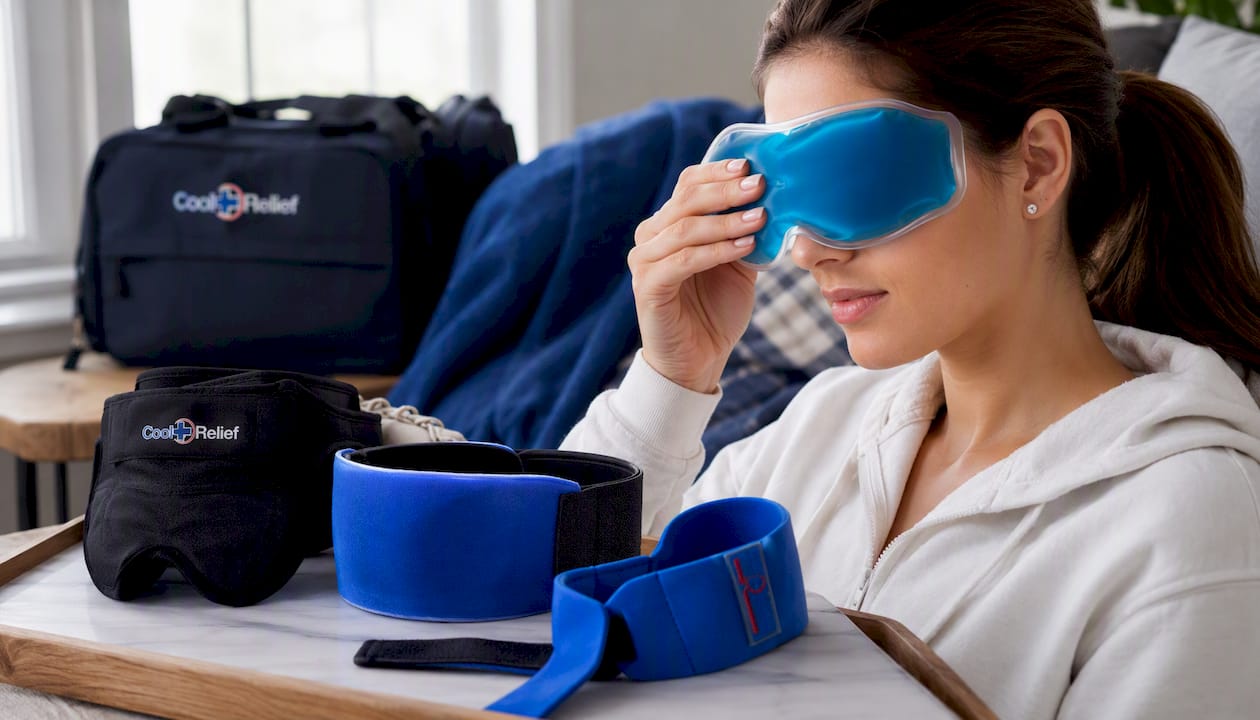
If the swelling has spread across your forehead or temples, the Soft Gel Migraine Ice Pack covers more surface area, and the Refreezable Cooling Ice Bandana straps everything in place hands-free, which matters when you’re trying to ice every hour and still get through your day. Look for refreezable gel over disposable ice bags, and check that the cover is washable since you’ll be using it repeatedly over 48 hours. Browse Cool Relief’s full lineup, including ice and heat wraps for other injuries, if you’re recovering from more than one thing at once. Just remember: if any red-flag symptom shows up, a doctor visit comes first, and the cold pack comes second.
This article is general information, not a substitute for advice from a qualified doctor. Consult a qualified healthcare professional about your own circumstances before acting on anything here.
Sources
- Black Eye Causes & Treatment — Cleveland Clinic
- Black eye: First aid — Mayo Clinic
- Black eye — NHS
- Black eye — MSD Manual Consumer Version
FAQ
Does icing a black eye make it heal faster?
Icing doesn’t shrink the healing timeline itself, but it limits how much swelling and bruising develop in the first place, which makes the whole process look and feel less severe. The Cleveland Clinic recommends icing during the first 24 to 48 hours specifically because that’s the window when most swelling forms.
How late is too late to ice a bruise?
Icing works best within the first 48 hours, but starting a few hours late still helps limit swelling, it’s just less effective the longer you wait. Past 48 to 72 hours, warm compresses become the better tool since the NHS notes that heat encourages fluid drainage once the swelling phase has passed.
How long should you ice a black eye after the injury?
Ice for 10 to 20 minutes at a time, repeating roughly once an hour during the first 24 to 48 hours, according to the Mayo Clinic. If swelling lingers, you can continue icing through 72 hours before switching to warmth.
Does Neosporin help a black eye?
Neosporin isn’t necessary for a black eye if the skin isn’t broken, since it treats infection risk that generally isn’t present with a closed bruise. Applying it near the eye also risks stinging or irritation, so plain ice and, if needed, acetaminophen are the safer first steps.
Which Cool Relief product works best for a black eye?
The Soft Gel Eye Ice Pack is built specifically for the contour of the eye socket, making it the most direct fit for eyelid and under-eye swelling. For broader forehead or temple swelling, the Soft Gel Migraine Ice Pack covers more area comfortably.
Share and get 15% off!
Simply share this product on one of the following social networks and you will unlock 15% off!