


Ice is the right first move for a fresh calf strain. Applying cold within the first 48 to 72 hours limits internal bleeding, calms swelling, and takes the edge off pain enough that you can move safely. The catch: icing only manages symptoms. It won’t stitch torn muscle fibers back together, so pair it with rest, gentle movement, and a plan to rebuild strength.
TL;DR:
- Icing within the first 48 to 72 hours mainly relieves pain and reduces swelling but does not accelerate muscle tissue healing.
- Use ice only during the initial three days, avoiding heat to prevent worsening swelling or bleeding.
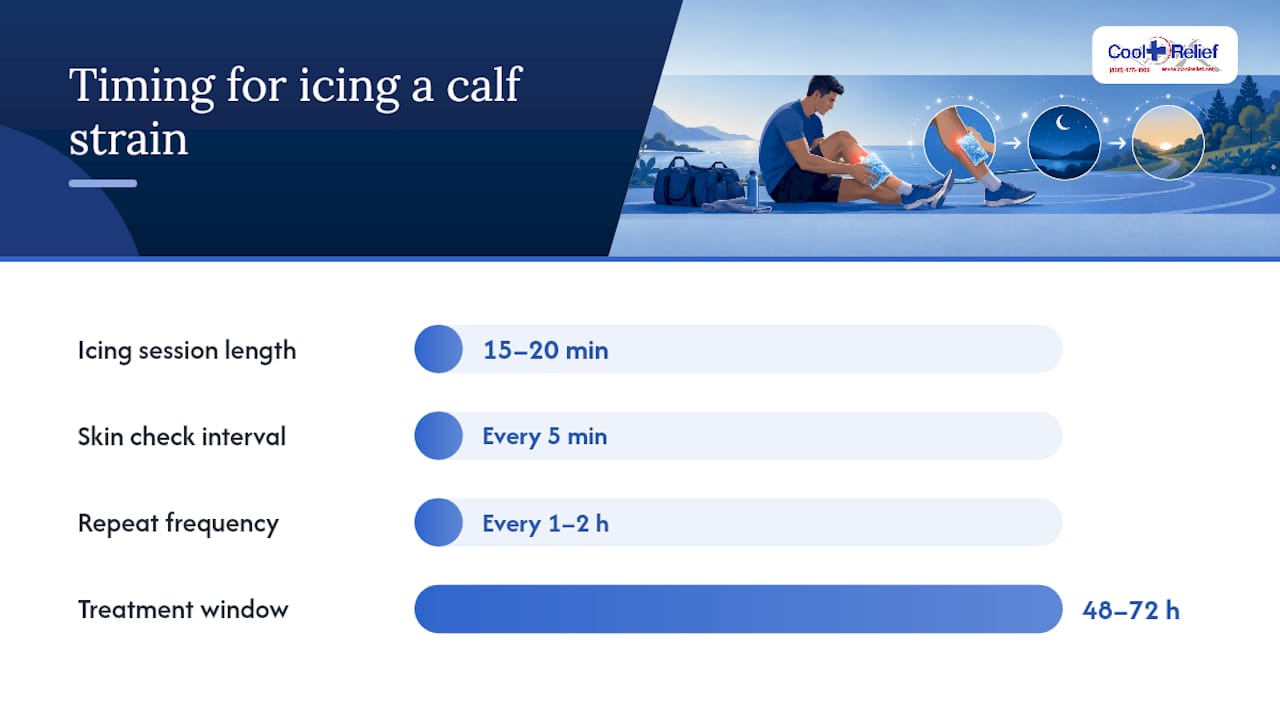
- Apply ice for 15 to 20 minutes every one to two hours, ensuring skin safety by wrapping the pack in a damp towel and checking skin frequently.
- Stop icing and seek medical attention if symptoms such as a visible muscle gap, inability to walk, spreading bruising, or persistent numbness occur.
- Effective recovery combines initial icing with gradual movement, strengthening, and choosing appropriate wraps to stay consistent during early treatment.
Table of Contents
- What Does the Evidence Say About Calf Strain Icing?
- Ice or Heat for a Calf Strain: Which One and When?
- How Do You Ice a Calf Strain Safely?
- When Should You Stop Icing and See a Doctor?
- How Icing Supports Early Movement and Recovery
- What Cool Relief Hears From People Icing a Calf Strain
- Find the Right Wrap for Repeated Calf Icing
- Sources
- FAQ
What Does the Evidence Say About Calf Strain Icing?
You don’t need a lab coat to understand why doctors reach for ice first. Cleveland Clinic recommends applying an ice pack for 15 to 20 minutes every two hours during the first few days after a pulled calf muscle, as part of the standard RICE approach (rest, ice, compression, elevation). That timing isn’t arbitrary. Cold narrows blood vessels near the injury, which slows the leakage that causes swelling and the deep purple bruising typical of a calf strain.
Here’s what the research actually supports, and where it gets murkier:
- Icing calms pain and controls swelling in the acute phase, according to consistent clinical guidance.
- Ice works best on injuries less than five days old, per Hospital for Special Surgery guidance, because that’s the window where bleeding and inflammation are most active.
- Evidence that icing speeds up actual tissue repair is thin. Most research points to symptom relief, not faster regeneration of muscle fibers.
- One small study found that stretching combined with ice produced better short-term flexibility than stretching alone, though the researchers flagged the need for more study before drawing firm conclusions.
- Other research shows no measurable acceleration in healing time from icing, and some clinicians warn that excessive or prolonged icing can actually slow the natural inflammatory response your body needs to repair itself.
Here’s the honest takeaway: icing buys you comfort and function, not a shortcut to a healed muscle. Think of it as pain control that opens the door to safe movement, not a treatment that works while you sit still. That distinction shapes almost everything else in this guide, from how long to ice to when you should stop relying on it entirely.
Ice or Heat for a Calf Strain: Which One and When?
Cold and heat do opposite things to your blood vessels, which is exactly why timing matters so much with a calf strain.
Ice constricts blood vessels. That’s useful right after an injury, when you want to slow bleeding and keep swelling contained. Heat does the reverse: it dilates vessels and increases blood flow. Applied too early, heat can pour fuel on a fire that’s still actively bleeding internally, making swelling and bruising worse rather than better.
That’s why HSS guidance is direct about avoiding heat for at least the first three days after an acute strain. A few rules of thumb make this easy to apply:
- First 48 to 72 hours: ice only. No heating pads, no hot showers aimed at the calf, no heat wraps.
- After 72 hours, if swelling has leveled off and pain is stable, you can start experimenting with heat for stiffness or lingering soreness.
- Some people find alternating cold and heat once the acute phase passes help with comfort and loosening up tight tissue before light stretching.
If swelling suddenly increases after you introduce heat, go back to ice and give it another day or two.
How Do You Ice a Calf Strain Safely?
Getting the technique right matters as much as deciding to ice in the first place. Here’s the protocol to follow for the first 48 to 72 hours after a calf strain:
- Rest the leg. Stop the activity that caused the strain and avoid putting weight on it if it’s painful.
- Ice for 15 to 20 minutes. Harvard Health recommends 10 to 20 minutes per session, and Cleveland Clinic backs the 15 to 20 minute range, so stay inside that window rather than icing for an hour hoping for extra benefit.
- Remove the ice and check your skin. Look for normal color returning within a few minutes.
- Elevate and add light compression. Prop your calf above heart level and use a compression wrap or sleeve to help control swelling between icing sessions.
- Repeat every one to two hours while you’re awake, for the first two to three days.
For pack choice, you’ve got a few solid options. Frozen peas mold easily to the curve of your calf and cost almost nothing, but they thaw fast and aren’t reusable in the same session. Ice cubes in a bag chill hard but conform poorly. A refreezable soft gel wrap holds a consistent temperature longer and drapes over the muscle belly better than loose ice, which matters when you’re trying to hit that 15 to 20 minute mark without repositioning every few minutes.
Skin safety isn’t optional. Wrap the pack in a damp towel rather than placing it directly on skin, and check the area every five minutes. Stop immediately if the skin turns white, blue, or blotchy, or if you lose sensation. If you have circulation problems, shorten sessions and check more frequently.
Pro Tip: Ice right after your first gentle range-of-motion exercises, not before. Cooling the muscle first can make it feel stiffer during movement, while icing afterward controls the swelling response those movements can trigger.
When Should You Stop Icing and See a Doctor?
Icing isn’t right for everyone, and some symptoms mean it’s time to stop self-managing and get evaluated. Skip icing, or use extra caution, if you have poor circulation in your legs, diabetic neuropathy, a known cold intolerance, or any open wound near the injury.
Watch for these red flags that point to something beyond a routine strain:
- A visible gap, dent, or divot in the calf muscle, which can signal a more serious tear
- Inability to bear weight or walk at all
- Bruising that keeps spreading rather than stabilizing after a day or two
- Numbness that doesn’t resolve, or pain that keeps getting worse despite consistent icing and rest
One more thing worth flagging with your doctor: NSAIDs like ibuprofen are generally not recommended in the first 24 to 72 hours after an acute strain, since they may increase bleeding risk in freshly injured tissue. Acetaminophen or a clinician-guided alternative is often the safer early choice for pain control.
How Icing Supports Early Movement and Recovery
Icing’s real job is to lower pain enough that you can start gentle movement sooner. Early mobilization, once pain allows it, improves circulation and helps prevent the muscle from tightening up into a stiff, shortened state. Icing doesn’t replace that work. It creates the window for it.
That’s the logic behind Cool Relief’s Knee Ice Pack Soft Gel, Ankle Ice Pack, and Soft Gel Back Heat Wrap. They’re built for repeated, controlled sessions on the anatomy around your calf and thigh, so you’re not improvising with a bag of peas every two hours for three days straight.
What Cool Relief Hears From People Icing a Calf Strain
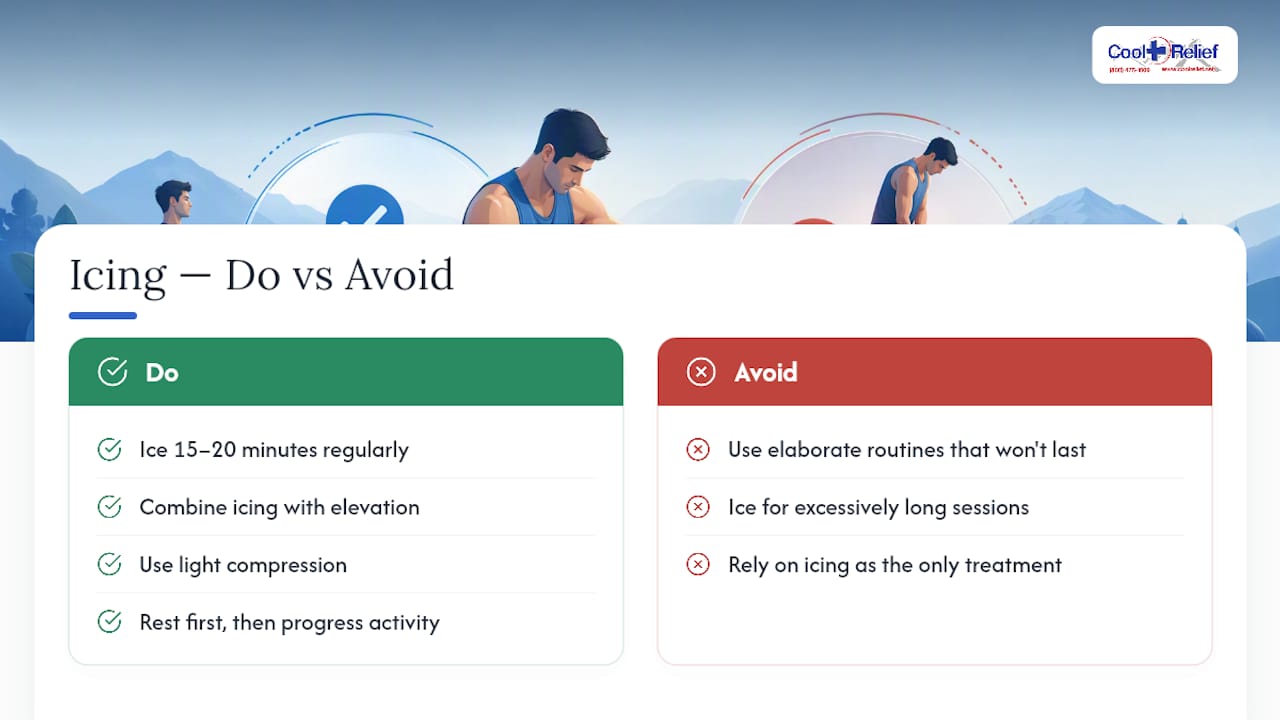
Most people icing a calf strain aren’t looking for perfection. They’re looking for a way to get through the first few painful days without making things worse, then get moving again as soon as it’s reasonably safe. Short, consistent icing sessions, paired with elevation and light compression, tend to be what actually gets used day after day, rather than an elaborate routine that falls apart by day two.
Keep the bigger picture in view. Icing is one piece of recovery, not the whole plan. Rest early, then graded activity and strengthening carry you the rest of the way back.
— Cool Relief
Find the Right Wrap for Repeated Calf Icing
Soft gel wraps solve a common problem: sticking to a 15 to 20 minute icing schedule for three straight days is hard when your only tool is a bag of frozen vegetables losing its shape by session two.
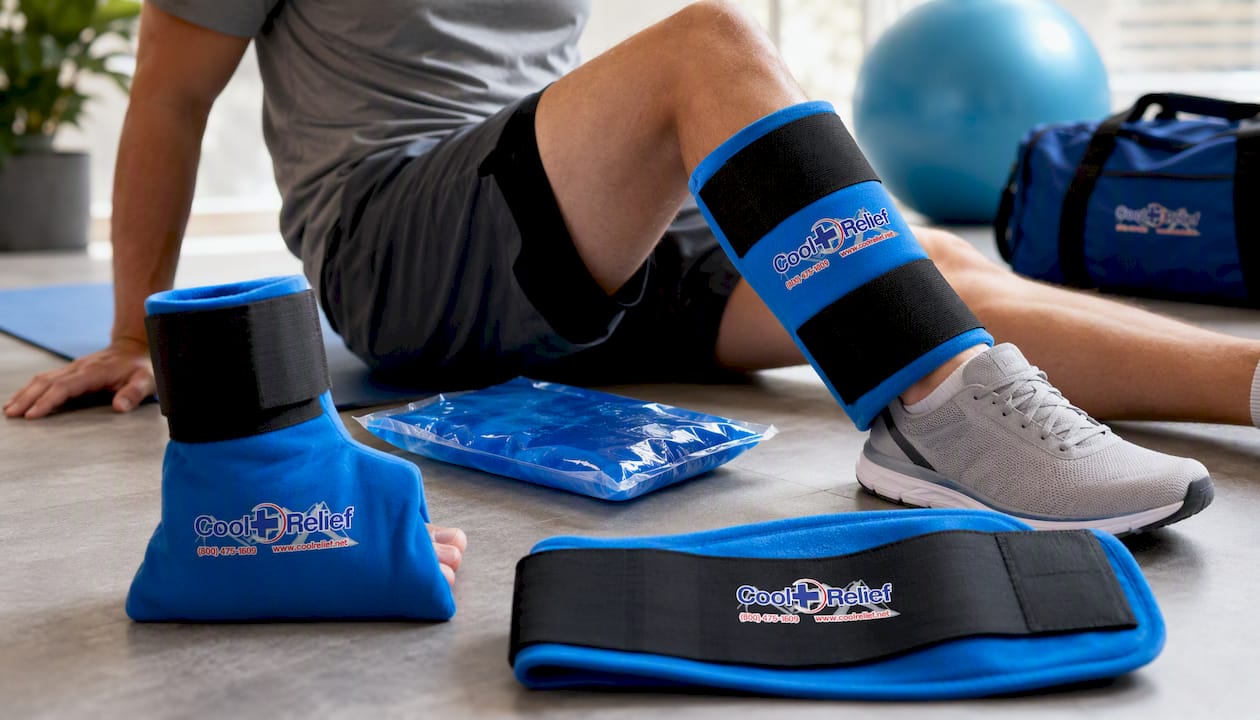
If swelling sits mainly in the calf and lower leg, the Thigh and Calf collection is built to wrap and stay put through a full session. The Knee Ice Pack Soft Gel is a flexible option that conforms well whether swelling centers on the knee or spreads down toward the calf. If swelling tracks further down toward your ankle, the compact Ankle Ice Pack targets that area without excess bulk. Every wrap refreezes for the next session and straps on with light compression built in, so you’re not holding a bag against your leg for 20 minutes at a time. Check the current options and pick the wrap that matches where your swelling actually is.
This article is general information, not a substitute for advice from a qualified doctor. Consult a qualified healthcare professional about your own circumstances before acting on anything here.
Sources
- Calf Strain (Pulled Calf Muscle): Treatment & Recovery
- Ice or heat: which is better for injuries? (HSS)
- What to do if you get ‘tennis leg’ - Harvard Health
- Gastrocnemius strain and posterior calf injuries (NCBI Bookshelf)
FAQ
Is It Good to Ice a Strained Calf?
Yes. Icing a strained calf during the first 48 to 72 hours helps control pain, swelling, and internal bleeding, which are the main goals of early management.
How Can I Make a Calf Strain Heal Faster?
No treatment, including icing, speeds up how fast muscle fibers repair themselves. What actually helps is controlling swelling early with ice and elevation, then adding gentle movement and progressive strengthening as pain allows.
How Do You Tell If a Calf Muscle Is Torn or Strained?
A mild to moderate strain typically causes tightness, soreness, and pain with movement, while a more severe tear often causes sudden sharp pain, a visible gap or divot in the muscle, and difficulty bearing weight. A gap, inability to walk, or rapidly spreading bruising warrants a clinician evaluation rather than continued self-care.
How Long Should You Ice a Calf Strain?
Ice for 15 to 20 minutes at a time, every one to two hours while awake, for the first two to three days after the injury. After that window, reassess and consider whether heat or alternating cold and heat fits your recovery better.
Share and get 15% off!
Simply share this product on one of the following social networks and you will unlock 15% off!