


Cold therapy often reduces migraine pain fast. For quick relief, apply a cooled neck wrap or gel headband for 15 to 20 minutes with a thin cloth barrier between the gel and your skin. It won’t replace your prescribed migraine medication, but it’s a safe, evidence-backed step you can take the moment symptoms start.
TL;DR:
- Applying cold to the neck targets the carotid arteries, which may enhance the effectiveness of migraine relief compared to other placement sites.
- The strongest evidence supports using cold therapy immediately at migraine onset for significant pain reduction within 30 minutes.
- Using a barrier like a cloth layer is essential to prevent skin damage during cold therapy, especially for prolonged applications.
- Cold therapy primarily provides short-term pain relief and has not proven effective as a preventive measure for reducing migraine frequency.
- Reusable gel packs that conform to head and neck curves are more comfortable and effective than rigid ice packs during migraine attacks.
Table of Contents
- How Does Cold Therapy Work for Migraine Pain?
- What Does the Research Say About Cold Therapy and Migraines?
- How Should You Apply Cold Therapy During a Migraine?
- When Should You Avoid Cold Therapy?
- Should You Use Cold or Heat for Migraine Relief?
- How Cool Relief Supports Safe Cold Therapy at Home
- How Often Should You Use Cold Therapy for Migraines?
- How Do You Manage Migraine Triggers Alongside Cold Therapy?
- What Cold Therapy Products Are Worth Considering?
- Cold Therapy for Migraines: What Actually Matters
- Find the Right Cold Therapy Wrap for Your Migraines
- Sources
- FAQ
How Does Cold Therapy Work for Migraine Pain?
Cold works on migraine pain through a few overlapping mechanisms, not just one. When you press a cold pack against your skin, the blood vessels underneath tighten up, a process called vasoconstriction. Migraines often involve swollen, overactive blood vessels around the brain, so narrowing them can ease the throbbing sensation that makes migraines so miserable.
Cold also slows down nerve conduction in the area you’re treating. That’s why an ice pack numbs pain almost like a mild local anesthetic. Slower nerve signals mean fewer pain messages getting through to your brain, at least temporarily.
There’s a third piece that gets less attention: cold appears to lower the metabolic demand of cells in the treated area, meaning they need less energy (ATP) to function. Lower metabolic activity is linked to reduced inflammation, which may explain part of why cold feels calming during an attack, according to Medical News Today’s review of cold therapy research.
Here’s the part that surprises most people: placement matters more than they’d guess.
- Cooling the neck targets the carotid arteries, which carry blood directly toward the brain.
- Cooling the forehead or temples works more locally, numbing surface nerves near the pain site.
- Cooling the base of the skull may help when tension radiates upward from the neck.
Pro Tip: If you only have time or patience for one placement, aim for the neck first. The rationale behind the neck-cooling clinical trial was built specifically around cooling blood before it reaches the skull, which may explain why that trial’s results were so strong.
What Does the Research Say About Cold Therapy and Migraines?
The strongest evidence for cold therapy for migraines comes from a 2013 randomized, controlled, crossover trial that tested a frozen neck wrap applied right at migraine onset. Participants in the treatment group saw a mean pain reduction at the 30 minute mark, while the control group saw pain increase instead. That gap was statistically significant, with a P value under .001, according to the randomized controlled trial published in Hawai’i Journal of Medicine & Public Health.
Earlier research backs this up, too. A 2006 open-label pilot study found that cold application alone helped a meaningful share of migraine patients, even without a control group for comparison, according to the pilot study on cold therapy in migraine patients. Pilot studies like this one carry real limitations. Small sample sizes and the lack of a placebo group mean the results point toward a promising pattern rather than settling the question outright.
Where does that leave the current evidence base? A few things stand out:
- Short-term relief is the best-supported benefit of cold therapy for migraines.
- Long-term prevention of migraine frequency remains largely unproven.
- Reviews from outlets like Medical News Today consistently note that cold works well for symptom relief in the moment, but the data doesn’t yet support it as a standalone preventive strategy.
- Medical organizations, including the American Migraine Foundation, list cold compresses among common home remedies worth trying, alongside rest and hydration.
The practical takeaway is straightforward. Cold therapy has real, measured evidence behind it for stopping pain in its tracks during an attack. What it hasn’t shown, at least not yet, is a strong ability to reduce how often migraines happen in the first place. Treat it as an acute relief tool, not a cure.
How Should You Apply Cold Therapy During a Migraine?
Timing and technique both matter here, and getting them right is what separates a helpful cold pack from one that just sits there doing nothing.
- Start as early as you can. Some of the strongest study results came from applying cooling right at migraine onset, before the pain fully builds. If you feel an attack coming on, don’t wait to see how bad it gets.
- Choose your placement. The neck (targeting the carotid arteries) has the best trial evidence behind it. The forehead and temples work well for localized numbing. Some people prefer the base of the skull if tension headache symptoms overlap with migraine.
- Time your sessions. Apply cold for 15 to 20 minutes, then take a break of at least one hour before reapplying, according to Healthline’s guidance on ice packs for headaches. Repeat this cycle through the attack as needed.
- Use a barrier. Always keep a thin cloth or the pack’s built-in fabric layer between gel and skin. Direct, prolonged contact with ice risks skin damage.
- Pick a flexible device. Rigid ice bags shift and gap against curves like the neck or temple. Gel-based wraps that stay flexible when frozen conform better and distribute cold more evenly, per findings summarized by Medical News Today.
Pay attention to how your skin feels while the pack is on. Most people notice a predictable sequence: cold, then a burning sensation, then aching, then numbness. That numbness stage is your cue to remove the pack, according to Healthline’s breakdown of ice pack sensations.
- If a wrap feels too intense right away, add another layer of cloth rather than pushing through the discomfort.
- If you deal with cold intolerance, try shorter intervals of 5 to 10 minutes instead of the full 15 to 20.
- Secure neck wraps loosely enough that they never press on your airway, especially if nausea is part of your migraine pattern.
Pro Tip: Keep two gel packs in rotation in your freezer. While one warms up on your neck, the other stays ready, so you’re never waiting on a single pack to refreeze mid-attack.
When Should You Avoid Cold Therapy?
Cold therapy is low-risk for most people, but it’s not risk-free, and a few groups need to be more careful.
- Never place ice directly against bare skin for extended periods. Always use a cloth layer or a gel pack with a built-in fabric cover to prevent frostbite or cold burns.
- If you have Raynaud’s phenomenon, cold urticaria, severe peripheral vascular disease, or certain neuropathies, talk to your doctor before starting cold therapy. These conditions can make cold exposure genuinely harmful rather than just uncomfortable.
- Watch for warning signs during use: pain that gets worse instead of better, numbness that lingers well after you remove the pack, or any change in skin color. Stop immediately if you notice any of these.
- Seek emergency medical care for a sudden, severe headache unlike any you’ve had before, one-sided weakness or slurred speech, confusion, or loss of consciousness. These can signal something more serious than a migraine, and cold therapy is not the right response.
If cold ever makes your headache feel worse rather than better, that’s useful information. It may mean heat, or another approach entirely, fits your body better.
Should You Use Cold or Heat for Migraine Relief?
Cold and heat both have a place in migraine management, and the right choice often depends on what’s driving your particular headache.
Heat tends to work best when muscle tension is part of the picture. A warm compress on tight shoulders or the back of the neck can relax muscles that are contributing to head pain, especially in tension-type headaches that overlap with migraine symptoms. Cold, by contrast, is better suited to numbing pain and calming what feels like an inflammatory component, though how much of that is inflammation versus general nerve slowing is still debated, per Medical News Today’s analysis.
Response really does vary person to person. Some people swear by cold. Others find heat brings faster relief. It’s worth trying both, under safe conditions, to learn which one your body responds to.
Cold and heat don’t have to work alone. A few complementary steps that pair well with either approach:
- Rest in a dark, quiet room to reduce sensory triggers.
- Stay hydrated, since dehydration is a common migraine trigger.
- A small amount of caffeine can help some people, though too much can backfire.
- Take prescribed acute migraine medication as directed by your doctor.
One caution: avoid jumping straight from intense cold to intense heat, or the reverse, in rapid succession. Give your skin and vessels time to normalize between the two, and check with a clinician if you’re combining multiple therapies regularly.
How Cool Relief Supports Safe Cold Therapy at Home
Some cold therapy wraps use soft gel technology designed to stay flexible even straight out of the freezer, so the pack conforms to your head, neck, or eye area instead of sitting rigid and uneven.
Cold therapy wraps designed for head and forehead application, neck coverage, and periorbital comfort are available in the market. Many come with fabric covering built in, so you’re not pressing bare gel against your skin. Pro Tip: Keep a cold therapy wrap in the freezer at all times to have immediate relief available when migraines start.
How Often Should You Use Cold Therapy for Migraines?
Cold therapy fits acute treatment far better than it fits prevention, at least based on what the current evidence shows. Reach for it as soon as you feel an attack starting or worsening, and repeat the 15 to 20 minute on, one hour off cycle for as long as symptoms last. There’s no research supporting a hard cap on how many migraine episodes you can treat this way in a month.
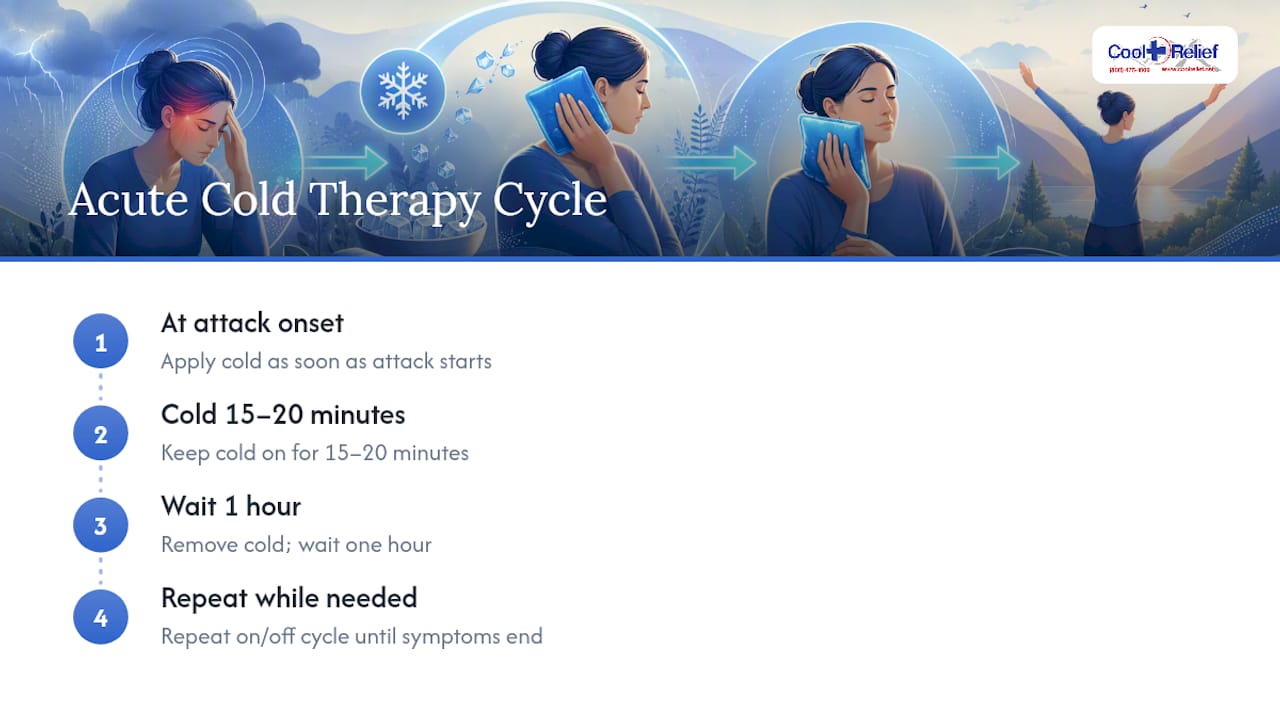
Using cold therapy preventively, on some kind of fixed daily schedule regardless of symptoms, isn’t well-supported by the data. The 2013 neck-cooling trial and the open-label pilot studies both tested cold as a response to an active migraine, not as a standing prevention routine. If you’re hoping cold therapy will reduce how many migraines you get overall, the honest answer right now is that the evidence isn’t there yet.
That doesn’t mean daily use is off the table for other reasons. Plenty of people use cold packs on tense neck or shoulder muscles between migraine episodes simply to manage everyday tension, which may lower the odds that muscular tension tips into a full attack. That’s a different use case from treating an active migraine, though, and it’s worth keeping the distinction clear in your own routine.
The practical rule: treat cold therapy like a fire extinguisher, not a vitamin. Use it fully and immediately when an attack starts. Don’t feel obligated to use it when you’re symptom free, and don’t expect it to lower your baseline migraine frequency over time.
How Do You Manage Migraine Triggers Alongside Cold Therapy?
Cold therapy treats the pain that’s already showing up. Managing your triggers is what reduces how often you end up needing it in the first place, and the two work best as a pair rather than a substitute for each other.
Start by tracking what precedes your attacks. Common migraine triggers include skipped meals, dehydration, poor sleep, bright or flickering light, strong smells, stress, and hormonal shifts. A simple notes app entry after each migraine, listing what you ate, slept, and felt in the 24 hours prior, can reveal patterns faster than you’d expect.
Once you’ve spotted a pattern, build small habits around it:
- Keep water within reach throughout the day, not just when you feel thirsty.
- Eat on a consistent schedule instead of letting long gaps build up.
- Dim harsh overhead lighting in spaces where you spend a lot of time.
- Protect a consistent sleep window, even on weekends.
None of this eliminates migraines outright. What it does is lower the frequency of attacks you need to treat with cold therapy, medication, or rest in the first place. Think of trigger management as the long game and cold therapy as your response when that long game still doesn’t fully hold.
Keep your cold pack somewhere accessible, whether that’s your bag, your desk, or your nightstand freezer stash, so you’re not scrambling to find relief once symptoms are already building.
What Cold Therapy Products Are Worth Considering?
Not every cold pack is built the same way, and the differences show up most in comfort and how well a product holds its shape against your head or neck.
Rigid, hard-shell ice packs are the cheapest option and widely available, but they don’t flex to fit curves. That means gaps form where cold doesn’t reach, and pressure builds where it does, which can be uncomfortable during a migraine when you’re already sensitive to pressure and touch.
Gel-based wraps solve much of that problem. Because the gel stays pliable when frozen, it molds around the neck, forehead, or eye socket instead of sitting flat against it. Cool Relief’s lineup, including the Soft Gel Migraine Ice Pack, the Refreezable Cooling Ice Bandana, and the Soft Gel Eye Ice Pack, fits this category.
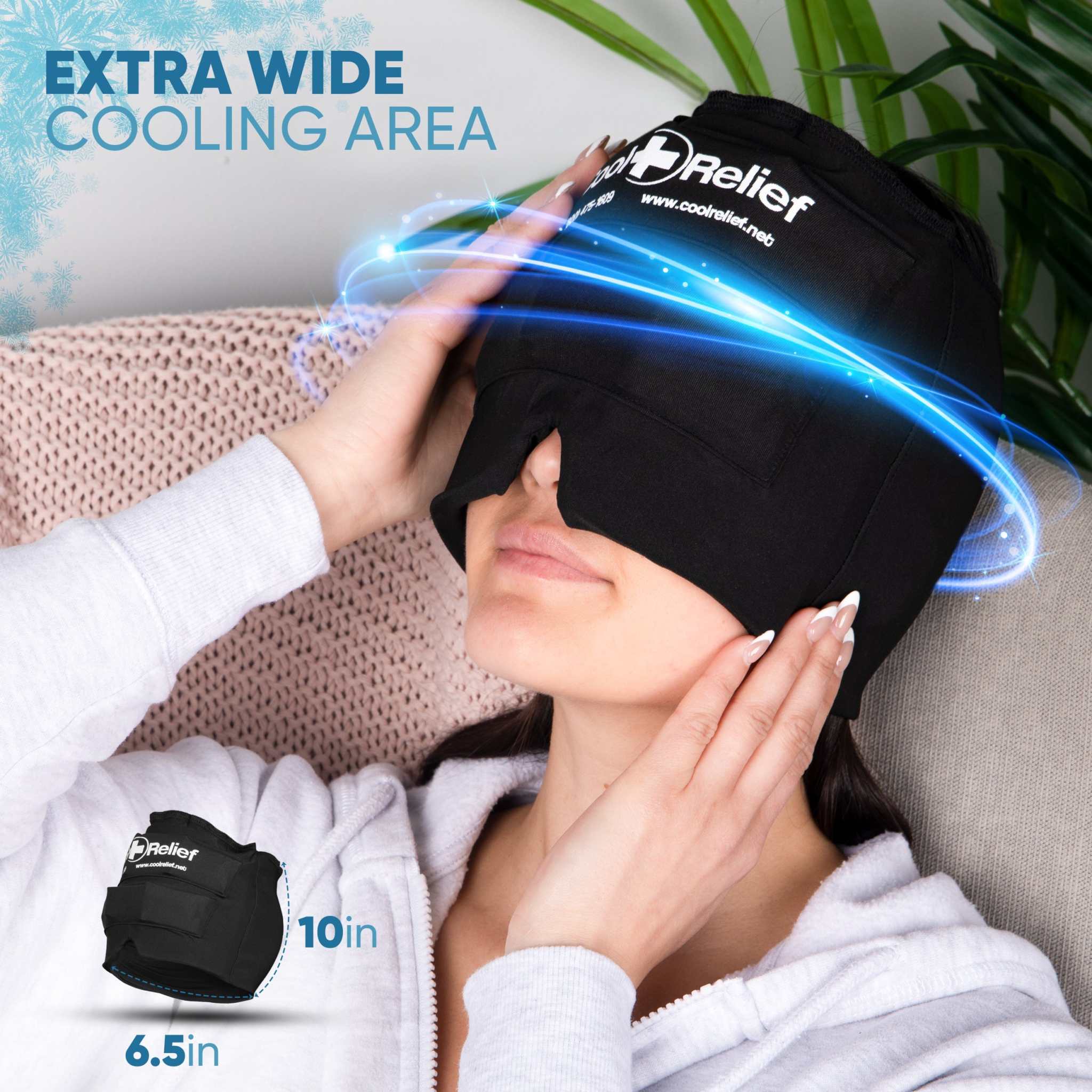
Accessibility is worth factoring in too. A wrap with adjustable straps works better for people with larger or smaller head and neck sizes than a one-size elastic band. Reusable, refreezable designs also cost less over time than disposable cold packs, since you’re not repurchasing anything after the first use. For anyone treating migraines regularly, that reusability adds up fast across a year of attacks.
Cold Therapy for Migraines: What Actually Matters
The evidence on cold therapy for migraines is more solid than most home remedies get credit for. It’s a real, measured effect. Where conventional advice tends to go wrong is treating cold therapy as either a miracle cure or a throwaway home trick. It’s neither.
What the research actually supports is narrower and more useful: cold works well, fast, for acute pain during an attack, especially when applied to the neck. It has not been shown to meaningfully reduce how often migraines occur. Anyone expecting a daily ice routine to shrink their migraine frequency is likely to be disappointed.
If you take one thing from this guide, prioritize timing over gadgets. Applying cold at the very first sign of an attack matters more than which specific product you use. Get the timing right, then worry about finding a wrap that’s comfortable enough to keep on for the full 15 to 20 minutes.
— Cool Relief
Find the Right Cold Therapy Wrap for Your Migraines
Once you know cold therapy for migraines works best when it fits your specific pain pattern, picking the right product becomes a lot simpler. If your pain sits mostly in your forehead or temples, the Soft Gel Migraine Ice Pack wraps around your head for hands-free relief. If you want to replicate the neck-targeted approach used in clinical research, the Refreezable Cooling Ice Bandana sits around your neck and carotid area. For lighter, more localized comfort around tired or pressured eyes, the Soft Gel Eye Ice Pack is built for exactly that.
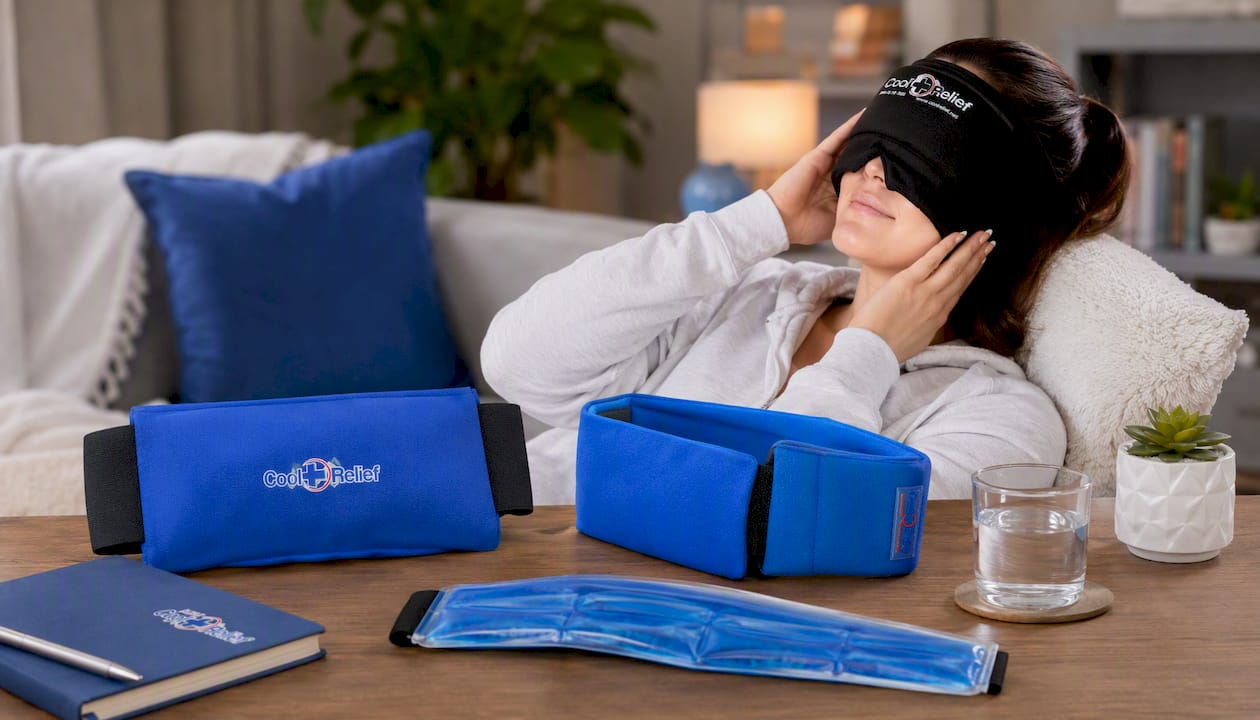
Every Cool Relief wrap is reusable and refreezable, so there’s no repurchasing disposable packs every time an attack hits. Keep one in the freezer at all times (most are ready to use again within a few hours), and pull it out the moment you feel a migraine starting. Browse the full head and neck ice wrap collection to compare sizes and find the fit that matches how and where your migraines show up.
This article is general information, not a substitute for advice from a qualified doctor. Consult a qualified healthcare professional about your own circumstances before acting on anything here.
Sources
- Randomized controlled trial: targeted neck cooling in the treatment of the migraine patient.
- Ice Packs for Headaches: How It Works and How to Use It
- Cold therapy: Can it prevent or treat migraine?
FAQ
Does cold therapy actually work for migraines?
Yes, for short-term relief. A randomized clinical trial found a frozen neck wrap reduced pain by 31.8% within 30 minutes, though evidence for long-term migraine prevention remains limited.
What do people traditionally do in China for migraines?
Traditional Chinese approaches to headaches often combine acupressure, herbal remedies, and rest in a calm, dark environment, though these methods sit outside the clinical cold-therapy research covered in this guide.
What is the ice trick for migraines?
The most studied version involves wrapping a frozen gel pack around the neck at the first sign of an attack and leaving it on for 15 to 20 minutes, based on the neck-cooling trial’s protocol.
What is the fastest way to relieve a migraine?
Combining early cold therapy application, a dark and quiet room, hydration, and any prescribed acute medication tends to bring the fastest relief; cold applied at onset showed measurable pain reduction within 30 minutes in clinical testing.
How long should I leave a cold pack on for a migraine?
Apply cold for 15 to 20 minutes at a time, then wait at least one hour before reapplying, according to Healthline’s guidance on safe cold pack use.
Share and get 15% off!
Simply share this product on one of the following social networks and you will unlock 15% off!