


Yes, combining compression with ice, often called cryocompression, is commonly recommended for acute injuries and many post-surgical swelling cases when used correctly. Compression deepens and speeds up the cooling effect, and several trials show faster relief of pain and swelling than ice alone. The main caveats: limit sessions to about 20 to 30 minutes, keep a barrier between skin and gel pack, and check with a clinician first if you have diabetes, poor circulation, or recent surgery.
TL;DR:
- Compression enhances cold therapy by deepening tissue cooling, with elastic wraps providing the most effective pressure and contact.
- Combining cold with compression results in faster pain relief and reduced swelling, especially when applied within the first 48 hours post-injury or surgery.
- Clinical evidence strongly supports cryocompression for knee surgery recovery and athletic inflammation, though results vary based on protocols and injury specifics.
- Proper application requires snug wrapping over a barrier, limited sessions to about 20 minutes, and careful skin monitoring to prevent tissue damage.
- Not suitable for people with circulatory or sensory issues; tailored adjustments are necessary for high-risk individuals.
Table of Contents
- How Compression Plus Ice Cools Tissue and Cuts Swelling
- What Do Clinical Studies Say About Cryocompression?
- How Do You Apply Compression and Ice Safely?
- Which Compression Materials Actually Work Best?
- Who Should Avoid Cryocompression or Use Extra Caution?
- When Should You Choose Heat or Skip Cold Therapy Entirely?
- The Gap Between Perfect Evidence and Real-World Recovery
- Find the Right Cool Relief Wrap for Your Recovery
- Where This Article’s Research Comes From
- Sources
- FAQ
How Compression Plus Ice Cools Tissue and Cuts Swelling
Ice alone works by pulling heat away from the skin’s surface. Adding compression provides a mechanical boost that makes the whole process more efficient. Pressure squeezes out the small air pockets between a cold pack and your skin, so the surface actually stays in tighter contact with the tissue underneath it. Less insulating air means more heat transfer, and that translates into a deeper, faster drop in temperature at the muscle and joint level rather than just the skin.
Cold on its own triggers’ vasoconstriction, the narrowing of blood vessels, which slows local blood flow and reduces the metabolic activity of injured cells. That slower metabolic rate means less inflammatory buildup and less pressure on the nerve endings (nociceptors) that signal pain. Compression adds a second effect: it physically encourages fluid to move out of the injured area and back toward the trunk, supporting the lymphatic system’s natural drainage process. Less fluid pooling at the injury site means less visible swelling and less of that tight, throbbing sensation that comes with it.
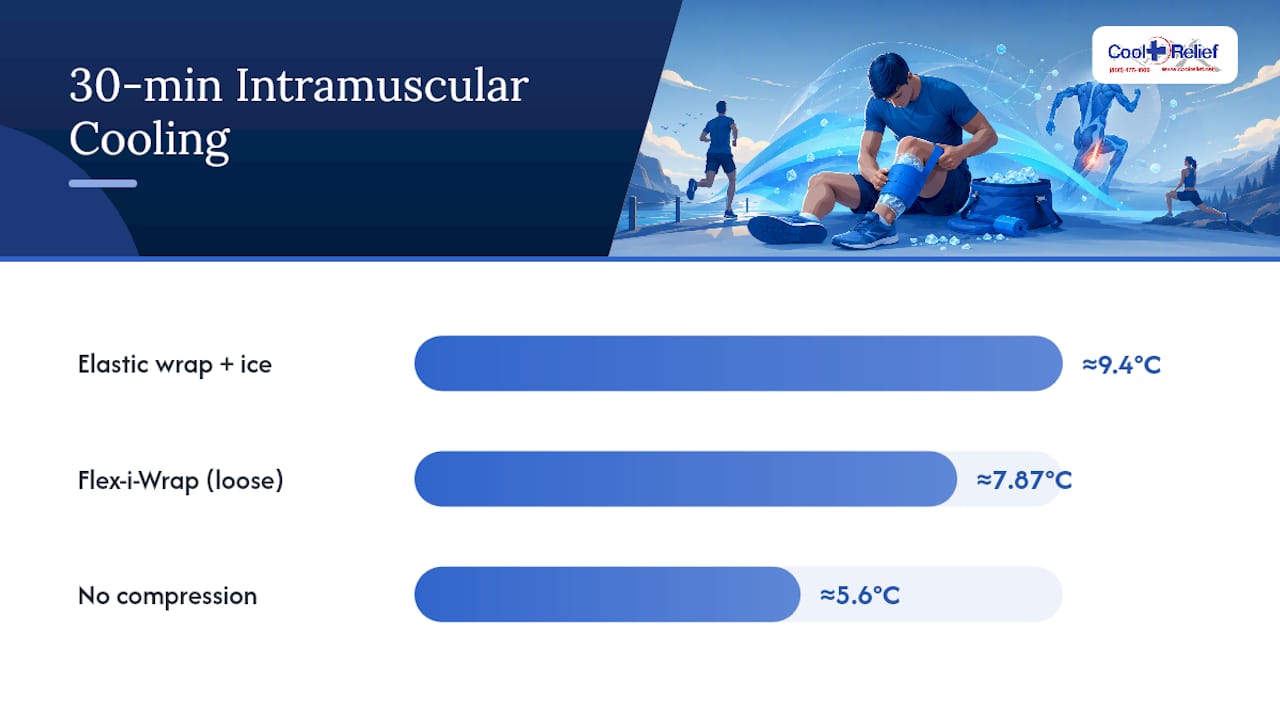
The numbers back this up in a striking way. In a controlled comparison of cooling methods, an elastic wrap combined with an ice bag produced an intramuscular temperature drop of about 9.4°C after 30 minutes, compared to roughly 7.87°C with a looser Flex-i-Wrap and only about 5.6°C with no compression at all, according to research on tissue cooling with varied compression types.
Pro Tip: If you’re using a loose bandage or an ad hoc wrap, snug it enough to eliminate gaps, but not so tight that it restricts circulation. You want firm, even contact, not a tourniquet.
Why does deeper cooling matter beyond comfort? Nerve conduction velocity slows as tissue temperature drops, which is part of why cold therapy dulls pain signals so effectively. When compression pushes that cooling effect further into the muscle rather than leaving it stuck at the skin, you get:
- Faster reduction in localized swelling because fluid movement is actively encouraged, not just passively slowed
- Quicker pain relief since deeper nerve tissue reaches an analgesic temperature range sooner
- More consistent results session to session, because contact quality (not just ice temperature) drives the outcome
- Better cold retention over the treatment window, since compression also acts as a light insulating layer against room-temperature air
This is the physiological case for pairing the two. It also explains why a loose bag of ice resting on a knee tends to underperform compared to a wrap that holds the same ice firmly in place.
What Do Clinical Studies Say About Cryocompression?
The research on combining cold and compression is generally favorable, though it’s not uniform across every injury type or comparison. A narrative review of randomized trials covering musculoskeletal injuries and orthopedic procedures found that cold plus compression consistently outperforms no treatment at all, but results become less consistent when compared directly against single-modality treatments like ice alone or compression alone, according to the narrative review on cold and compression management. That inconsistency isn’t a knock against the approach. It reflects how differently each study designs its protocol, from the type of compression used to how long sessions last.
The strongest evidence sits in post-operative settings, particularly total knee arthroplasty. Patients recovering from knee replacement surgery who received cryocompression tended to show measurable improvements in swelling control and reported pain compared to standard care, which is part of why so many orthopedic surgeons now build it into recovery protocols as a matter of course.
Athletic recovery research tells a similar story. Randomized and crossover trials comparing cryocompression to passive recovery (simply resting without any cold or compression intervention) found reductions in inflammatory markers like IL-1β, smaller thigh circumference measurements (a proxy for edema), and faster return of maximal force production, according to studies on cryocompression versus passive recovery. Athletes who used cryocompression after intense training bouts got back to baseline strength noticeably sooner than those who just sat and waited it out.
More recent clinical trials have tested regulated cryocompression protocols, meaning devices that control both temperature and pressure precisely rather than relying on a bag of ice and an elastic bandage. One trial using a protocol of roughly 3°C at 75 mmHg of pressure for 10 minutes, applied twice daily, reported improved strength recovery, reduced stiffness, and higher pain thresholds within 48 hours of the intervention, based on cryocompression clinical trial data.
None of this means the evidence is airtight. Reviewers repeatedly flag the same limitations:
- Small sample sizes across many of the individual trials, which limits how confidently results generalize
- Wide variation in compression devices, from disposable wraps to regulated pneumatic systems, that makes direct comparison difficult
- Differing outcome measures (some track intramuscular temperature, others track pain scores or return-to-function timelines), which complicates pooling results into a single conclusion
- A relative shortage of long-term follow-up data outside the 48 to 72 hour window most trials focus on
Combined cold and compression therapy generally outperforms no treatment at all, but head-to-head comparisons against single-modality approaches remain inconsistent because study protocols vary so widely in equipment, duration, and injury type.
That’s the honest state of the evidence. It supports cryocompression as a sound choice for acute swelling and many post-op scenarios, while leaving room for individual variation depending on injury type and how the therapy is applied.
How Do You Apply Compression and Ice Safely?
Timing matters as much as technique. For an acute injury, most guidance supports starting cold and compression as soon as reasonably possible after the injury occurs, typically within the first 24 to 48 hours when swelling is actively forming. For post-surgical swelling, timing should follow your surgeon’s or physical therapist’s specific instructions, since some procedures call for a delay before any cold therapy begins.
Here’s a straightforward protocol you can follow or adapt with a clinician’s guidance:
- Prepare the area. Place a thin cloth or the wrap’s built-in fabric layer between the cold pack and your skin. Never apply a frozen gel pack directly to bare skin.
- Position the compression wrap. Wrap an elastic bandage or a soft compression ice wrap snugly around the injury site, ensuring even pressure with no bunching or gaps.
- Check the fit. You should be able to slide one or two fingers under the wrap comfortably. If it feels tight enough to throb or tingle, loosen it immediately.
- Set a timer for 20 minutes. Clinical guidance from Johns Hopkins Medicine generally recommends capping continuous cold application around 20 minutes to avoid tissue damage, though some trial protocols use shorter, more frequent cycles.
- Remove and check skin. Look for normal pink or slightly red coloring. Numbness, white patches, or blue discoloration means you need to stop and let the area rewarm.
- Allow skin to return to normal temperature before reapplying, generally at least 30 to 60 minutes between sessions.
- Repeat 3 to 5 times daily during the acute swelling phase, adjusting frequency based on comfort and any clinician instructions.
- Pair with elevation and rest whenever possible. Raising the injured limb above heart level works alongside compression to further encourage fluid drainage.
Monitoring during each session isn’t optional. Check skin color and sensation at least once partway through the session, not just at the end. Watch for these warning signs that mean you should stop immediately: persistent numbness that doesn’t resolve after removing the wrap, blistering, disproportionate skin color changes (especially white or mottled blue patches), or pain that increases rather than eases.
Pro Tip: Keep two wraps on rotation, one cooling in the freezer while the other is in use. This makes it far easier to stick to a consistent schedule instead of skipping sessions because your only pack is still thawing out.
Frequency guidance from clinical and athletic trials varies, but a reasonable practical range for most acute injuries lands between 3 and 6 applications per day during the first 48 to 72 hours, tapering off as swelling subsides. For guidance specific to a surgical recovery, our ice wrap guide for post-knee surgery walks through timing considerations unique to that recovery window.
Which Compression Materials Actually Work Best?
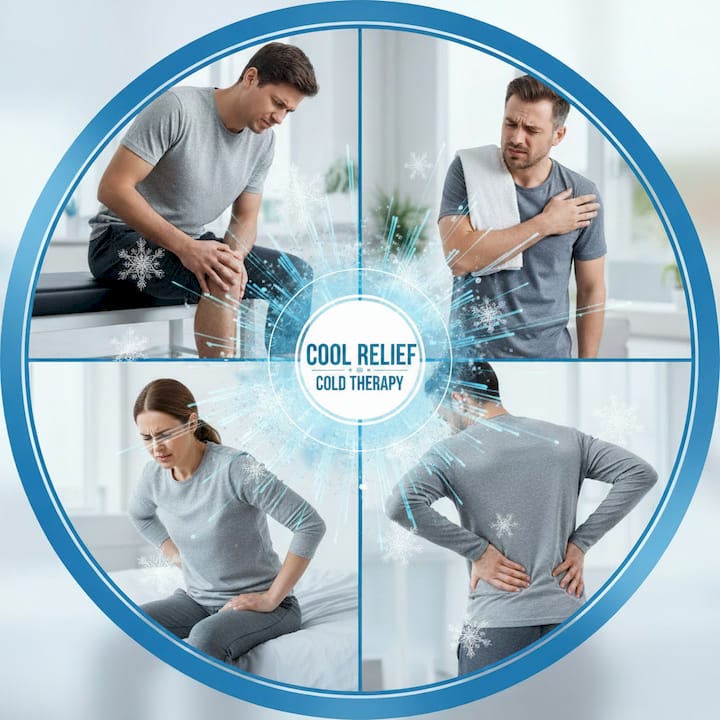
Not all compression is created equal, and the differences show up clearly in the research. Elastic wraps consistently outperform looser alternatives at deepening the cooling effect. In the same controlled study referenced earlier, elastic wrap compression produced significantly cooler intramuscular temperatures than a disposable plastic-style wrap (Flex-i-Wrap) or no compression at all, according to the tissue cooling study. The mechanical contact elastic material provides, hugging the gel pack tightly against the skin’s contours, appears to be the driving factor.
Here’s how the common options stack up for home and clinical use:
- Frozen vegetables or ice in a plastic bag: Cheap and always available, but shapes poorly to joints and loses consistent contact quickly, undermining the cooling depth compression is supposed to deliver.
- Reusable gel packs with soft compression wraps: Mold to the body, stay flexible even when frozen, and hold their position through movement, which keeps contact and cooling consistent session after session.
- Disposable plastic or loose elastic wraps: Better than nothing, but they tend to loosen during use and don’t provide the same even pressure that a purpose-built compression wrap does.
- Intermittent pneumatic compression devices: Used mainly in clinical and post-surgical settings, these regulate pressure automatically and cycle it on and off, which trial data suggests can accelerate recovery markers, though the cost and complexity put them out of reach for most home users.
When shopping for a consumer-grade soft compression ice wrap, look for a few specific features: a shape that actually fits the joint or muscle you’re treating rather than a generic rectangle, a replaceable or reusable gel insert so you’re not stuck buying disposable packs, a fabric layer that acts as a skin barrier, and a wrap material that’s easy to clean after repeated use.
This is where Cool Relief’s product lineup fits the evidence directly. The Large Universal Soft Compression Ice Wrap uses soft gel technology designed to hold firm, even contact across larger areas like the back, hip, or shoulder, which mirrors the elastic wrap advantage seen in the cooling trials. The Knee Ice Pack Soft Gel is molded to wrap around the joint’s natural shape rather than sitting flat against it, and our guide on why ice helps knee injuries covers the specific mechanics for that joint. For smaller joints, the Wrist Ice Pack applies the same soft gel and compression principle at a scale that fits sprains, strains, and post-fracture swelling in a much smaller footprint.
Who Should Avoid Cryocompression or Use Extra Caution?
Cold and compression aren’t risk-free for everyone. People with diabetes, peripheral neuropathy, peripheral vascular disease, or Raynaud’s phenomenon face a meaningfully higher risk of tissue damage from cold therapy, because reduced or altered sensation can mask early warning signs like numbness or skin color changes before real harm occurs, according to Johns Hopkins Medicine’s cryotherapy guidance. If you fall into any of these categories, talk to a clinician before starting any home cold compression routine, even one that feels mild.
For anyone using cryocompression, a few safeguards apply across the board:
- Never apply ice or a gel pack directly to bare skin; always use a cloth or fabric barrier.
- Cap continuous application at roughly 20 minutes, and avoid extending sessions past 30 minutes even if the area still feels warm.
- Check skin every 10 minutes when possible, especially during longer sessions or with higher-risk individuals.
- Loosen the wrap immediately if you notice tingling, throbbing, or a sensation of tightness beyond normal pressure.
Watch for signs that mean you should stop and seek medical attention: numbness that persists well after removing the wrap, blistering or skin discoloration that doesn’t fade, and pain that intensifies rather than easing during or after treatment. Roughly these same signs apply whether you’re treating a fresh ankle sprain or managing swelling after surgery, so the caution isn’t limited to one injury type.
If your risk profile is elevated but you still want cold therapy’s benefits, practical adjustments include shorter cycles (10 minutes instead of 20), a thicker skin barrier, and choosing clinician-supervised options rather than an unsupervised home routine.
When Should You Choose Heat or Skip Cold Therapy Entirely?
Cryocompression isn’t the right tool for every situation, and knowing when to switch approaches matters as much as knowing how to apply it correctly. Acute injuries, meaning anything within the first 48 to 72 hours where swelling is actively forming, respond best to cold and compression. Chronic stiffness and ongoing muscle tension, on the other hand, typically respond better to heat, which increases blood flow and relaxes tissue rather than constricting it, according to guidance from UCSF’s pain management education program.
Training goals also shift the calculation. If you’re doing resistance training and your priority is long-term strength or muscle adaptation, some evidence suggests cold water immersion and aggressive cryocompression may blunt the anabolic signaling your body needs to build new tissue, making passive recovery a better fit in that specific context, based on research on cold water immersion across exercise modalities. Endurance athletes chasing faster turnaround between sessions tend to see more benefit from moderate cold exposure, since the priority there is reducing inflammation and soreness rather than maximizing muscle growth.
A quick decision checklist:
- Fresh injury with visible swelling: Choose cold and compression.
- Chronic joint stiffness with no active swelling: Choose heat.
- Recovering from heavy resistance training with long-term gains as the goal: Consider passive recovery over aggressive cold.
- Tendon pain that flares with activity: This one depends on the phase of injury, and our guide on heat versus cold for tendonitis breaks down the distinction in more detail.
- Endurance training recovery between sessions: Moderate cold exposure tends to help more than passive rest alone.
The Gap Between Perfect Evidence and Real-World Recovery
The research on cryocompression is favorable but imperfect, and we think that’s worth saying plainly rather than glossing over. Study protocols differ enough that no one can hand you a universal number for exactly how many minutes or how many sessions guarantee the best outcome. What the evidence does support clearly is the core mechanism: compression deepens cooling, and deeper cooling tends to mean faster relief.
That’s why we’d rather you focus less on chasing a perfect protocol from a single study and more on consistency, comfort, and paying attention to what your body (or your clinician) tells you. A wrap that fits well and that you’ll actually use twenty minutes a day beats a theoretically optimal device sitting unused in a drawer.
— Cool Relief
Find the Right Cool Relief Wrap for Your Recovery
Loose ice bags and stretched-out ace bandages get the job done in a pinch, but they lose contact fast and rarely hold consistent pressure through a full session, which is exactly the gap Cool Relief’s soft gel wraps are built to close. Instead of rigging a compression setup from spare parts every time you need relief, you get a wrap shaped to fit the joint from the start.
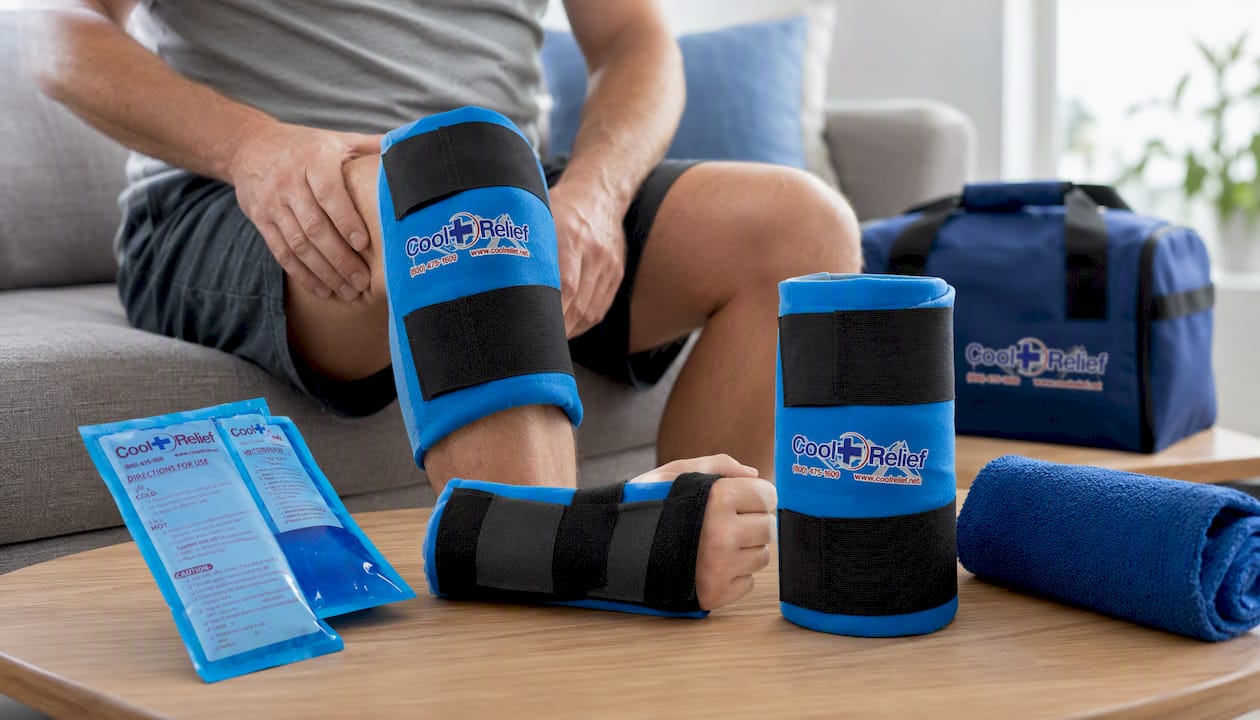
For general swelling, sprains, or post-workout soreness across larger areas like the back, hip, or shoulder, the Large Universal Soft Compression Ice Wrap gives you adjustable, even pressure without needing a separate elastic bandage layered on top. If you’re dealing with a sprained wrist, a repetitive strain injury, or post-fracture swelling, the Wrist Ice Pack is sized specifically for that joint rather than forcing a bulky pack to conform to a small area. Knee pain, whether from arthritis, a sports injury, or post-surgical recovery, calls for the Knee Ice Pack Soft Gel, molded to stay in place through normal movement instead of sliding off mid-session.
Each wrap uses reusable soft gel, so there’s no ice tray, no leaking bag, and no bunched-up towel trying to act as a barrier. Freeze it, wrap it snugly, and you’re set for a full 20 minute session with even compression built in. Browse the full Cool Relief lineup to find the right fit for your specific injury or recovery stage, and get one shipped to your door before your next flare-up catches you without a plan.
Where This Article’s Research Comes From
The clinical claims here draw from peer-reviewed trials and institutional guidance rather than general wellness advice. The narrative review on cold and compression management covers musculoskeletal injuries and orthopedic procedures broadly, including the post-operative knee arthroplasty evidence referenced throughout this piece. The tissue cooling comparison study supplies the specific intramuscular temperature figures for different compression types. Athletic recovery data comes from research comparing cryocompression to passive recovery, while more recent controlled protocols appear in the cryocompression clinical trial. Modality selection guidance reflects UCSF’s pain management resources, and safety parameters follow Johns Hopkins Medicine’s cryotherapy guidelines. None of this replaces a one-on-one conversation with your doctor or physical therapist about your specific injury.
This article is general information, not a substitute for advice from a qualified doctor. Consult a qualified healthcare professional about your own circumstances before acting on anything here.
Sources
- Cold and compression in the management of musculoskeletal injuries and orthopedic operative procedures: a narrative review
- Cryocompression clinical trial (PubMed 42318261)
- Cryotherapy cold therapy for pain management | Johns Hopkins Medicine
FAQ
Should I Ice With Compression?
Yes, in most cases. Compression improves contact between the cold pack and your skin, which produces significantly deeper tissue cooling, with one study showing an intramuscular temperature drop of about 9.4°C with elastic wrap compression versus 5.6°C with no compression after 30 minutes.
Can You Do Compression and Ice at the Same Time?
Yes, applying them together is the standard cryocompression approach and is generally more effective than using either one alone for acute swelling. Use a soft compression ice wrap or an elastic bandage wrapped snugly around a cold pack, always with a fabric barrier against bare skin.
Should I Do Ice or Compression First?
Apply them together rather than sequentially for the best result. Wrap the compression bandage around the ice pack itself, or use a combined product like a soft gel compression wrap, so cooling and pressure happen simultaneously from the start of the session.
Why Is Ice No Longer Recommended for Injuries?
Ice hasn’t been ruled out. Some recent discussion questions whether ice alone should be the only step for injuries because it may slightly delay certain healing processes, but current evidence still supports cold and compression together for managing acute swelling and pain, particularly in post-operative and orthopedic settings. The debate centers on ice used in isolation and for extended periods, not on short, well-monitored cryocompression sessions.
Share and get 15% off!
Simply share this product on one of the following social networks and you will unlock 15% off!