


Heat works best for chronic or subacute knee stiffness and as a warmup before activity. Skip it if your knee is actively swollen, hot to the touch, or freshly injured. For most stiff, achy knees, apply moist heat or a low-level heat wrap for 10 to 20 minutes before you move around, and stop right away if the joint looks or feels inflamed. Research from Frontiers and clinical guidance backed by PMC both support this approach, and Certain therapeutic product makers build products around exactly this kind of safe, everyday use.
TL;DR:
- Heat therapy is most effective for chronic knee stiffness and should be used before activity, not during active swelling or fresh injuries.
- Applying moist heat for 10 to 20 minutes can improve flexibility and dull pain, but it cannot repair cartilage or reverse structural damage.
- Safety depends on avoiding heat if the knee is inflamed, has open wounds, or if there is reduced sensation due to nerve damage or medical conditions.
- Using heat as a warm-up improves movement, which is essential for long-term recovery, especially when combined with gentle exercises.
- Reusable soft gel wraps provide controlled, safe heat application suitable for daily use and can be paired with cold therapy after activity.
Table of Contents
- When to Use Heat for Knee Pain (And When to Skip It)
- How Heat Actually Relieves Knee Pain
- How to Apply Heat to Your Knee Safely
- Safety Rules and When to Call a Doctor
- Using Heat to Support Exercise and Rehab
- Cool Relief Products Built for Safe Heat Use
- Our Take: Heat Is a Tool for Movement, Not a Substitute for Care
- Ready to Add Heat Therapy to Your Knee Routine?
- Sources
- FAQ
When to Use Heat for Knee Pain (And When to Skip It)
The rule of thumb is simple: heat calms down old pain, ice calms down new damage. If your knee has been swollen for less than 72 hours or you just twisted it playing pickleball, that’s acute. Reach for ice. If you’ve had the same dull ache or stiffness for six weeks or longer with no fresh swelling, that’s chronic, and heat is usually the better call. Subacute sits in between, roughly the second and third week after an injury, when swelling has faded but stiffness remains.
Several common knee problems tend to respond well to heat:
- Osteoarthritis, where heat therapy is often preferred over ice because it relaxes surrounding muscles and improves flexibility, according to a PMC expert opinion review
- Chronic tendinopathy around the patella or hamstring insertion
- Stiffness after a cast, brace, or long period of limited movement
- Generalized muscle tightness around the joint from overuse or sitting too long
A practical sequencing rule: use heat before movement to loosen the joint, and save ice for after activity if new swelling shows up. That order matters more than most people realize.
How Heat Actually Relieves Knee Pain
Heat doesn’t mask pain so much as change the conditions around the joint. Warming the skin and underlying tissue triggers vasodilation, meaning blood vessels widen and blood flow to the area increases. That extra circulation delivers more oxygen and nutrients to the tissue and helps flush out some of the chemical byproducts that build up in stiff, overworked muscles.
At the same time, heat raises local tissue metabolism and relaxes muscle fibers around the knee, which reduces stiffness and can dull pain signals at the nerve level. This isn’t a guess. A narrative review in PMC found that superficial heat therapy produces measurable short-term improvements in both pain and mobility.
Here’s what the evidence actually shows heat can and can’t do:
- It provides small-to-moderate short-term relief for pain and stiffness, particularly in arthritic and chronically tight knees
- It improves joint flexibility enough to make stretching and exercise more comfortable
- It does not repair cartilage, reverse arthritis, or fix structural damage on its own
Quick fact: Reviews of low-level continuous heat use found it improved both pain scores and home-exercise compliance when paired with physical therapy, not used alone.
Heat is a tool that opens the door to movement. Movement is what actually drives long-term recovery.
How to Apply Heat to Your Knee Safely
Getting the method right matters as much as deciding to use heat in the first place. Follow these steps for a safe, effective session:
- Choose your heat source. A low-setting electric heating pad, a warm moist towel, a warm bath or shower, or a low-level continuous heat wrap all work well. Microwaveable gel packs can overheat unevenly, so check them carefully before applying.
- Wrap it, don’t press it raw. Place a thin cloth barrier between any heat source and bare skin, especially with electric pads.
- Time it. Short sessions of 10 to 20 minutes work for most people, a range echoed in Harvard Health’s guidance on heat and cold therapy. Product-directed low-level continuous wraps can run longer, but always follow the specific product instructions.
- Space out sessions. Give your skin at least an hour or two between applications, and never sleep with an active heat source on your knee.
- Check your skin. Do a blanch test: press the skin, and if it turns white then pink again quickly, circulation is fine. If skin stays red, feels numb, or looks mottled, stop.
If you have diabetes, neuropathy, or reduced sensation in your legs, use lower temperatures and check skin more often, since you may not feel a burn forming until damage has already started.
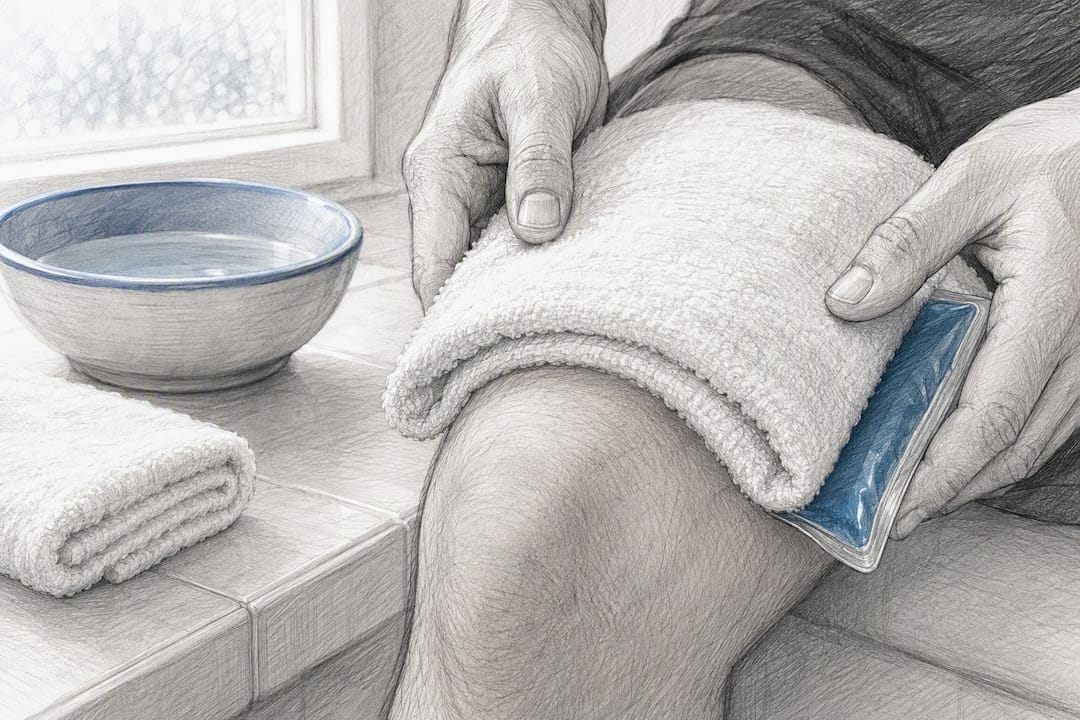
Pro Tip: Moist heat tends to penetrate tissue more effectively than dry heat. Lay a damp, warm towel between your skin and a non-powered gel pack for the benefits of moist heat without the risk of combining water and electronics.
Safety Rules and When to Call a Doctor
Heat isn’t the right choice for every knee, and knowing when to avoid it protects you from making things worse. Don’t apply heat if you have:
- Active swelling, redness, or a knee that’s warm to the touch already
- Open wounds, recent stitches, or broken skin near the joint
- Reduced sensation from neuropathy, diabetes, or nerve damage, which raises burn risk without you realizing it
- Peripheral vascular disease, where impaired circulation makes heat regulation unpredictable
Certain symptoms are red flags no heating pad should be used to manage. Fever alongside knee pain, rapidly worsening swelling, an inability to bear weight, or visible redness spreading up the leg all point to possible infection or a more serious injury. See a clinician promptly if any of these show up, according to safety guidance compiled by Hinge Health.
If you’re ever unsure whether heat is appropriate, the safer move is to pause and check with a primary care doctor, physical therapist, or orthopedist before continuing.
Using Heat to Support Exercise and Rehab
Heat works best as a warmup act, not a standalone fix. Apply it right before stretching or a physical therapy session, since loosened tissue moves through a fuller range of motion with less discomfort. This timing matters more than most people assume.
A randomized controlled trial tested low-level continuous heat used before home exercise in people with chronic knee pain. The heat group showed significantly better pain reduction, improved range of motion, and higher rates of sticking with their home exercise program compared to a placebo group.
A simple routine that reflects this research:
- Apply heat for 15 to 20 minutes to loosen the joint
- Do a light warmup, like walking or gentle cycling
- Move into your prescribed exercises or stretches
- Apply ice afterward only if you notice new swelling
Pairing heat with a consistent exercise habit, rather than using it in isolation, is where the real payoff shows up.
Cool Relief Products Built for Safe Heat Use
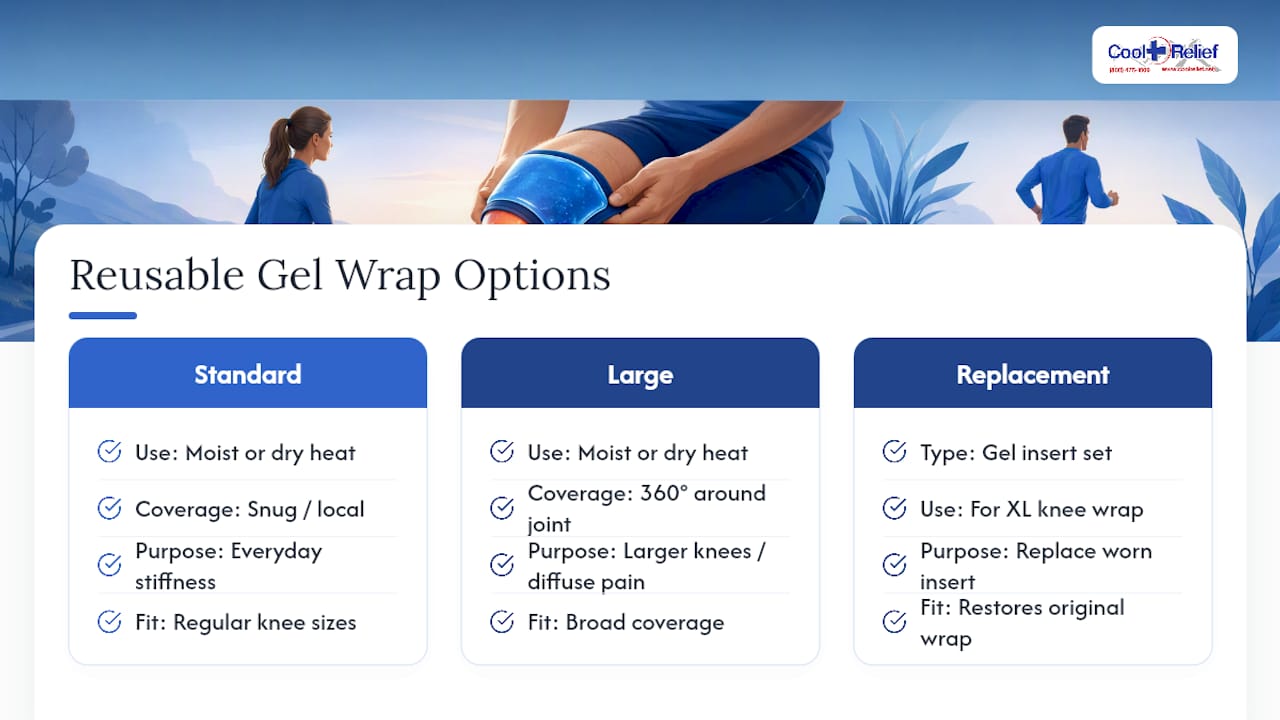
Some companies focus on reusable soft gel wraps that adapt to both hot and cold therapy, which fits naturally with the low-level, controlled application this article recommends. Three products cover most knee-pain scenarios.
The Knee Ice Pack Soft Gel works well for standard moist or dry heat sessions, wrapping snugly for everyday stiffness. The Large Soft Gel Pack for Knee 360 Coverage suits anyone who needs broader coverage around the whole joint, useful for larger knees or more diffuse pain. The Replacement Gel Ice Pack Insert Set for XL Knee Wrap keeps an existing wrap in service once the original insert wears out.
Pair any of these with a damp towel for moist heat benefits, and always check the included instructions for session timing.
Our Take: Heat Is a Tool for Movement, Not a Substitute for Care
Heat therapy works best when you treat it as a bridge to activity, not a finish line. The evidence backs short, controlled sessions before exercise, not marathon heating with no follow-through on movement. If knee pain persists past a few weeks or keeps interrupting daily life, talk to a clinician instead of relying on heat alone. Use it to get moving, not to avoid moving forward.
— Cool Relief
Ready to Add Heat Therapy to Your Knee Routine?
Reusable gel wraps solve a real problem with drugstore heating pads: most are either too stiff to fit the knee’s curve or too hot in one spot to use safely for a full session. Soft gel technology molds to the joint and holds a steady, controlled temperature, which matches the low-level heat approach the research supports.
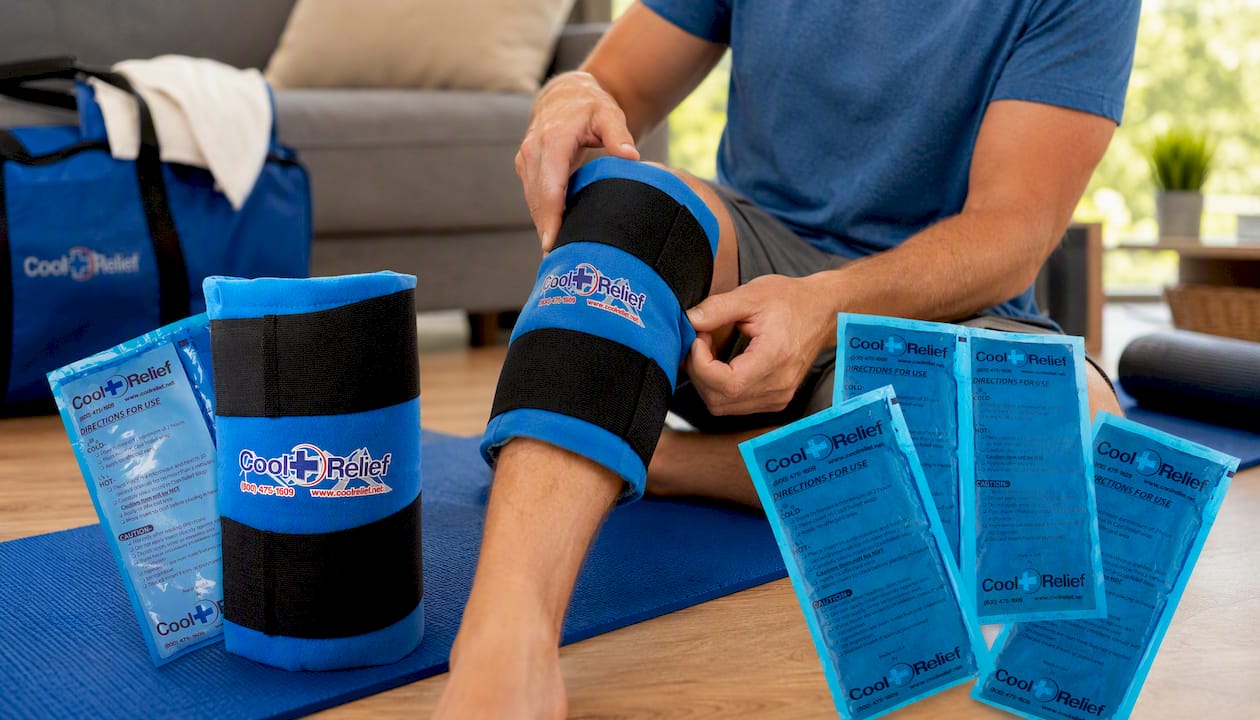
The Knee Ice Pack Soft Gel handles daily stiffness and pre-exercise warmups. The Large Soft Gel Pack for Knee 360 Coverage wraps the entire joint for broader relief. Already own a wrap that’s lost its punch? The Replacement Gel Ice Pack Insert Set for XL Knee Wrap brings it back to life without buying a whole new setup.
Read the instructions that come with each product, and check with a clinician if your knee pain doesn’t improve. Then browse the full lineup at Cool Relief to find the wrap that fits your knee and your routine.
FAQ
What’s the biggest mistake people make with bad knees?
The most common mistake is avoiding movement altogether out of fear of making pain worse. Heat and ice can ease symptoms, but staying active with appropriate exercise is what actually protects knee function long term.
What’s the fastest way to relieve knee pain?
There’s no instant fix, but pairing heat with gentle movement tends to work faster than either alone. Apply heat for 10 to 20 minutes to loosen the joint, then move into light stretching or a short walk.
How long should you leave a heating pad on your knee?
Most sessions should last 10 to 20 minutes, based on guidance from Harvard Health. Low-level continuous heat wraps can run longer if the product instructions say so, but always check skin regularly.
Is heat or ice better for an arthritic knee?
Heat is generally the better choice for arthritic knees because it relaxes muscles and improves flexibility, according to a PMC review. Ice is better reserved for flare-ups with active swelling.
Can I use heat and ice together for knee pain?
Yes, many people use heat before activity to loosen the joint and ice afterward if new swelling appears. This sequencing is supported by clinical guidance and works well with a reusable wrap like Cool Relief’s knee products.
Share and get 15% off!
Simply share this product on one of the following social networks and you will unlock 15% off!