


Heat works best for lower back pain that comes from muscle tightness, stiffness, or ongoing backache, warming tissue and easing tension within minutes. Ice is the better call for a fresh injury or visible swelling, especially in the initial days after injury. Skip heat entirely if you have an open wound, an infection, or numbness in the area. Get that part right, and everything else about treating a sore lower back gets a lot simpler.
TL;DR:
- Use cold therapy within the first 72 hours after injury, especially if swelling, warmth, or sharp localized pain is present.
- Switch to heat therapy for muscle stiffness, chronic pain, or increased discomfort in cold weather once the initial inflammation subsides.
- Always wrap heat sources with a barrier, limit sessions to 15-20 minutes, and avoid heat on open wounds, infections, or areas with reduced sensation.
- Pair heat application with gentle movement or stretching to maximize pain relief and support functional improvement.
- Avoid heat if signs of infection, deep vein thrombosis, or neurological symptoms occur, and consult a doctor for persistent or worsening issues.
Table of Contents
- When to Use Heat vs. Ice for Lower Back Pain
- How Heat Helps: Physiology and Clinical Evidence
- How to Apply Heat Safely for Lower Back Pain
- When Not to Use Heat and Warning Signs to Watch For
- Using Heat With Movement and Physical Therapy
- How to Choose a Heat Product for Your Lower Back
- Soft Gel Back Heat Wrap: Where It Fits
- Our Take: Heat Works, But Only Alongside Smart Habits
- Reach for the Soft Gel Back Heat Wrap Before Your Next Flare-Up
- Sources
- FAQ
When to Use Heat vs. Ice for Lower Back Pain
The mix up most people make isn’t choosing the wrong therapy. It’s applying the right one at the wrong time. Lower back pain generally falls into three phases, and each one calls for a different approach.
Acute pain hits in the first 72 hours after a strain, lift, or twist. If the area feels warm, swollen, or you can pinpoint the moment it happened, you’re in this window. Subacute pain runs from about day 3 to six weeks, when the initial inflammation has settled but stiffness and soreness linger. Chronic pain is anything sticking around past three months, often showing up as a dull, tight ache that flares with sitting, sleeping wrong, or overdoing it at the gym.
Here’s the rule of thumb that covers most situations:
- Ice first 48 to 72 hours after any injury where swelling is likely, such as a fall, a sudden twist, or a lifting strain that caused immediate sharp pain.
- Heat for muscle tightness, spasms, and stiffness that build up gradually rather than strike all at once.
- Heat for chronic, nonspecific low back pain without a clear injury, especially if it worsens with cold weather or long stretches of sitting.
- Heat before activity to loosen tissue and improve range of motion before a workout, walk, or physical therapy session.
- Alternate the two once swelling has gone down but stiffness remains: ice calms inflammation, heat then loosens the muscles guarding around it.
A sample schedule looks like this: someone strains their back lifting a couch on Saturday. Ice for 15 to 20 minutes every few hours through Sunday and Monday keeps swelling in check. By Tuesday, once the sharp, hot sensation has faded into a dull, achy tightness, heat takes over, applied before stretching and again in the evening to ease the day’s tension.
Before reaching for either, run through this quick checklist:
- Did the pain start suddenly with a specific movement, or has it built up over days or weeks?
- Is the area swollen, warm to the touch, or bruised?
- Does the pain feel sharp and localized, or dull and diffuse?
- Has it been more than 72 hours since the injury, if there was one?
- Is movement or stretching easier or harder when the area is warm?
If you answered “sudden,” “swollen,” and “sharp,” reach for ice. If you answered “gradual,” “no swelling,” and “dull,” heat is your starting point. Johns Hopkins Medicine’s guidance on ice packs versus warm compresses backs this same split: cold for fresh injuries and swelling, heat for muscle tightness and chronic discomfort.
How Heat Helps: Physiology and Clinical Evidence
Heat works by widening blood vessels in the treated area, a process called vasodilation. More blood flow means more oxygen and nutrients reaching tight, fatigued muscle tissue, and that helps muscles release rather than stay clenched around an irritated nerve or joint. Heat also reduces protective muscle spasms, the involuntary guarding your body does when it senses something’s wrong in your lower back.
There’s a nervous system piece to this too. Warmth activates nerve fibers that compete with pain signals for your brain’s attention, a mechanism related to what’s known as gate control theory. Applying heat essentially gives your nervous system something else to process, which can turn down the volume on pain signals traveling from your lower back.
A systematic review of nine trials covering 1,117 participants found that continuous low-level heat wrap therapy produced a small but real short-term reduction in pain and disability for acute and subacute low back pain. That’s a meaningful finding, but the review, published through the National Institutes of Health, is also clear about its limits: the benefit is short-term and modest, not a cure, and evidence for cold therapy in the same context is too thin to draw firm conclusions either way.
Some of those same trials found that continuous low-level heat wrap therapy, worn for several hours a day, outperformed acetaminophen or ibuprofen for short-term pain relief in acute nonspecific low back pain, according to the same NIH-published review. That’s worth sitting with if you’ve been reaching for pills before trying a wrap.
Heat’s real limitation is that it treats the symptom, not the structural cause. It won’t fix a herniated disc or correct poor posture mechanics. What it does is calm the muscle guarding and stiffness that make an underlying issue feel worse, which is often enough to let you move, stretch, and function while the real healing (or the real diagnostic work) happens elsewhere.
How to Apply Heat Safely for Lower Back Pain
Not all heat sources work the same way, and picking the wrong one for the situation is where most people run into trouble.
Moist heat, like a warm, damp towel or a hydrocollator pack, penetrates deeper than dry heat because moisture conducts warmth more efficiently into muscle tissue. Electric heating pads offer steady, adjustable warmth but need more caution around skin contact and unattended use. Continuous low-level heat wraps are worn under clothing and deliver gentle heat for hours at a time, which is the format behind most of the positive clinical trial results. Warm baths provide full-body relaxation but are harder to target directly at the lower back. Wheat or grain bags heated in a microwave are popular and effective, but they carry a real risk if overheated.
Follow these steps for any heat session:
- Add a barrier. Wrap the heat source in a thin towel rather than placing it directly on skin, even if the product says it’s safe for direct contact.
- Check your skin every 5 to 10 minutes. Look for redness, blotching, or a burning sensation. Stop immediately if you see any of these.
- Keep sessions to 15 to 20 minutes for a hot pack or heating pad. For continuous low-level heat wraps, follow the manufacturer’s guidance, which is often longer since the heat output is lower.
- Never fall asleep with an active heat source, especially electric pads or reheated grain bags, since prolonged unsupervised exposure is how burns happen.
- Let grain-filled packs cool completely before reheating, and never exceed the manufacturer’s microwave time. Research on heating device safety has documented burn and even scorching risk when these limits get ignored.
If you’re using an electric pad, a few extra rules apply. Check the cord for fraying or damage before every use. Never use it on wet or damp skin. Choose one with an auto shut-off feature, since falling asleep with a pad stuck on high for hours is a common and preventable cause of burns.
Pro Tip: Warm up before exercise or a physical therapy session, not just after. A brief 10 to 15 minutes of heat loosens tight tissue and makes stretching noticeably more comfortable. Keep a cool compress nearby too, just in case heat brings on unexpected swelling instead of relief.
When Not to Use Heat and Warning Signs to Watch For
Heat isn’t the right call for every kind of back pain, and using it in the wrong situation can genuinely make things worse.
Skip heat entirely if you have any of the following:
- Open wounds, cuts, or recent surgical incisions in the treatment area, since heat can increase bleeding and interfere with healing.
- Signs of infection, including redness that spreads, fever, or unusual warmth localized to one spot.
- Acute swelling in the first 48 to 72 hours after an injury, when ice is the better choice.
- Reduced sensation, such as diabetic neuropathy, which raises the risk of burns because you can’t reliably feel when the heat is too intense.
- Recent steroid injections, unless your clinician has specifically cleared heat use afterward.
Beyond contraindications, certain symptoms mean it’s time to stop self-treating and call a doctor. Fever alongside back pain, progressive weakness or numbness in your legs, changes in bowel or bladder control, and pain that wakes you up repeatedly at night or keeps worsening despite rest are all red flags that point to something beyond routine muscle strain. Spine-Health’s clinical guidance on heat therapy for lower back pain echoes this same caution around escalating or neurological symptoms.
A few situations deserve extra care. If you’re pregnant, check with your provider before using heat on your lower back, particularly heating pads with higher or unregulated temperatures. If you suspect a deep vein thrombosis, meaning localized swelling, warmth, and pain in a leg, avoid heat and seek immediate medical evaluation, since heat can worsen clot related complications. And if you’re recovering from back surgery, follow your surgeon’s specific instructions on when heat is appropriate. Post-op timelines vary and heat applied too early can interfere with healing.
Using Heat With Movement and Physical Therapy
Heat works best as a warm-up act, not a substitute for movement. Applying it right before stretching or exercise loosens muscle fibers, increases blood flow to the area, and genuinely reduces the pain you feel when you push into a stretch that would otherwise feel too tight to attempt.
A simple, effective routine looks like this:
- Apply heat for 10 to 20 minutes to the lower back before any planned activity.
- Follow with gentle mobility work, such as knee-to-chest stretches, cat-cow movements, or a short walk.
- Move into strengthening or a scheduled physical therapy session while the tissue is still warm and pliable.
Trials on continuous low-level heat wrap therapy found that pairing heat with exercise reduced pain more, and faster, than heat alone within seven days. Warmed tissue tolerates stretching and light loading better, which means people stick with their rehab exercises more consistently instead of avoiding them out of discomfort. If you’re working with a physical therapist, a simple routine like the ones outlined in these lower back exercises pairs naturally with a short heat session beforehand.
One caution worth repeating: don’t apply heat immediately after an intense workout or activity if you suspect you’ve aggravated inflammation, since warmth can amplify swelling in actively inflamed tissue. If you’re unsure whether your pain is inflammatory or just muscular tightness, that’s a good moment to loop in a clinician rather than guess. And if pills aren’t your preferred first step, there are other drug-free approaches to lower back relief worth building into a broader routine alongside heat and movement.
How to Choose a Heat Product for Your Lower Back
The right heat product depends less on brand and more on matching the tool to how you’ll actually use it.
Start with your use case. A large electric heating pad suits occasional, at-home relief when you can sit still for 15 to 20 minutes. A continuous low-level heat wrap fits chronic stiffness better, since it’s designed for hours of wear under clothing rather than a single focused session. Moist heat sources, like a hydrocollator pack or a warm damp towel, deliver deeper penetration when surface warmth alone isn’t cutting it.
Safety features matter more than most shoppers realize. Prioritize:
- Auto shut-off, so the pad can’t run unattended for hours.
- Adjustable temperature control, giving you a low setting for sensitive skin or longer wear.
- A washable, removable cover, both for hygiene and for comfort against bare skin.
- Compatibility with a fabric barrier, since direct high heat on skin raises burn risk regardless of how well-designed the product is.
- Clearly stated heating limits in the manufacturer’s instructions, particularly for microwaveable or grain-filled options.
Consumer testing on heating pads consistently flags fit and coverage as underrated factors. A pad or wrap that’s too small to cover your full lower back forces you to reposition constantly, which undercuts the whole point of steady, even warmth.
Beyond safety, think practically about power source and upkeep. Corded electric pads need an outlet nearby, which limits mobility during use, while wearable wraps let you keep moving around the house. Check whether the cover is machine washable, since sweat and skin contact build up over repeated use. On budget, a well-made reusable wrap usually costs more upfront than a basic pad but saves money over time compared to single-use gel packs you replace repeatedly.
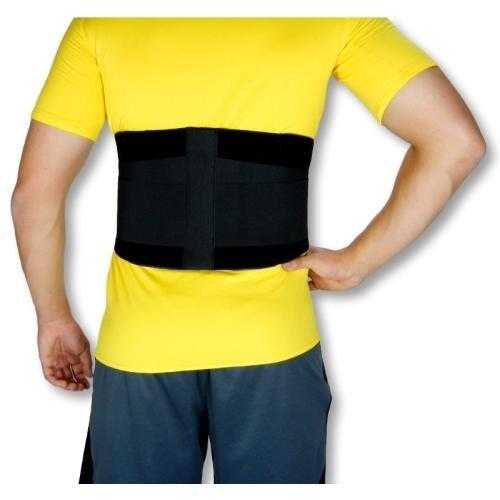
Soft Gel Back Heat Wrap: Where It Fits
Cool Relief builds its products around one core idea: pain relief tools should adapt to how you actually move through your day, not force you to sit still in one spot. That focus on reusable, soft gel technology runs through the entire product lineup, and the Soft Gel Back Heat Wrap was built specifically around the lower back’s shape and the way pain there tends to behave.
Against the selection criteria that matter most, the wrap is designed for full lower back and lumbar coverage rather than a narrow strip that only warms part of the area. It’s reusable, meaning no replacing single-use packs every time stiffness flares up, and it’s built for fabric barrier compatibility, so you can layer it appropriately rather than applying gel directly against bare skin.
If you’ve read through the safety and selection guidance above and want a product that maps directly onto those criteria, the wrap’s product page has full sizing and usage details.
Our Take: Heat Works, But Only Alongside Smart Habits
Here’s what we’d tell a friend asking about this: heat is genuinely one of the most useful tools you have for ordinary muscle tightness and chronic backache, but it’s not magic, and it’s not interchangeable with ice. Use ice for the first couple of days after a real injury when swelling is likely. Switch to heat once that acute stage passes, or reach for it straightaway if your pain built up gradually rather than struck all at once.
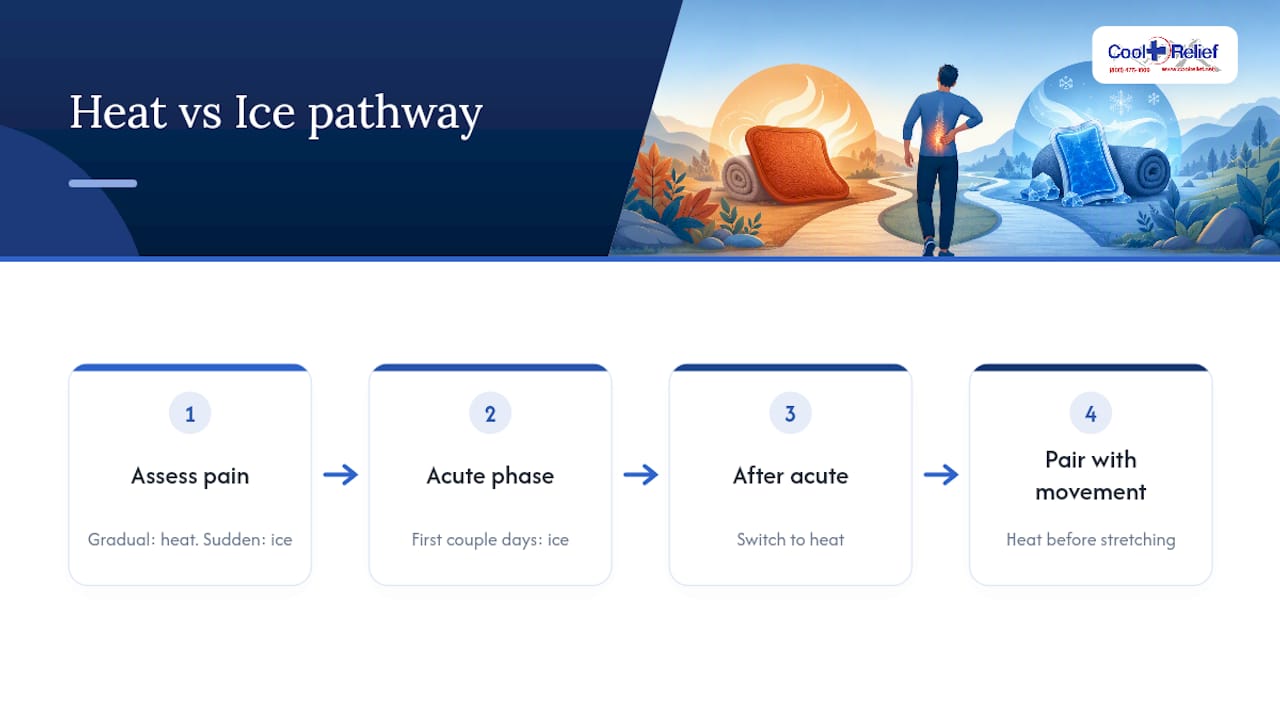
The precaution list matters as much as the benefit. Skip heat on open skin, active infection, or numbness, and treat fever, leg weakness, or bladder changes as your cue to call a doctor, not to grab a heating pad and wait it out.
What we think gets underplayed is the pairing with movement. Heat alone eases discomfort for a while, but heat before stretching or a physical therapy session is where the real functional improvement happens. Non-pharmacological options like this deserve more credit than they usually get, especially for people trying to manage chronic stiffness without leaning on medication every day.
— Cool Relief
Reach for the Soft Gel Back Heat Wrap Before Your Next Flare-Up
If your lower back tightens up every time you sit too long, sleep wrong, or push through a workout, the Soft Gel Back Heat Wrap gives you steady, wearable warmth without tying you to a couch and an outlet.
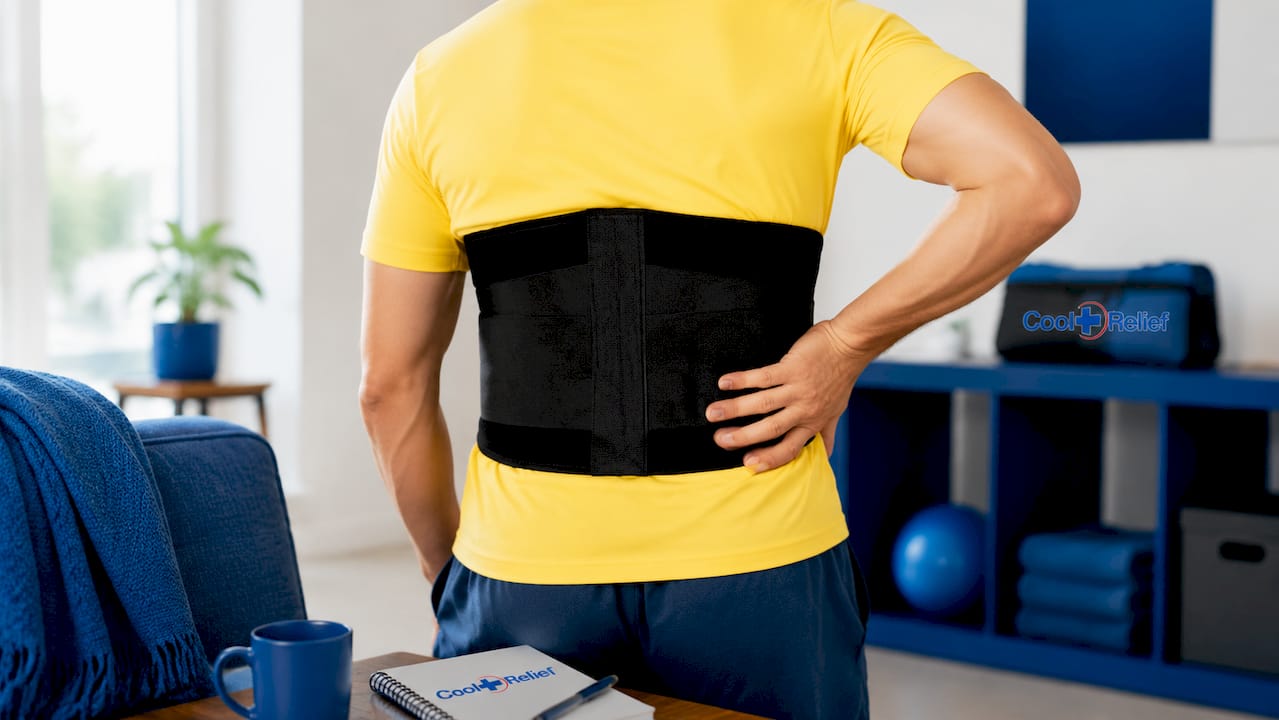
It’s built around the same soft gel technology across Cool Relief’s lineup, designed to contour to your lower back rather than sit flat like a basic pad. That means real coverage across the lumbar area, not just a warm patch in the middle. It’s reusable, so you’re not restocking single-use packs every time your back acts up, and it’s made to be layered with a fabric barrier for comfortable, safer contact during longer wear.
Whether you’re warming up before a walk, easing into a stretching routine, or just getting through a long day at a desk, this wrap is built for exactly that kind of everyday, low-level relief. Head to the product page to check sizing and pick one up before your next flare-up catches you without it. For broader relief options across your body, Cool Relief’s universal soft gel wrap is worth a look too.
Sources
For readers who want to dig into the original research and clinical guidance behind this advice, these sources are worth a direct read. The NIH-published systematic review on superficial heat and cold breaks down the trial data behind heat wrap therapy in detail. Johns Hopkins Medicine’s comparison of ice versus warm compresses offers clear, practical timing rules. Spine-Health’s overview of heat therapy covers how heat fits into broader back pain treatment. And the PubMed research on heat therapy mechanisms explains the physiological basis for why heat eases muscle tension.
- Superficial heat or cold for low back pain - PMC - NIH
- Ice packs vs warm compresses for pain - Johns Hopkins Medicine
- Benefits of Heat Therapy for Lower Back Pain - Spine-Health
FAQ
Is It Good to Put Heat on Your Lower Back?
Yes, for muscle tightness, stiffness, or chronic nonspecific pain, heat is a well-supported option. A systematic review of nine trials found continuous low-level heat wrap therapy produced a small, short-term reduction in pain and disability. Avoid it during the first 48 to 72 hours after a fresh injury if swelling is likely.
What Is the Fastest Way to Ease Lower Back Pain?
There’s no single fastest fix, but combining the right modality (ice for fresh swelling, heat for tightness) with gentle movement tends to work faster than either approach alone. Trials show pairing continuous heat wrap therapy with exercise reduced pain faster than heat by itself within seven days.
What’s the Worst Thing You Can Do for Back Pain?
Staying completely still for days on end usually makes back pain worse, not better, since prolonged inactivity stiffens muscles and slows recovery. Applying heat directly to a swollen, freshly injured area is a close second, since it can increase inflammation instead of easing it.
When Is Heat Not Good for Back Pain?
Avoid heat if you have an open wound, signs of infection, acute swelling within the first 48 to 72 hours of an injury, or reduced skin sensation from a condition like diabetic neuropathy. Also skip it if you’re experiencing fever, progressive leg weakness, or changes in bowel or bladder control, and see a doctor instead.
Share and get 15% off!
Simply share this product on one of the following social networks and you will unlock 15% off!