


Use heat for muscle tightness, stiffness, and most everyday post-exercise soreness. Skip heat on anything freshly injured, swollen, red, or hot to the touch. That’s when cold does the real work. Once you know which category you’re in, the how-to and safety details below will tell you exactly how warm, how long, and how often.
TL;DR:
- Heat is most effective for delayed onset muscle soreness, stiffness, and tension headaches, but should be avoided if there is swelling, redness, or recent injury.
- Applying heat safely involves wrapping the heat source in a towel, limiting sessions to 15-20 minutes, and monitoring skin for signs of burns or numbness.
- Cold therapy is preferable immediately after acute injury or swelling, while heat provides longer-lasting relief for stiffness and soreness beyond the initial phase.
- Moist heat penetrates tissues more effectively than dry heat, and the benefit depends heavily on reaching an adequate temperature and duration.
- Combining heat and cold therapy can be beneficial for athletes managing both swelling and muscle tightness, but should be done cautiously, especially with circulation issues.
Table of Contents
- When Should You Use Heat for Muscle Soreness?
- How Do You Apply Heat Safely?
- Heat or Cold: Which One Fits Your Situation?
- Which Type of Heat Works Best?
- What Does the Research Actually Show?
- Can You Combine Heat and Cold Therapy?
- Why Cool Relief Takes a Practical View on Heat
- Which Cool Relief Wrap Fits Your Soreness?
- Sources
- FAQ
When Should You Use Heat for Muscle Soreness?
Heat shines for the aches that build slowly, not the ones that show up all at once. If you’re dealing with delayed onset muscle soreness (DOMS), the deep, achy stiffness that shows up a day or two after a hard workout, heat is a solid pick. So is general muscle tightness from sitting at a desk all day, a stiff lower back after yard work, or shoulders that feel locked up from stress.
Heat works because it triggers vasodilation, widening blood vessels so more blood reaches the tissue. That extra circulation delivers oxygen and nutrients while helping clear out the metabolic byproducts that build up in sore muscles. Heat also relaxes muscle spasms and raises your pain threshold, which is why a warm shower after a tough leg day feels like relief instead of irritation.
Good candidates for heat:
- Chronic low-back stiffness or tightness
- DOMS starting 24 hours or later after exercise
- Tension headaches tied to neck and shoulder tightness
- Pre-activity warmup for stiff joints or muscles
Watch for red flags that mean heat is the wrong call: swelling, redness, warmth at the site, or any injury from the past two to three days. Cold therapy is preferred during that initial inflammatory window, and heat can actually make swelling worse.
How Do You Apply Heat Safely?
Getting the technique right matters as much as picking heat over cold in the first place. A burn from an overheated pack undoes any benefit fast.
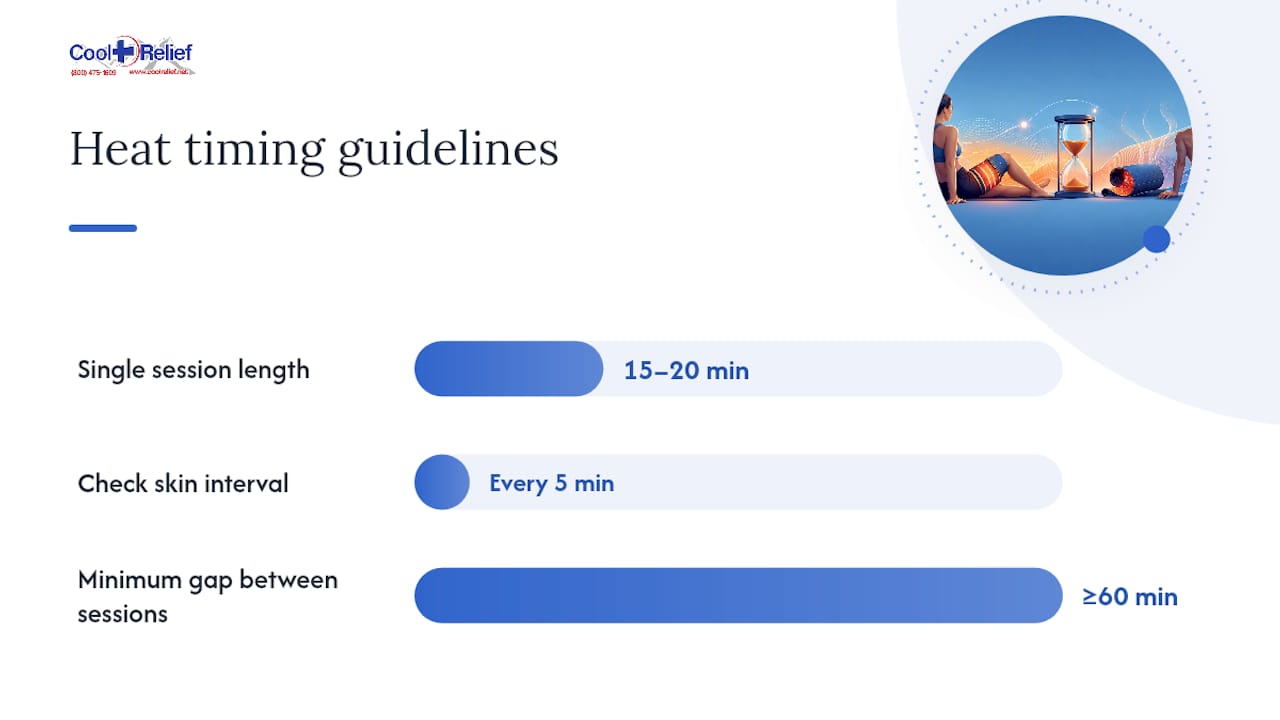
- Wrap any heat source in a thin towel. Never put a heating pad, hot pack, or wrap directly against bare skin.
- Apply for 15 to 20 minutes at a time. Longer sessions don’t add much benefit and raise burn risk.
- Check your skin every five minutes for the first few uses, especially with a new device.
- Repeat multiple times a day as needed for chronic stiffness, leaving at least an hour between sessions.
- Stop immediately if you notice numbness, unusual redness, or pain that gets worse instead of better.
Temperature matters more than people assume. Once skin contact climbs above roughly 113°F, it starts to hurt, and above 122°F, burn risk rises fast. If you have diabetes, neuropathy, or poor circulation, skip self-applied heat or check with a doctor first. Reduced sensation means you might not feel a burn forming until it’s already happened.
Pro Tip: Set a timer for every heat session. It sounds basic, but losing track of time while you relax on the couch is the single most common reason people end up with a heat burn.
Heat or Cold: Which One Fits Your Situation?
The short version: cold calms down acute swelling, heat loosens up stiffness and most DOMS once the acute phase has passed. A systematic review of 32 randomized controlled trials found that both heat and cold reduce DOMS pain, but they work best in different windows and for different problems.
Cold therapy applied promptly after a hard workout tends to blunt DOMS pain in the first 24 hours. Heat becomes more useful from that point onward, and its pain-relieving effect can hold steady well beyond 24 hours as circulation increases and spasms ease.
Here’s how that plays out in real situations:
- Twisted an ankle an hour ago and it’s swelling: use cold, not heat.
- Legs are stiff and achy two days after a long run: heat is your better bet.
- Neck is tight from hunching over a laptop all week: heat, ideally moist heat.
- Just had a cortisone shot or minor procedure: follow your clinician’s guidance, and lean toward cold if there’s any swelling involved. Readers recovering from a procedure should also check our guide to icing after knee surgery for timing specifics.
- Tendon pain that’s nagging rather than acute: this one depends on the stage of injury, and our breakdown of heat versus cold for tendonitis walks through it in more detail.
Which Type of Heat Works Best?
Not all heat is created equal, and the format you choose changes both comfort and effectiveness.
Moist heat, think a warm damp towel or a moist heating pad, transfers heat into tissue more efficiently than dry heat and usually feels more penetrating. A practical trick: wrap a warm, damp towel in a plastic bag before placing it over a heating pad. It holds moisture and stretches the effect longer.
Thermal dose, meaning temperature multiplied by time, is what actually determines how much benefit you get. If you can’t reach a high temperature safely at home, shorter, more frequent sessions still add up to meaningful relief.
When picking a method, run through this checklist:
- Hot-water immersion works well for larger muscle groups like legs and hips, but takes more setup.
- Electric heating pads offer steady, hands-free heat for the back or shoulders.
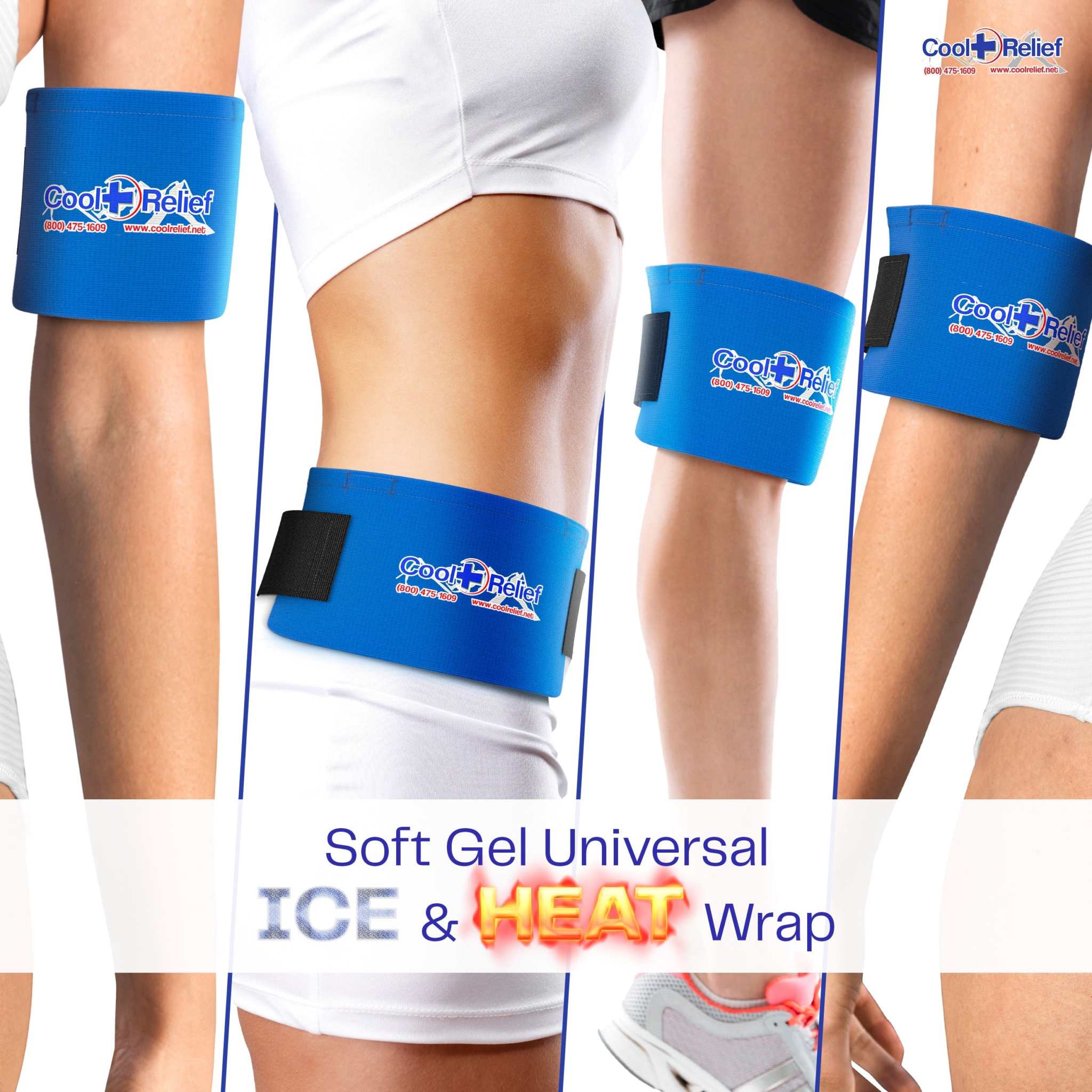
- Reusable heat wraps with gel inserts conform to joints and stay put during daily activity, which matters for areas like knees, elbows, and ankles.
- Hot packs from the microwave are convenient but cool quickly, so plan for reheating if you need a longer session.
What Does the Research Actually Show?
The evidence for heat is solid but not absolute. The meta-analysis of 32 trials found hot packs and hot-water immersion among the most effective interventions tested for DOMS, right alongside cold therapy. Neither modality won outright. Both reduced pain, just on somewhat different timelines.
Across the pooled trials, timing and dose came out as the biggest drivers of results, not which therapy a person chose.
Sports-medicine reviews back this up: applying heat promptly, and at an adequate temperature and duration, produces bigger effects than a half-hearted, delayed application. That’s the practical takeaway. Heat is a real, evidence-backed tool for easing soreness and improving comfort, but it’s not a shortcut that speeds up the underlying repair process. It manages symptoms while your body does the actual healing. The trials themselves vary a lot in design, duration, and populations tested, so treat any single number as a general signal rather than a guarantee for your specific case.
Can You Combine Heat and Cold Therapy?
Contrast therapy, alternating heat and cold, has a place for some people, mainly athletes managing heavy training loads who want both circulation benefits and swelling control.
- Apply heat for 15 to 20 minutes before activity to loosen tight muscles and improve range of motion.
- Switch to cold immediately after intense activity if any swelling shows up, then reassess after 48 to 72 hours.
- For casual exercisers without swelling, a single modality, usually heat for next-day soreness, is simpler and works just as well for most everyday aches.
Anyone with circulation problems, diabetes, or reduced skin sensation should get a clinician’s input before alternating temperatures, since rapid shifts add complexity that isn’t worth the risk without guidance.
Why Cool Relief Takes a Practical View on Heat
Most guidance on heat therapy stops at “apply a warm pack and see how you feel.” We think that undersells what a well-designed wrap actually does. Cool Relief builds soft gel wraps that adapt to the body part you’re treating instead of forcing a flat pad against a curved joint, which is where a lot of at-home heat therapy falls short on contact and comfort.
Some products exist because people need gear that holds its shape through movement, not just while lying still on a couch.
— Cool Relief
Which Cool Relief Wrap Fits Your Soreness?
Matching the wrap to the ache makes the difference between a product that sits in a drawer and one you actually reach for. Low-back stiffness that flares up after long days on your feet responds well to a wrap built for that curve of your spine, which is exactly what the Soft Gel Back Heat Wrap is shaped for, with lumbar support built into the design.
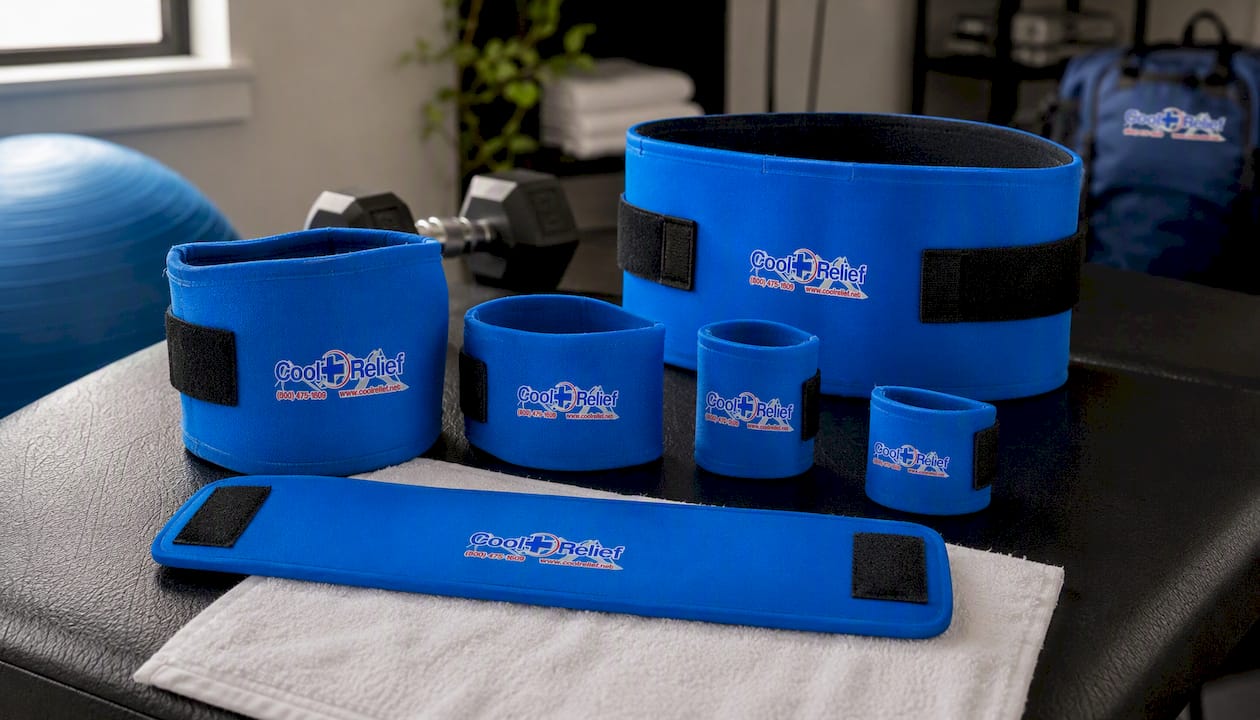
Neck and shoulder tightness, especially the kind that builds into tension headaches, is a different shape problem entirely. The Refreezable Cooling Ice Bandana wraps around that area for cold relief when swelling or tension headaches call for it instead of heat. For everything in between, elbows, thighs, ankles, wrists, the Soft Gel Universal Ice and Heat Wrap switches between hot and cold therapy in one product, so you’re not buying a separate wrap for every joint.
If you’re managing a more serious injury, a recent surgery, or pain that isn’t responding to home care, talk to your doctor or physical therapist before relying on any wrap. For everyday stiffness and soreness, browse Cool Relief’s ice and heat wraps and pick the one that matches where you hurt.
Sources
- Cold versus heat for pain relief: How to use them safely and effectively — Harvard Health
- Mechanisms by which heat relieves muscle soreness — PMC article
- Heat and cold therapy reduce pain in patients with delayed onset muscle soreness: A systematic review and meta-analysis
- Isolated and combined effects of cold, heat and hypoxia therapies on muscle recovery following exercise-induced muscle damage — Sports Medicine review
This article is general information, not a substitute for advice from a qualified doctor. Consult a qualified healthcare professional about your own circumstances before acting on anything here.
FAQ
Is heat good for extremely sore muscles?
Yes, for stiffness and DOMS beyond the first 24 hours, but not for muscles that are freshly injured, swollen, or bruised. In those cases, cold is the safer first step.
What helps muscle soreness go away fast?
Heat applied promptly, at a comfortable but adequately warm temperature, tends to produce faster relief than a lukewarm pack applied hours later, since thermal dose drives much of the benefit. Light movement and hydration also help.
What kind of pain gets worse with heat?
Pain from acute injuries with swelling, redness, or warmth, like a fresh sprain or a recent surgical site, can worsen with heat because it increases blood flow to tissue that’s already inflamed.
Which is better for muscle pain, heat or cold?
Both reduce pain in DOMS according to the 32-trial meta-analysis, but cold works best in the first 24 hours after acute strain or swelling, while heat is more useful for stiffness and soreness after that window.
Share and get 15% off!
Simply share this product on one of the following social networks and you will unlock 15% off!