


Ice for lower back pain works best in the first 24 to 72 hours after an acute strain or a sudden flare, when swelling and nerve firing are at their worst. Apply it for 15 to 20 minutes at a time, always with a thin barrier between the pack and your skin, according to Hopkins Medicine. The one rule that matters more than any other: never apply ice directly to bare skin, and never fall asleep with a pack in place. Cool Relief builds its wraps around exactly this guidance.
TL;DR:
- Ice is most effective within the first 24 to 72 hours after an acute lower back strain or flare, especially when swelling and nerve firing peak.
- Proper technique requires applying ice for 15 to 20 minutes with a barrier, targeting muscles not bones, and avoiding skin damage or falling asleep with the pack.
- Cold therapy is recommended mainly for recent injuries and is less supported for chronic stiffness or long-term degenerative pain, which may respond better to heat.
- Using soft-gel wraps or other stable application methods helps maintain contact and makes consistent icing easier, especially for the lower back.
- Switch to heat once inflammation subsides and symptoms shift to stiffness, and avoid ice if you have poor circulation, nerve issues, open wounds, or signs of serious neurological symptoms.
Table of Contents
- When Ice Helps: Acute Strains vs. Chronic Stiffness
- How Do You Apply Ice to Your Lower Back Safely?
- How Long and How Often Should You Ice Your Back?
- Should You Switch to Heat or Alternate the Two?
- Who Should Be Careful With Ice, and What Are Red Flags?
- What if Icing Doesn’t Help Your Back Pain?
- Why Soft-Gel Wraps Make Safe Icing Easier
- Which Cool Relief Wrap Fits Your Lower Back?
- Sources
- FAQ
When Ice Helps: Acute Strains vs. Chronic Stiffness
Ice earns its keep with acute back pain, meaning pain that shows up suddenly and is less than 72 hours old. Think of the moment right after you twist reaching for a bag in the trunk, or the ache that sets in an hour after a heavy lifting session at the gym. Cold narrows blood vessels near the surface (vasoconstriction), which slows local swelling and dulls nerve signals enough to take the edge off pain fast.
Chronic stiffness is a different animal. If your lower back has been tight for weeks without a new injury triggering it, ice usually does less for you than heat does. A Cochrane review of nine trials involving 1,117 participants found moderate evidence that heat wraps ease pain short term, while evidence for cold in low back pain was too thin and low quality to draw firm conclusions. That doesn’t mean ice is useless. It means the evidence base is smaller than most people assume, and clinicians still lean on it clinically for acute flares even without a mountain of trial data behind it, per Harvard Health Publishing.
Good candidates for ice include:
- A fresh strain from lifting, bending, or twisting awkwardly
- Swelling or warmth you can feel right after activity
- A flare that hit within the last day or two
Ice is a weaker match for long-standing stiffness or degenerative disc pain that hasn’t changed recently.
How Do You Apply Ice to Your Lower Back Safely?
Getting the technique right is what separates real relief from an ice burn. Follow these steps:
- Get comfortable first. Lie on your back with your knees bent and supported, or lie on your side with a pillow between your knees. You want your lower back muscles relaxed, not braced.
- Wrap it before you place it. A thin towel between the cold source and your skin prevents frostbite while still letting the cold through.
- Set a timer. Fifteen to 20 minutes is the target window, per Hopkins Medicine, and 10 to 20 minutes is the range most consumer health guidance sticks to, according to WebMD.
- Target the muscle, not the bone. Place cold over the paraspinal muscles running alongside your spine, not directly on the bony ridge of your spinal column itself, according to Spine-Health.
- Watch your skin. Pale, blotchy, or blue skin, or numbness that doesn’t fade quickly after removal, means stop immediately and let the area warm up.
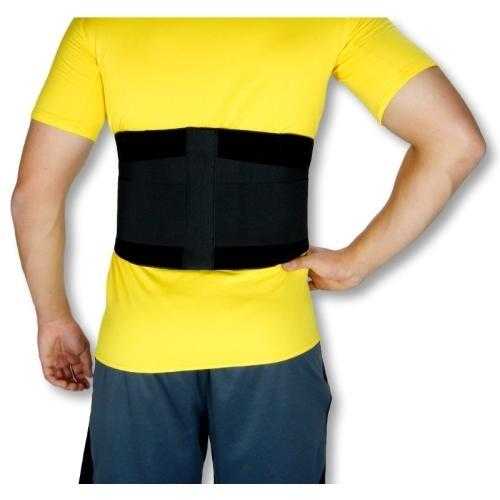
You have real options for how you deliver the cold. A soft-gel wrap that straps around your torso stays put without you holding it, which matters more than it sounds like it should. A flat ice pack works but tends to slide once you shift position. Ice massage, rubbing an ice cube or frozen cup in slow circles over sore tissue, is effective for a smaller, more targeted spot, but Spine-Health recommends capping it around 5 minutes since direct ice contact chills skin faster than a wrapped pack.
Pro Tip: Set a phone timer the moment you place the ice. It’s easy to lose track of time lying down, and going past 20 minutes doesn’t speed up relief, it just increases your risk of skin irritation.
For step-by-step positioning tips that translate well to the lower back, our ice wrap guide for post-knee surgery recovery covers the same skin-protection principles in more detail.
How Long and How Often Should You Ice Your Back?
Stick to 15 to 20 minute sessions, and during the first 24 to 72 hours after a flare, you can repeat every 1 to 2 hours while you’re awake. Once that acute window passes, cut back to 2 to 3 sessions a day as needed, tapering further as pain and stiffness ease.
Longer isn’t better here. Icing beyond the recommended window can actually stiffen the muscle you’re trying to loosen up, which works against the mobility you need for safe movement and recovery, according to Cleveland Clinic. A few practical guardrails:
- Always let skin return to normal temperature between sessions before icing again
- Track your pain on a simple 0 to 10 scale so you can see whether frequency needs adjusting
- Reduce sessions as soon as sharp pain fades into general soreness
If you’re icing five or six times a day and not noticing any change by day three, that’s a signal to reassess, not a reason to ice more.
Should You Switch to Heat or Alternate the Two?
Ice narrows blood vessels; heat opens them. That’s the entire logic behind switching. Once the acute inflammation calms down, usually somewhere in that 24 to 72 hour window, blood flow becomes more helpful than blood flow restriction, and heat starts to outperform ice for loosening tight, guarded muscles.
A simple way to think about it: use ice right after activity or during an early flare, and switch to heat for morning stiffness or later in the recovery process once swelling has settled. Cleveland Clinic frames it as matching the modality to your dominant symptom, cold for inflammation and acute pain, heat for stiffness and chronic tightness.
If you alternate the two, give your skin a full break between applications:
- Ice first, wait at least an hour, then heat if stiffness lingers
- Never overlap the two on the same skin at the same time
- Let redness or numbness fully resolve before switching modalities
Who Should Be Careful With Ice, and What Are Red Flags?
Ice isn’t right for everyone, and skipping this section is how people end up with frostbite or worse. Be cautious or skip ice entirely if you have poor circulation, diabetic neuropathy, cold urticaria (a cold-triggered skin reaction), open wounds, or unusually sensitive skin near the area.
Pregnant readers can generally use ice safely on the lower back for short sessions, provided it’s kept off the abdomen; check with your obstetric provider if pain is persistent or unusual.
Some symptoms mean ice at home isn’t the priority, a same-day medical evaluation is:
- New weakness in your legs or trouble walking
- Numbness in the saddle area (inner thighs, groin)
- New loss of bladder or bowel control
- Fever accompanying your back pain
Any of those four warrants urgent care, not a wrap and a heating pad.
What if Icing Doesn’t Help Your Back Pain?
Give self-care a real 48 to 72 hour window. If ice, rest, and gentle movement aren’t producing meaningful improvement by then, it’s time to get evaluated rather than keep icing indefinitely.
A clinician will typically sort out whether your pain is mechanical (muscle or joint) or has a neurologic component, and decide whether imaging or physical therapy makes sense. Ice doesn’t address the structural cause of back pain, it’s an adjunct that keeps you comfortable while your body (or your treatment plan) does the actual repair work, a point emphasized by Mayo Clinic. Bring notes on what helped and what didn’t:
- When the pain started and what triggered it
- Which modality (ice or heat) gave more relief
- How your pain scale number changed day to day
That record speeds up diagnosis more than you’d think. For non-drug approaches worth trying alongside ice, our guide on relieving low back pain without medication covers complementary strategies.
Why Soft-Gel Wraps Make Safe Icing Easier
The steps above only work if you actually follow them, and holding a lumpy ice pack in place for 20 minutes is harder than it sounds. That’s the practical problem Cool Relief’s soft-gel wraps solve: a wrap that straps around your torso keeps consistent, even contact without you having to hold it or reposition it every few minutes, which makes it easier to stick to the timing that actually produces relief. These wraps are a tool for applying the guidance above correctly, not a substitute for addressing what caused your pain in the first place.
— Cool Relief
Which Cool Relief Wrap Fits Your Lower Back?
Slippage and uneven contact are the two most common reasons people give up on ice too early, and Cool Relief’s lineup is built to solve both.
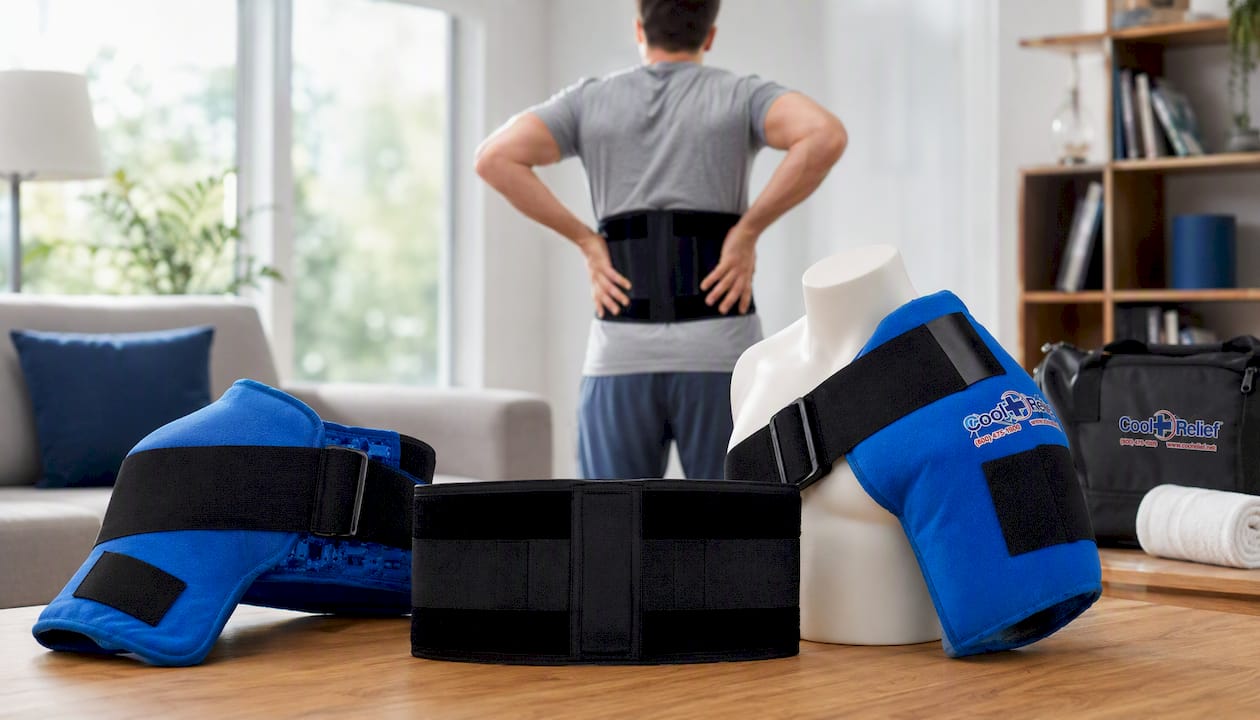
The Soft Gel Back Heat Wrap is shaped specifically for lumbar coverage, with soft-gel inserts you can freeze for cold therapy or warm for later-stage stiffness, so one product handles both phases of recovery. If you want broader, more stable coverage across the whole lower back, the Cool Relief Large Universal Soft Compression Ice Wrap straps in place and stays put through normal movement, solving the exact slippage problem a flat pack creates. And if you need something more versatile that can move between your shoulder, hip, or back depending on the day, the Soft Gel Shoulder Ice Wrap is refreezable and flexible enough to double up for smaller lumbar areas.
All three use soft-gel technology that stays pliable even when frozen, so it molds to your back instead of leaving cold, uncovered gaps. If your pain involves swelling that doesn’t fully resolve, pairing cold therapy with compression can help, an approach explained in more depth by Sacramento Bone & Joint’s overview of compression therapy. Browse the full lineup and find the wrap that matches your recovery stage at Cool Relief.
Sources
- Cryotherapy (cold therapy) for pain management — Johns Hopkins Medicine
- Superficial heat or cold for low back pain — Cochrane/PMC review
FAQ
Is It Better to Use Ice or Heat for Lower Back Pain?
Ice works best in the first 24 to 72 hours after a new strain or flare, when swelling and inflammation are active. Heat tends to help more once that acute window passes and stiffness or muscle tightness becomes the main complaint.
What Is the Fastest Way to Ease Lower Back Pain?
For a fresh strain, icing for 15 to 20 minutes combined with gentle supported rest (knees bent, lying down) tends to bring the quickest relief. Ice doesn’t fix the underlying cause, so pair it with gradual movement rather than complete bed rest.
What’s the Worst Thing You Can Do for Back Pain?
Prolonged strict bed rest and falling asleep with an ice pack in place are two of the most common mistakes. Extended inactivity slows recovery, and sleeping on an ice pack risks skin damage since you can’t monitor how your skin is reacting.
Can an Ice Pack Help With Lower Back Pain?
Yes, an ice pack can meaningfully reduce pain and swelling from an acute strain or flare when used for 15 to 20 minutes with a towel barrier between the pack and your skin. It’s less effective for long-term stiffness that isn’t tied to a new injury.
Share and get 15% off!
Simply share this product on one of the following social networks and you will unlock 15% off!