


For a swollen knee, wrap a cold pack in a thin towel, apply it for 15 to 20 minutes, and repeat several times a day during the first 48 to 72 hours. Keep your leg propped up so the knee sits above heart level while you ice. This combo, cold plus elevation, is the fastest, safest way to knock down swelling at home.
TL;DR:
- Icing should be limited to about 15 to 20 minutes per session with a barrier to prevent cold burns, especially for those with compromised circulation.
- Elevation combined with cold therapy is the most effective way to reduce swelling during the first 48 to 72 hours after injury.
- People with diabetes, neuropathy, or poor circulation need medical advice before regular ice use and should shorten sessions and monitor skin closely.
- If swelling persists beyond 72 hours, or if pain worsens, inability to weight bear, or signs of infection occur, seek medical evaluation promptly.
- Cold therapy reduces swelling by constricting blood vessels, lowering inflammatory markers, and diminishing pain signaling in the joint.
Table of Contents
- How to Ice a Swollen Knee Step by Step
- Who Should Be Careful With Ice, and Why
- When Icing Isn’t Enough: Red Flags to Watch For
- Why Cold Actually Reduces Knee Swelling
- Icing for a Fresh Injury vs. a Baker’s Cyst or Chronic Flare
- Cool Relief’s Take on Icing the Right Knee, the Right Way
- Get the Right Wrap for Your Knee
- Sources
- FAQ
How to Ice a Swollen Knee Step by Step
You don’t need anything fancy to get this right, but you do need to do it in the correct order. Here’s what to grab and how to use it.
What to use:
- A refreezable gel pack (this is what most people reach for first)
- A bag of crushed ice if that’s what’s in the freezer
- A bag of frozen peas or corn in a pinch, they mold to the knee better than a solid ice tray
Whatever you use, never let it touch bare skin. Wrap it in a thin towel or pillowcase first. Direct contact between ice and skin for more than a few minutes can cause a cold burn, and that’s an injury you don’t need on top of the one you’re already dealing with, per Johns Hopkins Medicine.
Here’s the workflow that works:
- Prepare the pack. Wrap your cold source in a barrier cloth. If you’re using a Cool Relief soft gel wrap, the fabric facing is already built in.
- Position yourself. Lie down or recline and prop your leg on pillows so the knee sits higher than your chest.
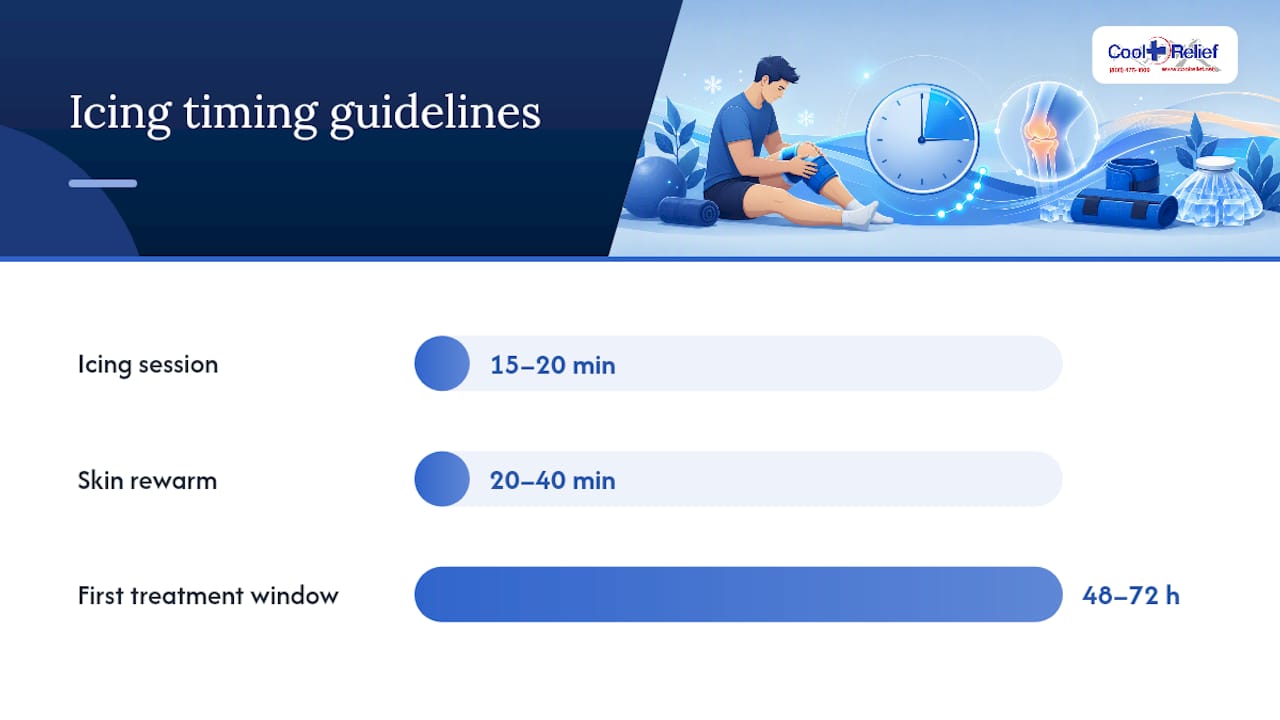
- Apply the ice. Keep it on for about 15 to 20 minutes, no longer.
- Remove and rest. Give your skin 20 to 40 minutes to rewarm before icing again.
- Repeat. Aim for multiple sessions across the day during the first 48 to 72 hours, based on Harvard Health guidance.
Adding light compression, like an elastic wrap, helps push fluid out of the joint faster than ice alone. Wrap it snug enough to feel supportive but not so tight that your toes go numb or change color. If they do, loosen it immediately.
Pro Tip: Keep a second gel pack in the freezer at all times. While one is icing your knee, the other is refreezing, so you’re never stuck waiting between sessions.
Who Should Be Careful With Ice, and Why
Icing is safe for most people, but a few groups need to adjust how they do it.
- People with diabetes or peripheral neuropathy often can’t feel when skin is getting too cold, which raises the risk of frostbite without warning signs.
- Anyone with poor circulation or Raynaud’s phenomenon should talk to a clinician before regular cold therapy, since restricted blood flow slows the skin’s ability to recover from cold exposure.
- Anyone icing directly against thin or already irritated skin is at higher risk even with a barrier in place.
The core safety rules apply to everyone: always use a cloth barrier, cap each session at about 20 minutes, and check the skin partway through for pale, red, or blotchy patches. Stop immediately if the area goes numb or starts to hurt in a sharp, burning way rather than feeling normally cold.
Numbness, blistering, or a discoloration that doesn’t fade after rewarming are signs of a cold injury. Remove the pack, let the skin return to normal temperature, and call a clinician if it doesn’t resolve within an hour, according to Johns Hopkins.
If you fall into a higher-risk group, shorten sessions to 10 minutes, check skin every few minutes instead of once, and use a soft gel wrap designed to buffer intensity rather than loose ice in a bag.
When Icing Isn’t Enough: Red Flags to Watch For
Home icing handles most everyday knee swelling, but it isn’t a substitute for medical evaluation when things don’t improve or get worse. Watch for these signs during the first three days:
- Swelling or pain that keeps increasing after 48 to 72 hours of consistent icing and rest
- Inability to bear weight on the leg or a knee that feels unstable, like it might buckle
- Fever, warmth radiating from the joint, or redness that’s spreading rather than staying localized
- A swollen knee that keeps refilling with fluid no matter how much you rest and ice it
Any of these warrant a call to your doctor rather than another round of home care. A clinician evaluating persistent swelling will typically start with a physical exam, then may order imaging like an X-ray or MRI to check for structural damage, or perform a joint aspiration to draw fluid for testing. Aspiration can also relieve pressure immediately, something icing alone cannot do once fluid has built up significantly. If you notice one leg suddenly swelling with calf pain and warmth (possible signs of a blood clot) or a knee that gives way with a popping sensation (possible ligament tear), those need urgent same-day evaluation, not a wait-and-ice approach.
Why Cold Actually Reduces Knee Swelling
Cold works on your knee in a fairly direct, mechanical way. It narrows blood vessels near the surface (vasoconstriction), which slows blood flow to the area and limits how much fluid leaks into the tissue. Cold also dulls nerve conduction, which is part of why pain drops almost immediately once the pack goes on.
There’s a chemical piece to this too. Controlled studies have found that local cryotherapy lowers inflammatory markers in the joint, including interleukin-6, interleukin-1 beta, and prostaglandin-E2, all compounds tied to swelling and pain signaling. A 2019 study measured these reductions directly after cold application, and meta-analyses of similar trials report a moderate short-term drop in pain scores.
The evidence is consistent on one point: cold therapy delivers real, measurable short-term relief for pain and inflammation. What it doesn’t do is fix whatever caused the swelling in the first place.
For chronic knee osteoarthritis flares specifically, a meta-analysis of five randomized controlled trials found cryotherapy helped short-term pain, though functional improvements were less consistent across studies. The takeaway: ice is a legitimate symptom-control tool, but it works best as one piece of a broader plan that includes rest, movement, and sometimes physical therapy, not as a standalone fix.
| Icing method | Cold intensity | Best for |
|---|---|---|
| Refreezable gel wrap | Moderate, adjustable with a barrier | Daily use, contoured knee coverage |
| Crushed ice in a bag | High, fast-acting | Acute injury, first hour |
| Frozen vegetables | Moderate, molds well | Emergency substitute when no pack is on hand |
| Ice massage (cube rubbed directly, briefly) | High but short-duration | Localized spots, not full joint coverage |
Icing for a Fresh Injury vs. a Baker’s Cyst or Chronic Flare
Not every swollen knee calls for the same icing schedule. Context changes the approach.
- Fresh injuries (a twist, a fall, a sports collision) respond best to immediate, frequent icing in the first 48 to 72 hours, following the 15 to 20 minute rule as closely as possible.
- Post-surgical swelling should follow your surgeon or physical therapist’s specific protocol. Controlled cold combined with light compression is commonly used after knee procedures to limit effusion, but timing and pressure levels vary by procedure.
- Chronic osteoarthritis flares, and this includes swelling from a Baker’s cyst behind the knee, often respond well to a short icing session before activity, which can ease pain enough to move more comfortably.
For a Baker’s cyst specifically, ice tends to work better than heat during an active flare, since heat can increase fluid pooling in an already swollen space. Once swelling has calmed and stiffness is the bigger issue, heat becomes the better tool for loosening the joint before activity.
The general rule for switching from cold to heat: stick with ice for the first 48 to 72 hours after a flare or injury, then heat becomes useful once the acute swelling has settled and the goal shifts to loosening stiff tissue.
Pro Tip: If you’re not sure whether you’re still in the “acute” window, look at the knee rather than the calendar. Visible swelling, warmth, or a knee that’s noticeably puffier than 24 hours ago means you’re still in ice territory.
Cool Relief’s Take on Icing the Right Knee, the Right Way
Not every wrap suits every swelling situation. A standard gel wrap handles day-to-day flares well, while larger coverage helps after surgery when swelling spreads wider across the joint. If you’re recovering from a procedure, our ice wrap guide for post-knee surgery walks through timing specific to that recovery window. For a deeper look at why cold works the way it does, our breakdown of icing mechanisms covers it in plain terms. Complex or persistent swelling still calls for a clinician’s input, icing is a tool, not a diagnosis.
— Cool Relief
Get the Right Wrap for Your Knee
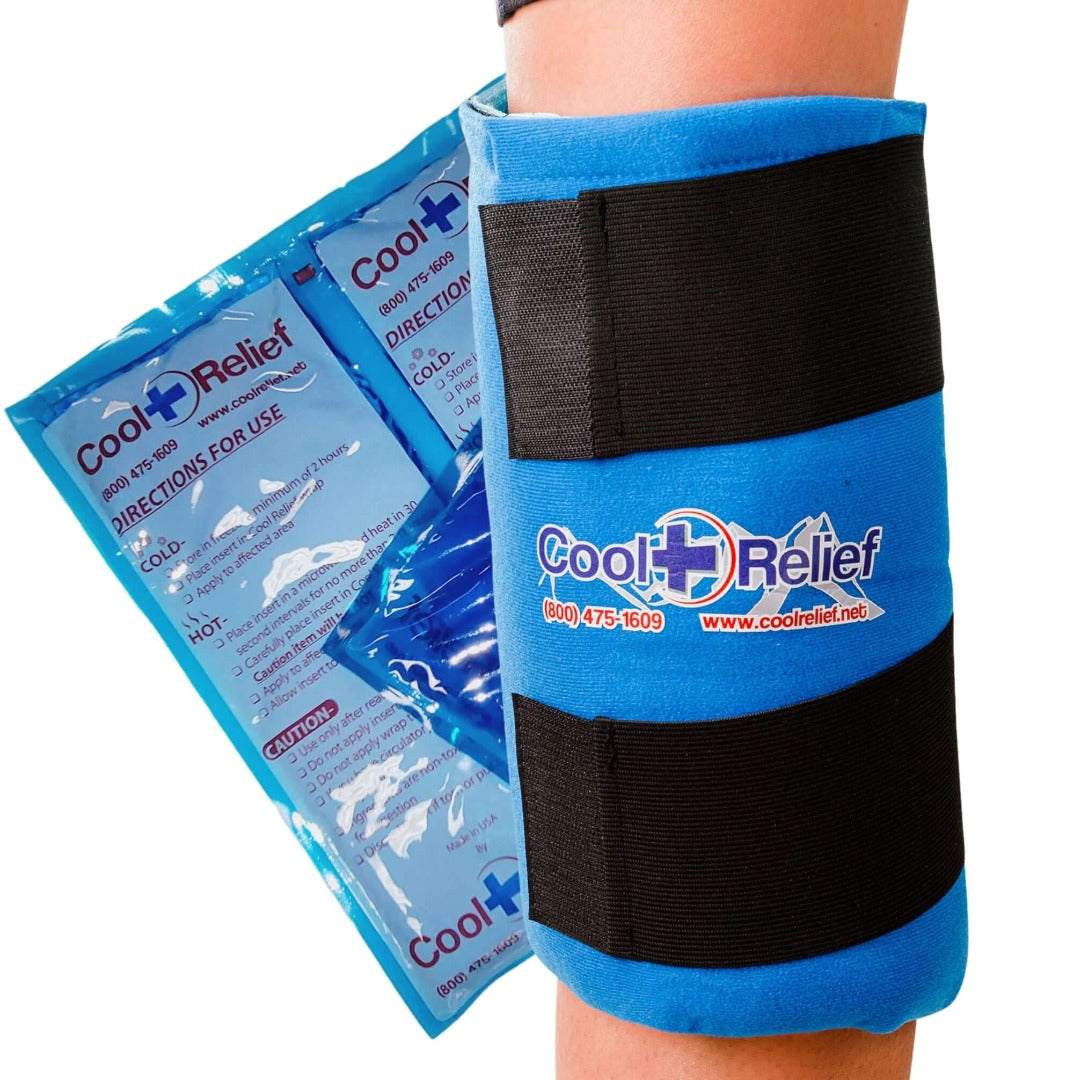
Soft gel wraps solve the problem of obtaining consistent, safe cold therapy without juggling melting ice bags and slipping towels. The Knee Ice Pack Soft Gel already has the cloth barrier built in, so you skip the towel-wrapping step entirely and just strap it on.
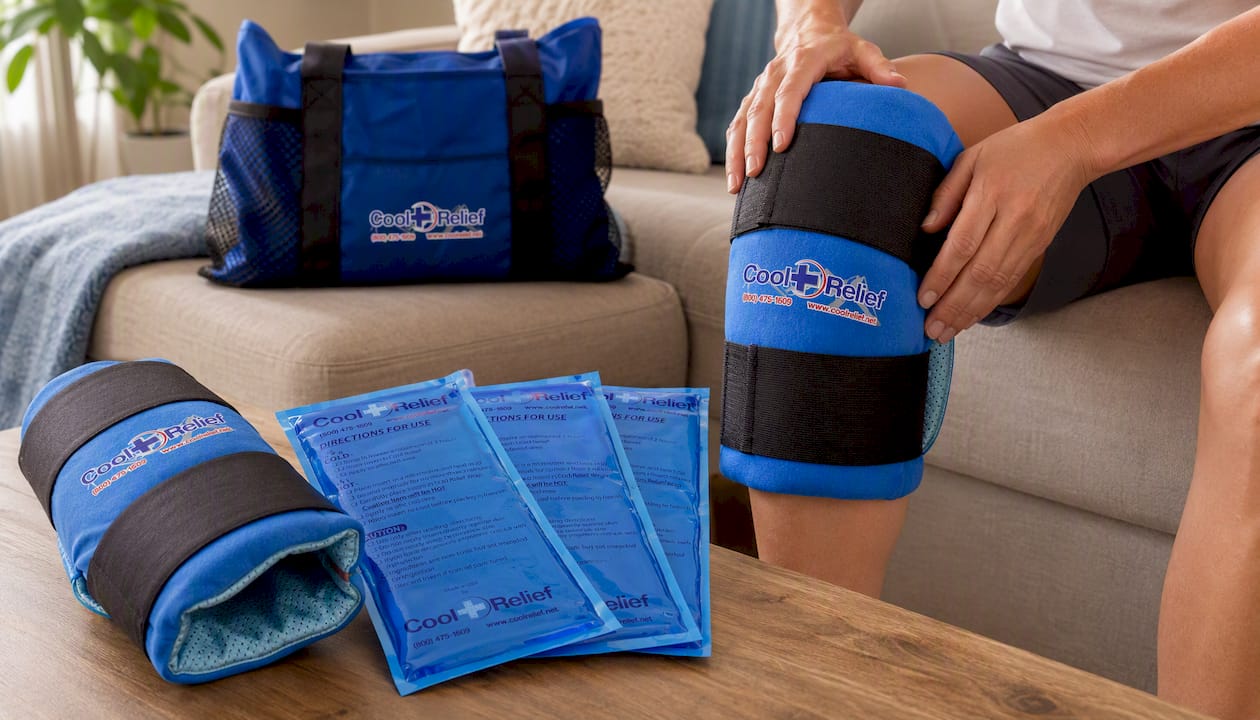
If your swelling wraps around the whole joint, especially post-surgery, the Large Soft Gel Pack for Knee 360 Coverage covers more surface area with adjustable compression straps so you get even cold delivery without cranking it too tight. And if you’re icing multiple times a day during that first 72-hour window, a Replacement Gel Ice Pack Insert Set means you’re never stuck waiting on one pack to refreeze between sessions. All three are reusable and easy to rinse clean. Browse the full lineup and find the wrap that matches your recovery stage.
Sources
- Cold versus heat for pain relief: How to use them safely and effectively - Harvard Health
- Controlled studies of cryotherapy effects on inflammatory markers and pain - PMC
- Cryotherapy Cold Therapy for Pain Management | Johns Hopkins Medicine
This article is general information, not a substitute for advice from a qualified doctor. Consult a qualified healthcare professional about your own circumstances before acting on anything here.
FAQ
Does Putting Ice on a Swollen Knee Actually Help?
Yes. Ice constricts blood vessels and slows nerve signaling, which reduces both fluid buildup and pain within minutes of application, according to Harvard Health.
What Draws Fluid Out of a Swollen Knee?
Elevation combined with icing is the most effective home approach. Raising the knee above heart level lets gravity help drain excess fluid while cold limits how much continues to accumulate, per Mayo Clinic.
What Shouldn’t You Do With a Swollen Knee?
Don’t apply ice directly to bare skin, ice for longer than 20 minutes at a stretch, or ignore worsening pain, fever, or inability to bear weight, all signs that need medical attention rather than more home icing.
What’s the Fastest Way to Reduce Knee Swelling?
Combine icing (about 15 to 20 minutes per session, several times daily), elevation above heart level, and light compression.
Should You Ice or Heat a Baker’s Cyst?
Ice during an active flare, since heat can worsen fluid pooling in the cyst. Switch to heat only after swelling has settled and stiffness becomes the main issue.
Share and get 15% off!
Simply share this product on one of the following social networks and you will unlock 15% off!