


Ice works best for acute patellar tendon flare-ups and post-activity swelling, applied 15–20 minutes with a towel barrier. It calms pain and swelling fast, but it can’t fix the tendon on its own. That job belongs to a progressive tendon-loading program, done consistently over weeks, not days.
TL;DR:
- Ice is most effective immediately after a new flare of swelling or sharp pain within 48 hours, helping to reduce inflammation and nerve pain signals.
- Proper icing technique involves a soft gel pack wrapped in a towel, applied to the lower kneecap for 15-20 minutes, with repeat sessions every four to six hours during flare-ups.
- Use heat instead of ice for chronic stiffness or before activity, as it promotes blood flow and tissue pliability, not vasoconstriction.
- Icing controls symptoms but does not repair tendon tissue; progress relies on consistent resistance training, with improvements of 50 to 70 percent over 3 to 6 months.
- Combining ice with a structured loading program and avoiding excessive rest or corticosteroid injections enhances recovery chances and prevents setbacks.
Table of Contents
- When Should You Use Ice for Patellar Tendonitis?
- How to Ice Patellar Tendonitis Safely
- Ice or Heat for Patellar Tendonitis: Which One Wins?
- What Ice Can’t Fix (and What Actually Does)
- A Simple Icing and Loading Schedule You Can Follow
- Our Take on Icing and Recovery Tools
- Cool Relief Knee Wraps Built for This Exact Routine
- Sources
- FAQ
When Should You Use Ice for Patellar Tendonitis?
Timing matters more than most people think. Ice works differently depending on whether you’re dealing with a fresh flare or a tendon that’s been cranky for months.
An acute flare, meaning new swelling or a sharp increase in pain within the last 24 to 48 hours, is where ice earns its keep. The cold triggers vasoconstriction, narrowing blood vessels near the skin, which slows fluid buildup around the tendon and dulls the nerve signals sending pain to your brain. That’s the whole mechanism, and it’s a good one for a specific window.
Chronic patellar tendinopathy, the kind that’s nagged you for months during squats or after a long run, behaves differently. There’s often less active swelling and more stiffness from tissue changes that build up over time. Icing still helps take the edge off after a hard session, but it’s not doing the heavy lifting your tendon actually needs.
Cleveland Clinic and other major centers generally frame it this way:
- Use ice for new swelling, sharp flares, or soreness right after activity.
- Don’t lean on ice as your only treatment. Clinical guidance consistently pairs it with rest, activity modification, and exercise.
- If pain lingers for weeks despite icing, that’s a signal you’re in tendinopathy territory, not a fresh injury.
Knowing which phase you’re in changes everything about how you treat the knee, including how much you should expect from ice alone.
How to Ice Patellar Tendonitis Safely
Getting the technique right is what separates relief from irritation. Here’s the sequence that clinics recommend and that actually holds up in practice.
- Prep your ice pack. A refreezable soft-gel pack molds better to the knee than a bag of frozen peas and holds a consistent temperature longer.
- Add a barrier. Wrap the pack in a thin towel. Never apply ice directly to skin.
- Position it over the tendon. Target the inferior pole of the patella, the small area just below the kneecap where jumper’s knee usually hurts most. Sit or lie down so the pack stays put without you holding it.
- Elevate if you can. Propping the leg up slightly helps reduce swelling faster.
- Time it. Ice for 15 to 20 minutes, then remove it. During an active flare, repeating every four to six hours is typical.
- Watch your skin and sensation. Stop immediately if you notice numbness, burning, or unusual pain. Skip icing entirely if you have compromised circulation, an open wound near the site, or peripheral neuropathy that dulls your ability to feel skin changes.
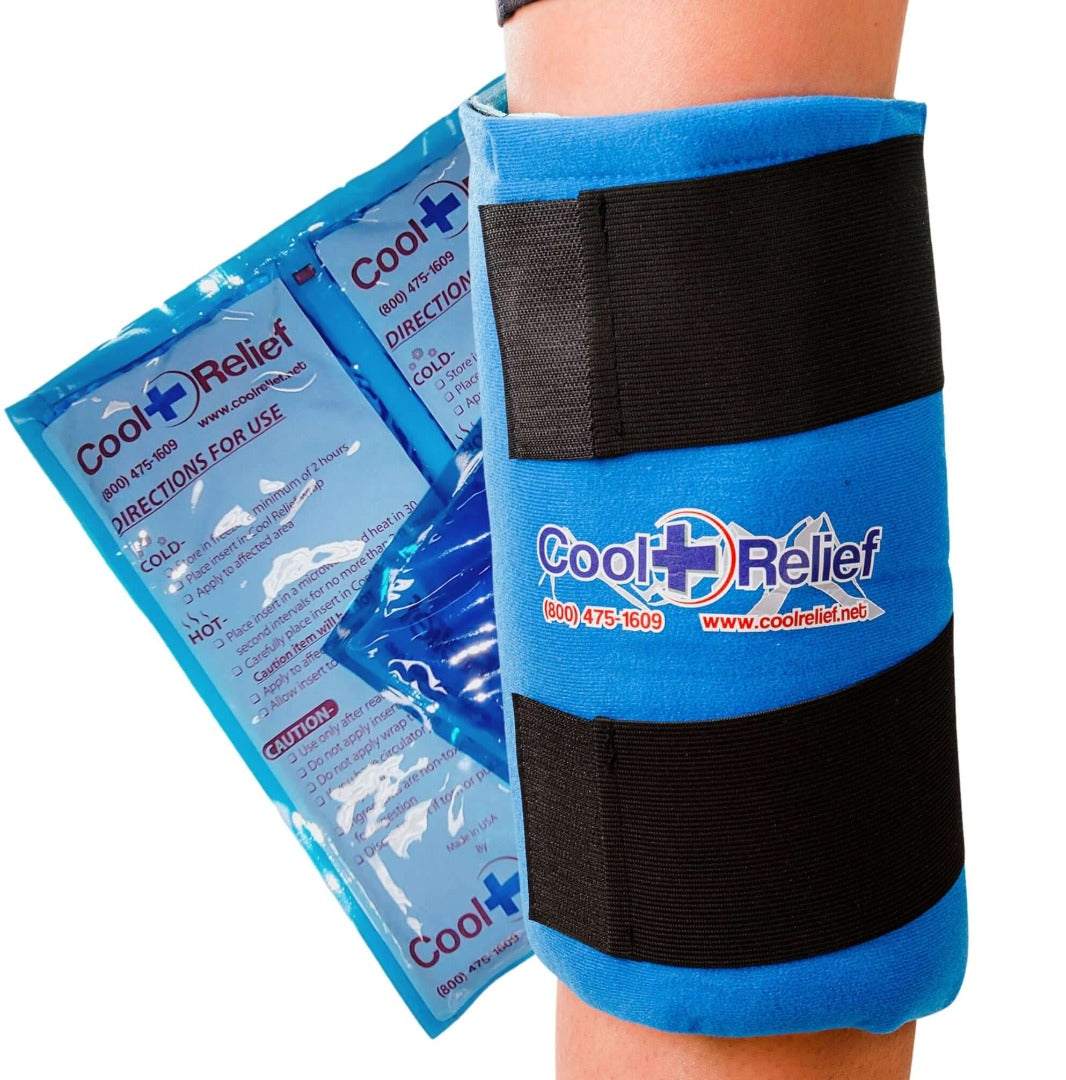
A wrap-style pack with a strap makes this far easier during real life. You can keep it in place while sitting at a desk or reading, instead of holding a bag against your knee for 20 minutes straight.
Pro Tip: Set a timer. It’s tempting to leave ice on longer thinking it’ll help more, but longer sessions raise the risk of skin irritation without added benefit. Twenty minutes is the ceiling, not the floor.
Ice or Heat for Patellar Tendonitis: Which One Wins?
Neither one wins outright. They solve different problems, and using the wrong one at the wrong time can slow you down.
Ice is your tool for the acute inflammatory stage, generally the first 24 to 48 hours after a flare, when swelling and sharp pain are the main problem. Vasoconstriction is exactly what you want there. Heat does the opposite: vasodilation, which increases blood flow and loosens stiff tissue. That makes heat the better choice for chronic stiffness or as a warm-up before exercise, when you want the tendon pliable rather than numbed.
A common mistake is reaching for heat during a fresh flare because it feels soothing in the moment, which can actually feed swelling. The reverse mistake, icing heavily right before a heavy-load workout, isn’t great either. Aggressive pre-exercise cooling doesn’t improve performance and may leave the tendon momentarily stiffer, so a proper warm-up matters even on days you’ve iced.
- Fresh flare or new swelling: ice.
- Chronic stiffness or pre-workout prep: heat.
- Transitioning out of an acute flare: some clinicians use contrast (alternating ice and heat) as a bridge.
What Ice Can’t Fix (and What Actually Does)
Ice controls symptoms. It doesn’t rebuild tendon tissue, and treating it like a cure is where a lot of jumper’s knee cases stall out for months.
Patellar tendinopathy is largely a degenerative process rather than pure inflammation, especially once it’s gone chronic. That distinction matters because passive treatments like ice don’t remodel collagen or restore tendon strength. What does is progressive loading.
The number that matters: Structured programs using eccentric exercise or heavy slow resistance training produce roughly 50 to 70 percent improvement at 3 to 6 months. Consistency across 12 weeks matters more than which specific exercise variation you pick.
Ice fits into that picture as an enabler. Take the edge off the pain, and you can actually complete your loading sessions instead of avoiding them out of dread. That’s a legitimate role, just not the main event.
A few adjuncts and cautions worth knowing:
- Patellar straps or bracing can help some people tolerate loading sessions, though they’re a support tool, not a treatment.
- Corticosteroid injections are generally discouraged for this condition because they risk weakening the tendon further.
- Rest alone, without eventual reloading, tends to leave the underlying tissue problem unresolved.
A Simple Icing and Loading Schedule You Can Follow
Two templates cover most situations, depending on whether you’re in a flare or building back up.
Acute flare days: Cut back on the aggravating activity. Ice 15 to 20 minutes every four to six hours. Move the knee gently through pain-free range of motion between sessions.
Rehab days: Warm up first, using heat if there’s no active swelling. Run your eccentric or heavy slow resistance session. Ice briefly afterward if soreness spikes, then track how the knee feels the next morning before deciding to increase load.
- Log pain on a simple 0 to 10 scale before and after each session.
- If soreness stays under a 3 the next day, nudge the load up slightly.
- If pain climbs or lingers past 24 hours, hold at the current load or scale back.
- Pause and check in with a clinician if symptoms worsen despite two to three weeks of consistent loading.
Our Take on Icing and Recovery Tools
We hear from a lot of people using ice wraps for knee injuries who say the biggest hurdle isn’t understanding the advice, it’s actually sticking with it. A wrap that stays put and covers the tendon consistently can help people finish the full 15 to 20 minutes instead of quitting early. For more on positioning and timing, our guide on using an ice wrap for knee recovery covers the details.
— Cool Relief
Cool Relief Knee Wraps Built for This Exact Routine
Some knee wraps are designed around a phase-based approach clinics recommend, so you’re not improvising with a bag of peas and a rubber band every four hours.
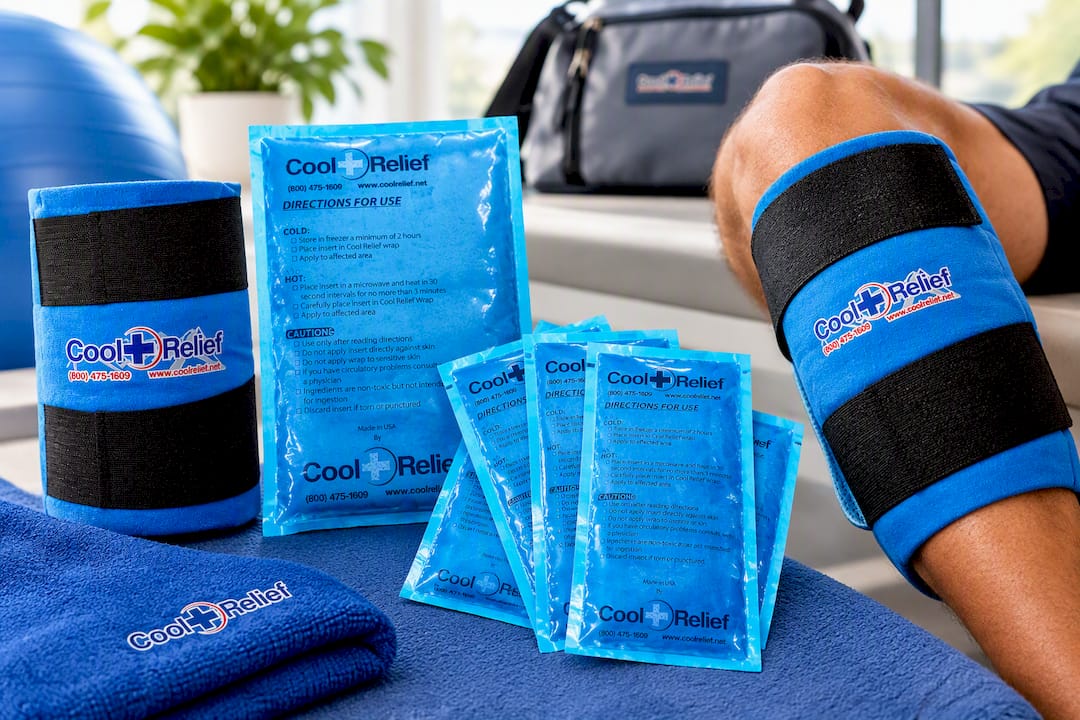
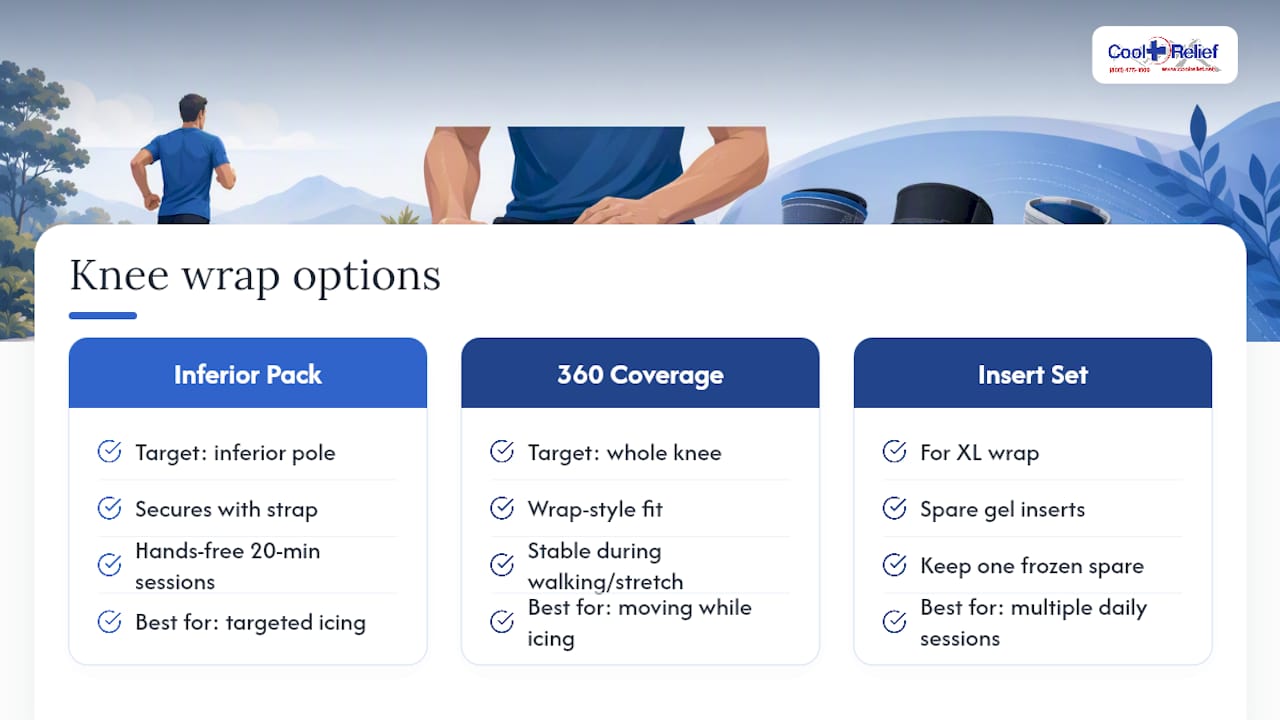
The Knee Ice Pack Soft Gel is built for exactly the inferior-pole targeting described above, with a strap that keeps it in place through a 20-minute session without you holding anything. If you want broader contact around the whole joint, especially useful if you’re moving around lightly while icing, the Large Soft Gel Pack for Knee 360 Coverage wraps the entire knee and stays stable during short walks or stretching.
For anyone icing multiple times a day during a flare, the math gets annoying fast if you only own one pack. The Replacement Gel Ice Pack Insert Set for XL Knee Wrap lets you keep one insert in the freezer while the other is in use, so you’re never waiting around for a pack to refreeze between sessions. Match your setup to how often you actually plan to ice: occasional flare, go standard; daily rehab routine, get the replacement set. Browse the full knee wrap lineup to find the fit that matches your activity level.
This article is general information, not a substitute for advice from a qualified doctor. Consult a qualified healthcare professional about your own circumstances before acting on anything here.
Sources
- Cold versus heat for pain relief: How to use them safely and effectively — Harvard Health
- Tendinitis pain: Should I apply ice or heat? — Mayo Clinic
FAQ
What Is the Fastest Way to Heal Patellar Tendonitis?
There’s no true shortcut, but the fastest reliable path combines short-term symptom control (ice, activity modification) with a progressive loading program started early. Programs using eccentric or heavy slow resistance training show roughly 50 to 70 percent improvement by 3 to 6 months, and starting that process sooner rather than waiting for pain to fully disappear tends to produce better outcomes.
Can Ice Aggravate Tendonitis?
Ice itself rarely worsens tendonitis when used correctly, but misuse can cause problems. Applying it directly to skin, icing for too long, or icing right before a heavy workout without warming up afterward can leave the tendon stiffer or irritate the skin.
What Should You Avoid With Patellar Tendonitis?
Avoid complete rest with no reloading plan, since the tendon needs progressive stress to rebuild. Also avoid corticosteroid injections when possible, as they’re generally discouraged due to tendon weakening risk, and skip pushing through sharp pain during exercise instead of scaling the load back.
What Is Stage 3 Patellar Tendinopathy?
Clinicians often describe tendinopathy on a continuum from reactive tendon changes to more advanced degenerative disrepair, though exact staging systems vary by source. A later stage generally involves more persistent pain, activity limitation, and structural tendon changes, which is why professional evaluation matters if symptoms have dragged on for months despite home care.
Share and get 15% off!
Simply share this product on one of the following social networks and you will unlock 15% off!