


Yes, ice helps during a new, sharp pinched nerve flare or visible swelling, but only in short, protected sessions of 10 to 20 minutes with a cloth barrier. After the first 48 to 72 hours, heat usually works better for the stiffness and muscle tightness that follow. Stop icing right away if you notice numbness or growing weakness, and get medical care if those red flags show up.
TL;DR:
- Use ice only during the first 48 to 72 hours after a pinched nerve flare, applying it for 10 to 20 minutes with a cloth barrier.
- Switch to heat therapy once swelling subsides and stiffness increases, typically after the initial acute phase.
- Avoid prolonged icing or applying cold to numb skin, and always monitor for skin changes or increased weakness.
- Follow proper icing techniques: use flexible gel packs, wrap in a barrier, set timers, and avoid compression or direct skin contact.
- Seek medical attention for worsening weakness, persistent numbness, increased pain, or bladder or bowel control loss.
Table of Contents
- When to Use Ice Versus Heat for a Pinched Nerve
- How to Ice a Pinched Nerve Safely at Home
- Building a Daily Icing and Heat Routine
- When Pinched Nerve Symptoms Need Medical Attention
- How Cool Relief’s Soft Gel Wraps Fit Into a Safe Routine
- What We See Users Get Wrong Most Often
- Find the Right Wrap for Your Recovery
- Sources
- FAQ
When to Use Ice Versus Heat for a Pinched Nerve
A pinched nerve moves through two distinct stages, and each one calls for a different tool. The acute flare happens in the first day or two: sharp, electric pain, swelling around the compressed nerve, and sometimes a hot, inflamed feeling in the area. Later stiffness shows up once that initial fire settles. This is when muscles around the nerve tighten up, movement feels restricted, and the pain shifts from sharp to achy.
Clinical guidance points to a fairly specific window for pinched nerve icing: prioritize cold for roughly the first 48 to 72 hours after a flare starts. After that, heat typically takes over as the more useful tool.
Why this order works:
- Cold narrows blood vessels, which slows swelling and dulls sharp pain signals right when they’re at their worst.
- Heat does the opposite: it widens blood vessels, increases circulation, and relaxes tight muscles that can add pressure on an already irritated nerve.
- Using heat too early, while things are still swollen, can sometimes make inflammation worse.
- Using ice too long after the acute phase can leave muscles tight and slow to loosen up.
Here’s a detail most home guides skip: inflammation isn’t just a symptom to erase. It’s part of how your body starts the healing process. That’s part of why Harvard Health’s guidance on cold therapy frames ice as a short-term tool for calming a flare, not something to lean on for weeks straight. Use it when symptoms are loud and fresh, then let your body’s own repair process take over as heat starts doing more of the work.
How to Ice a Pinched Nerve Safely at Home
Getting the technique right matters as much as knowing when to reach for the ice pack. Here’s the routine that lines up with what clinicians recommend.
- Pick your cold source. A reusable gel pack that molds to the area works better than a rigid ice cube tray or bag of loose cubes, especially around joints like the wrist or knee.
- Add a barrier. Wrap the pack in a thin towel or cloth before it touches your skin. Never apply ice directly.
- Set a timer. Ice for a brief period, then remove it completely.
- Take a real break. Wait 30 to 60 minutes before reapplying, giving your skin and tissue time to return to normal temperature.
- Repeat as needed. During the acute phase, several short sessions spread across the day work better than one long one.
- Check your skin. Look for even, mild redness. Stop immediately if the skin turns white, blotchy, or unusually pale, or if pain increases instead of easing.
This 10 to 20 minute window isn’t arbitrary. Harvard Health’s guidance on pinched nerve treatment specifically recommends this range with a cloth barrier to avoid skin damage, and it lines up with what most physical therapy clinics teach patients for at-home care.
A frozen bag of peas wrapped in a towel is a fine substitute if you don’t have a gel pack handy, and it conforms well to odd shapes like a wrist or shoulder. Brief ice massage, rubbing a small ice cube directly over (not on) a sore muscle for about 5 minutes, can work for some muscle-related pain, but skip this technique near a nerve that’s already inflamed unless a clinician has walked you through it.
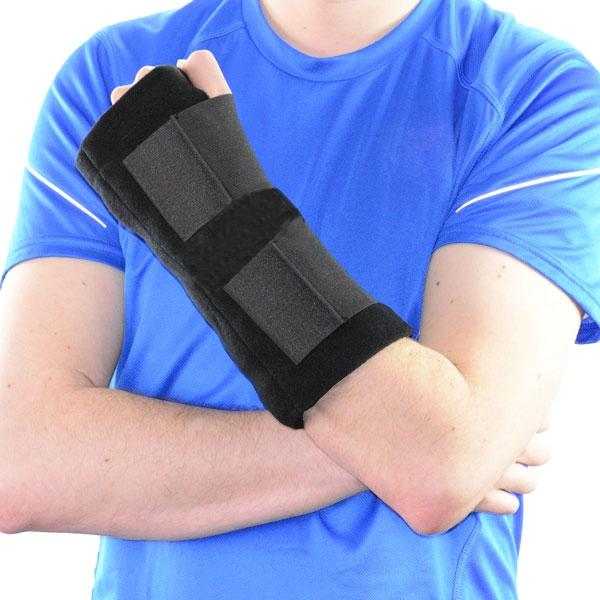
Pro Tip: Never wrap an ice pack so tightly with an elastic bandage that it compresses the area. Extra pressure on already-irritated tissue can add to nerve compression instead of relieving it.
The most common mistakes are simple ones: icing bare skin, losing track of time and leaving a pack on for 30 or 40 minutes, and continuing to ice a spot that’s gone numb. Never apply cold to skin that already feels numb or has reduced sensation. Healthline’s guidance on pinched nerve remedies is blunt about this: you can’t judge whether cold is causing damage if you can’t feel it properly, which raises the risk of frostbite or skin injury.
Building a Daily Icing and Heat Routine
A workable routine during the acute phase looks like about 15 minutes of ice, then a break of at least half an hour, repeated 3 to 4 times a day. That rhythm gives tissue time to rewarm between sessions instead of staying cold constantly, which doesn’t speed things up and raises the risk of skin irritation.
Once you’re past the first 48 to 72 hours and stiffness becomes the bigger complaint, a short burst of heat before gentle movement or stretching can loosen tight muscles and make that movement more comfortable. If an activity or stretch triggers a fresh flare of sharp pain, icing afterward for 10 to 20 minutes helps calm things back down.
- Swelling going down and stiffness taking over is your cue to shift from cold to heat.
- A sudden, sharp flare after activity is a cue to bring cold back into rotation, even later in recovery.
- Avoid leaving a heat pack or ice pack on overnight while you sleep. Neither should run unattended for hours, and skin can be injured without you noticing while unconscious.
- If nighttime stiffness is the main problem, a brief, low-heat session before bed tends to work better than an overnight pack.
Research on alternating cold and heat, known as contrast therapy, shows mixed results for nerve pain. There’s no single proven schedule for switching back and forth, so it’s more useful to let your symptoms guide which one you reach for, rather than following a rigid alternating pattern someone else designed for a different injury.
When Pinched Nerve Symptoms Need Medical Attention
Home care handles a lot of pinched nerve cases, but certain symptoms mean it’s time to stop self-treating and get evaluated. Watch for these signs:
- Weakness that’s getting worse instead of better, especially if you’re having trouble gripping objects or your leg keeps giving out.
- Numbness that doesn’t fade or is spreading to new areas.
- Pain that keeps intensifying despite consistent rest, ice, and heat.
- Any loss of bladder or bowel control, which is a medical emergency and needs immediate attention.
If your skin goes numb, blisters, or changes color during a cold or heat session, stop immediately. New or rapidly worsening weakness warrants a call to urgent care rather than waiting it out.
Most pinched nerves genuinely do improve with rest, activity changes, and conservative measures like the icing and heat routines described above. When symptoms don’t respond, a clinician might recommend physical therapy to relieve pressure through targeted stretches, imaging like an MRI to pinpoint the compression, or in more stubborn cases, an injection or referral to a spine specialist.
How Cool Relief’s Soft Gel Wraps Fit Into a Safe Routine
The safety rules above (barrier, timing, avoiding numb skin) work best when your gear is actually built for them. Soft gel wraps designed for those constraints help avoid improvising with a bag of frozen peas and a dish towel every time symptoms flare.
- Wrist Ice Pack: shaped to wrap around the wrist for targeted relief when carpal or nerve compression flares up there.
- Soft Gel Back Heat Wrap: built with lumbar support, useful for the heat phase of recovery once acute swelling has settled.
- Knee Ice Pack Soft Gel: contours to the knee for cold compression without needing a separate wrap to hold it in place.
The table below shows how each product’s design maps back to the safety rules covered earlier.
| Product | Safety Feature | Matches This Rule |
|---|---|---|
| Wrist Ice Pack | Soft gel stays flexible when frozen | Conforms without needing tight wrapping |
| Soft Gel Back Heat Wrap | Dual hot/cold function | Supports the shift from ice to heat after 48–72 hours |
| Knee Ice Pack Soft Gel | Wide surface with strap support | Even coverage without added compression |
For more on general application, Cool Relief’s guide to ice pack timing and safety and its post-knee-surgery icing guide both walk through placement and session length in more detail for specific situations.
What We See Users Get Wrong Most Often
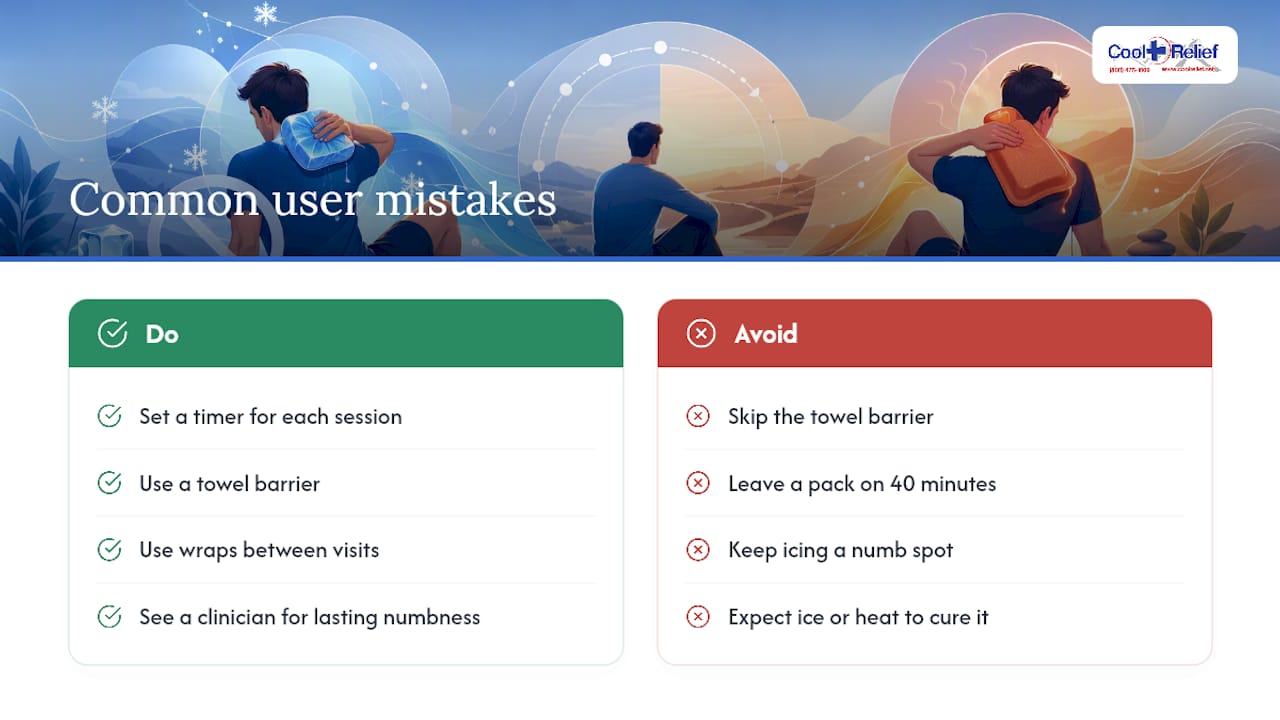
The mistakes we hear about most aren’t complicated. People skip the towel barrier because they’re in a hurry, or they leave a pack on for 40 minutes because they got distracted, or they keep icing a spot that’s gone numb because the pain relief feels good even after sensation fades. Setting a timer fixes most of this.
We also hear from people who expect ice or heat alone to resolve a pinched nerve completely. It won’t, and it shouldn’t be treated as a replacement for seeing a clinician if weakness or numbness sticks around. Wraps built for repeatable, safe home use can be used between clinical visits, not instead of them.
— Cool Relief
Find the Right Wrap for Your Recovery
Reaching for a bag of frozen vegetables works in a pinch, but it doesn’t hold its shape, doesn’t stay cold long enough for a full session, and definitely doesn’t convert to heat once you’re past the acute phase. Soft gel wraps that are reusable, shaped for specific body parts, and can be used for both cold and heat help address these needs.
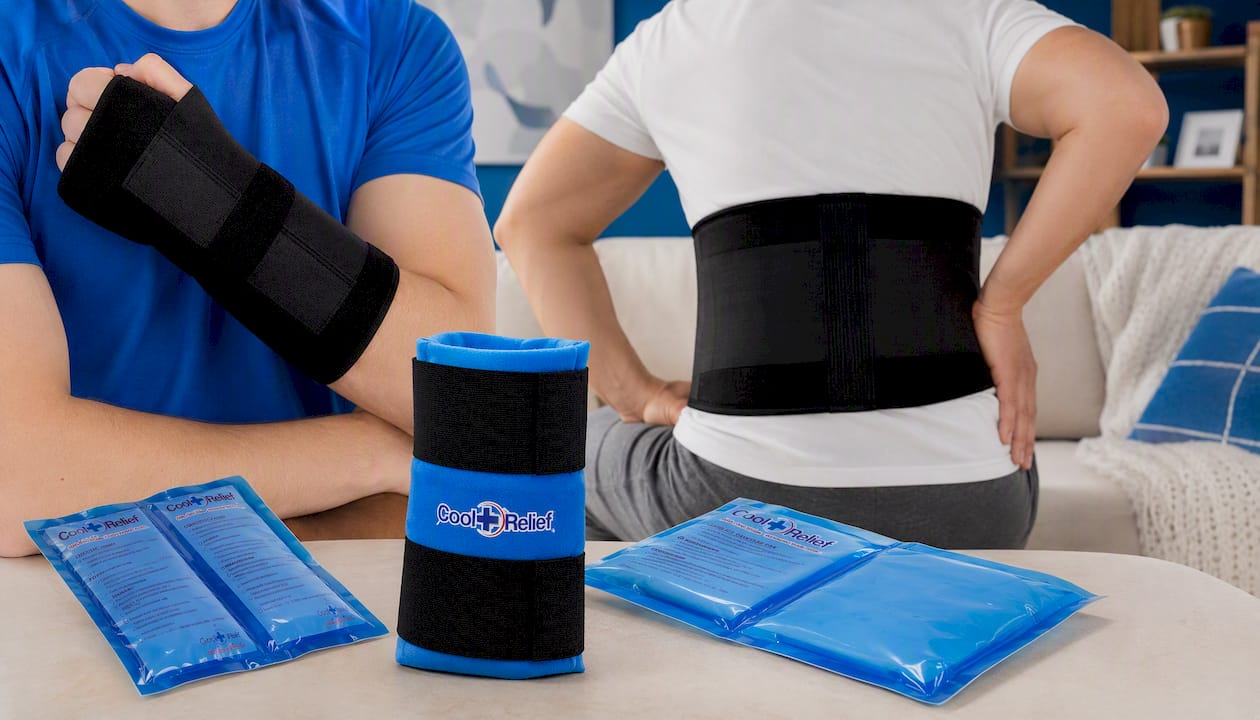
If wrist pain from nerve compression is your main issue, the Wrist Ice Pack is built to wrap snugly without needing extra tape or bandaging. For lower back stiffness once you’ve moved past the icing stage, the Soft Gel Back Heat Wrap gives you lumbar-specific heat support. And if a pinched nerve is showing up as knee pain or swelling, the Knee Ice Pack Soft Gel contours around the joint for consistent compression. Pick the wrap that matches where your symptoms are showing up, and add it to your cart to have it ready before your next flare.
This article is general information, not a substitute for advice from a qualified doctor. Consult a qualified healthcare professional about your own circumstances before acting on anything here.
Sources
- Ice vs heat: when to use cold or heat for pain relief | Sword Health
- Pinched nerve - Diagnosis and treatment - Mayo Clinic
FAQ
Is It Okay to Ice a Pinched Nerve?
Yes, icing is generally safe and helpful during a new flare or when swelling is visible, as long as you limit sessions to 10 to 20 minutes with a cloth barrier between the pack and your skin.
What Calms Down a Pinched Nerve?
Short icing sessions during the first 48 to 72 hours calm sharp pain and swelling, while heat, rest, and gentle movement help once the acute phase passes and stiffness takes over.
What Are the Signs a Pinched Nerve Is Healing?
Decreasing sharp pain, less frequent numbness or tingling, and a shift from acute, electric pain toward general stiffness are all signs of healing; stiffness easing with light movement and heat is a good sign too.
How Do You Unpinch a Severely Pinched Nerve?
Severe or persistent compression usually needs professional care rather than home remedies alone. A clinician may recommend physical therapy, imaging to locate the compression, or in some cases an injection or referral to a spine specialist.
Share and get 15% off!
Simply share this product on one of the following social networks and you will unlock 15% off!