


Use ice for the first 48 to 72 hours to numb sharp, shooting sciatica pain and calm inflammation, according to Harvard Health. Once that early flare settles, switch to heat to relax tight muscles and get blood moving again. Keep every session to 15 to 20 minutes, always with a cloth barrier, and adjust based on how your body responds. Mayo Clinic and Cleveland Clinic back this same ice-then-heat approach, and Cool Relief builds its gel wraps around it.
TL;DR:
- Cold therapy should be used immediately during the first 48 hours of a sciatic flare to numb sharp pain and reduce inflammation effectively.
- Heat therapy becomes beneficial only after the initial inflammatory stage, typically 48 to 72 hours later, to relax muscles and improve circulation.
- Alternating ice and heat can help loosen stiff muscles in the subacute stage, but should be avoided during severe inflammation or active infection.
- Keep sessions limited to 15 to 20 minutes with a cloth barrier, and avoid therapy on areas with reduced sensation or other contraindications.
- Consult a healthcare professional if symptoms worsen after one week or if there are signs of neurological deficits, such as leg weakness or bladder issues.
Table of Contents
- Sciatica Heat or Ice: Why Timing Comes First
- When and How to Use Ice for Sciatica
- When and How to Use Heat for Sciatica
- Alternating Ice and Heat: Who It Helps and How to Do It
- How to Apply Packs and Wraps for Best Results
- Safety, Contraindications, and Special Populations
- When Home Care Isn’t Enough
- Our Take on Ice, Heat, and Sciatica Recovery
- Practical Product Options From Cool Relief
- Sources
- FAQ
Sciatica Heat or Ice: Why Timing Comes First
The ice or heat question for sciatica isn’t really an either/or. It’s a timeline question. Sciatica pain almost always starts with some degree of nerve root irritation and inflammation along the lower back, and inflammation responds best to cold in its early hours. Heat comes in later, once your body has moved past the acute inflammatory stage and into muscle guarding and stiffness.
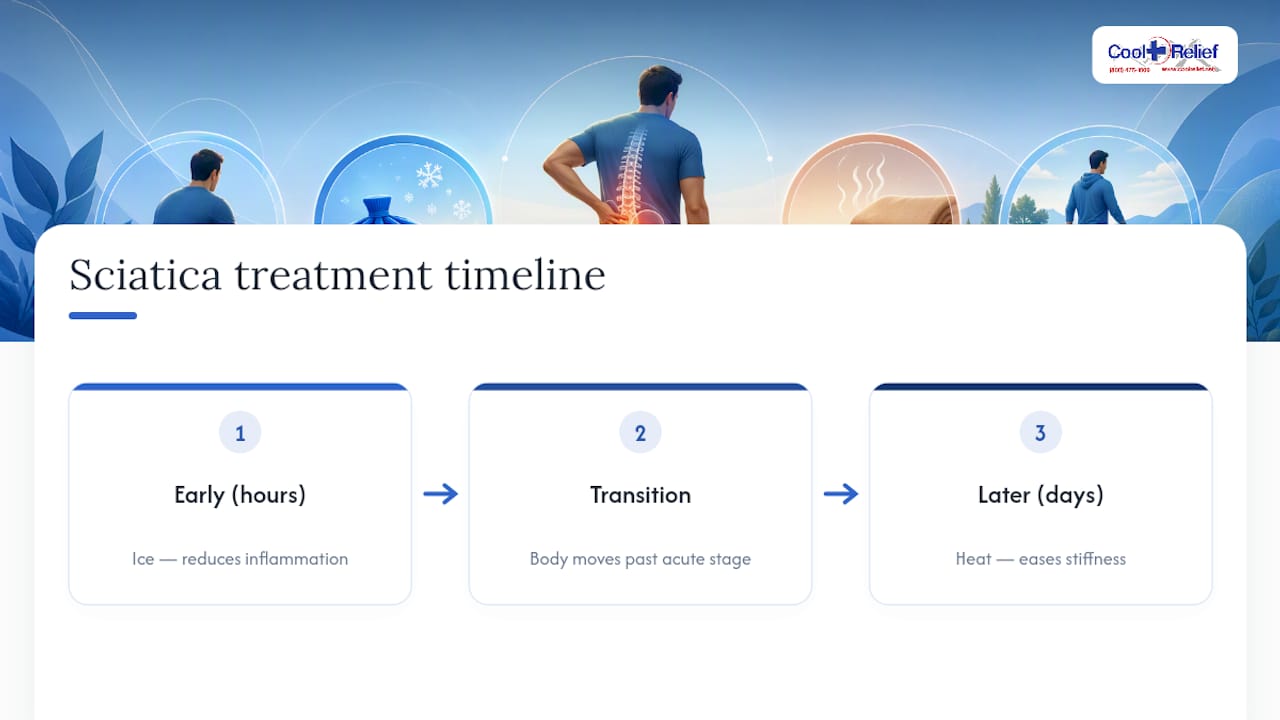
That’s why so many people who default to a heating pad on day one end up frustrated. Heat increases blood flow to the area, which is exactly what inflamed tissue does not need right away. Ice does the opposite. It causes the blood vessels to narrow, which dulls sharp pain signals and slows the inflammatory response, according to Harvard Health. Get the order right, and you’re working with your body’s healing process instead of against it.
When and How to Use Ice for Sciatica
Reach for ice as soon as sciatica flares, especially if the pain feels sharp, hot, or electric. Cold therapy numbs the nerve pathway and reduces swelling around the irritated nerve root, and it works best in the first few days of an acute episode, per Harvard Health.
Here’s how to apply it safely:
- Ice for about 15 to 20 minutes, then wait at least a similar amount of time before reapplying.
- Use a reusable gel pack, a bag of frozen peas wrapped in a thin towel, or an ice cube massaged in slow circles over roughly a 6-inch area.
- Keep the ice moving during a massage and avoid pressing directly on the bony part of the spine.
- Cap ice massage sessions at 10 minutes, with at least an hour between them, Harvard Health notes.
- Skip ice, or check with a provider first, if you have poor circulation or nerve damage that affects sensation.
Pro Tip: Press the pack against your inner forearm for a few seconds before applying it to your back. If it feels too cold to hold there comfortably, add another layer of cloth before it touches your skin.
A detailed breakdown of ice application timing covers more scenarios if you want to compare notes on your own flare pattern.
When and How to Use Heat for Sciatica
Once the sharp, acute stage passes, usually around 48 to 72 hours, heat becomes your better tool. Warmth widens blood vessels, relaxes muscle guarding around the irritated nerve, and improves circulation to the area, which Harvard Health points to as the reason heat helps once inflammation has eased. A controlled study on nerve injury even found that moderate hot compress cycles reduced inflammatory markers and improved nerve function in an animal model, giving heat a real mechanistic case beyond simple comfort, per the PMC study.
Apply heat this way:
- Wait until sharp, inflamed pain has calmed before introducing heat.
- Use moist heat, a heating pad with a cloth barrier, a warm bath, or a controlled reusable heat wrap.
- Sessions can last from around 15 minutes up to a couple of hours depending on comfort and the product’s guidelines, but stop immediately if your skin feels uncomfortably hot.
- Never fall asleep on an active heating pad, and avoid heat entirely on skin with reduced sensation.
A heat versus cold comparison for muscle pain offers useful background on how heat supports circulation during recovery.
Alternating Ice and Heat: Who It Helps and How to Do It
Alternating works by stacking two opposite effects back to back. Cold shrinks blood vessels and quiets inflammation, then heat widens them again to pump fresh blood through the area, according to Harvard Health. That push and pull can loosen a stiff lower back better than either therapy alone, particularly once you’re past the acute stage and dealing with lingering tightness.
A typical alternating cycle looks like this:
- Ice for 15 to 20 minutes.
- Rest with no therapy for 15 to 20 minutes.
- Heat for 15 to 20 minutes.
Repeat once more if needed. A full alternating session runs roughly 75 to 100 minutes. This approach suits subacute stiffness or soreness after activity, not the first days of a sharp flare. Skip alternating if you have an active infection, an open wound, or a fever, since heat can worsen those conditions.
How to Apply Packs and Wraps for Best Results
Position it over your rear lower back and pelvis, not just the thigh or calf where the pain radiates, since that’s where the sciatic nerve roots actually originate, according to Spine-health. Secure the wrap so it stays put, set a timer for 15 to 20 minutes, and remove it the moment your skin feels uncomfortable.
After removing the pack, give your body a few minutes before attempting any stretches. Gentle movement, like a slow knee-to-chest stretch or a short walk, tends to pair well with heat once muscles have loosened. Track how you feel after each session so you know whether ice, heat, or alternating is working best for your particular flare.
Reusable gel wraps designed for both temperatures make this whole process easier to manage consistently, since you’re not improvising with frozen vegetables one day and a hot towel the next. A side-by-side look at heat versus cold for stubborn pain walks through similar placement principles for other joint and muscle issues.
Pro Tip: If mornings are your worst time, a brief low-level heat session before you even get out of bed can ease early stiffness. Just stay fully awake while it’s on to avoid any risk of burns.

Safety, Contraindications, and Special Populations
A few non-negotiable rules keep home therapy safe:
- Limit sessions to 15 to 20 minutes, always with a cloth barrier between the pack and your skin.
- Test temperature on your forearm first, and never sleep with an active heating pad or ice pack in place.
- Avoid both therapies on areas with reduced sensation, peripheral vascular disease, open wounds, or active infection.
- People with diabetes-related neuropathy, older adults, and pregnant people should check with a provider before starting either therapy, since reduced sensation or circulation changes can hide early warning signs.
Harvard Health and Mayo Clinic both frame ice and heat as safe, effective first-line self-care for most sciatica cases when these basic time and barrier rules are followed.
When Home Care Isn’t Enough
Home therapy handles most flares, but some symptoms mean it’s time to call a provider. Seek care right away for new or worsening leg weakness, numbness in the saddle area, loss of bladder or bowel control, or fever with back pain, according to Cleveland Clinic. If ice and heat haven’t helped after about a week, or symptoms are getting worse rather than better, a clinician can offer physical therapy, imaging, medication, or other options tailored to what’s actually causing your sciatica.
Our Take on Ice, Heat, and Sciatica Recovery
We built Cool Relief’s gel wrap line around exactly the sequence this article lays out: cold for the acute flare, heat for the recovery phase that follows. What we’ve noticed working directly with people managing joint and nerve pain is that the biggest failure point isn’t picking the wrong therapy, it’s picking the right one and then applying it inconsistently, too hot, too long, or without a barrier. Follow the product instructions on any wrap you use, respect the time limits, and let your body’s response guide when you switch from ice to heat.
— Cool Relief
Practical Product Options From Cool Relief
Matching the right wrap to the right stage of your flare makes the whole ice-then-heat routine much easier to stick with. The Soft Gel Back Heat Wrap is built for the subacute stage, with lumbar support that holds warmth against your lower back while you stretch.
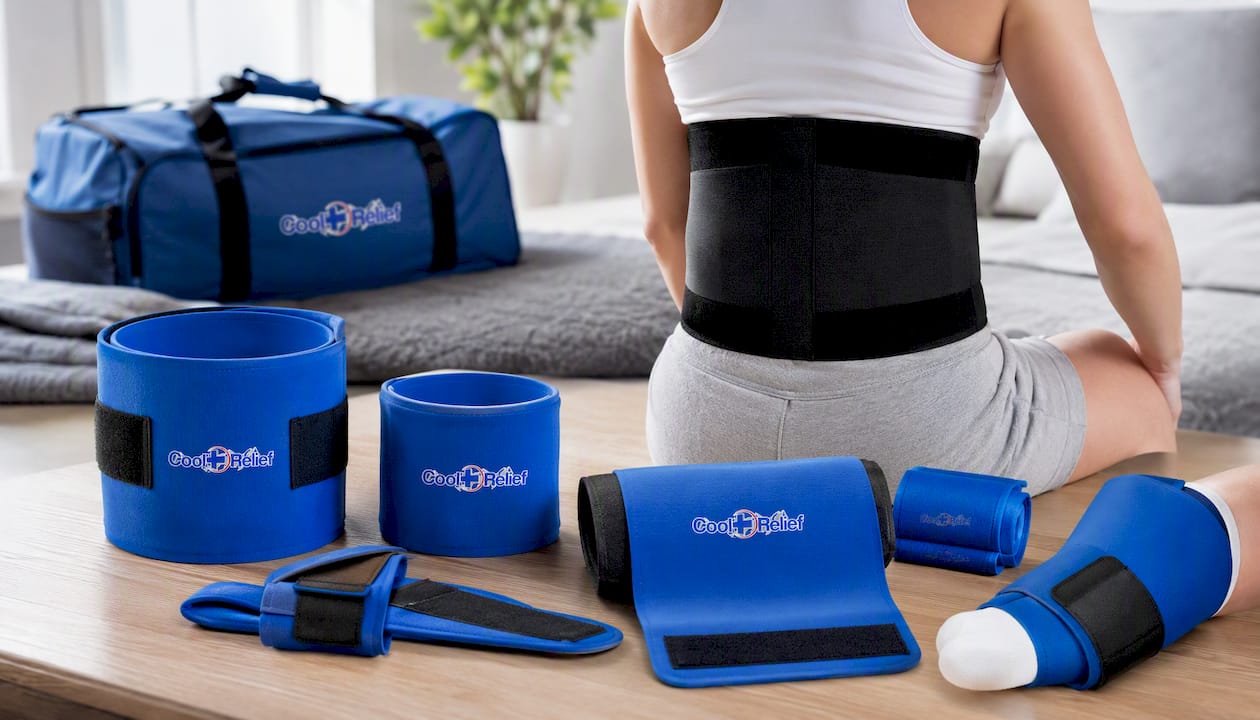
For anyone dealing with sciatica alongside other joint pain, the Soft Gel Universal Ice and Heat Wrap switches between cold and heat and fits the elbow, thigh, ankle, wrist, and more, which makes it a solid pick if you’re alternating therapies across a full recovery cycle. If your flare is still in the acute, inflamed stage and you need secure cold coverage over your rear pelvis, the Cool Relief Large Universal Soft Compression Ice Wrap stays in place better than a loose ice pack, which matters when you’re trying to hit that 15 to 20 minute window without constant readjusting. Check the specific freezing or heating instructions on your wrap before your first use, and start with shorter sessions until you know how your skin responds.
Sources
For deeper reading, Harvard Health’s sciatica guide covers self-care timing in full, Mayo Clinic explains typical treatment paths, Spine-health details placement technique, and Cleveland Clinic lists red flags requiring urgent care.
This article is general information, not a substitute for advice from a qualified doctor. Consult a qualified healthcare professional about your own circumstances before acting on anything here.
- Sciatica home remedies and self-care — Harvard Health Publishing
- Ameliorative potential of hot compress on sciatic nerve pain in chronic constriction injury-induced rat model — PMC
- Sciatica — Cleveland Clinic
FAQ
What Is the Fastest Way to Relieve Sciatica Pain?
Ice applied to the lower back for 15 to 20 minutes tends to numb sharp pain fastest during an acute flare, while gentle movement like walking or a knee-to-chest stretch can ease pressure on the nerve within minutes for milder discomfort.
What Triggers Sciatica Pain to Flare Up?
Prolonged sitting, sudden twisting or heavy lifting, and muscle tightness around the lower spine are common triggers, since each can add pressure to the sciatic nerve roots.
Is It Better to Sit or Lie Down With Sciatica?
Lying down, especially on your back with knees slightly bent or on your side with a pillow between your knees, usually reduces nerve pressure better than sitting, which tends to compress the lower spine.
How Can I Relieve Sciatica Pain in Five Minutes?
A short burst of gentle movement, like a slow pelvic tilt or knee-to-chest stretch, combined with a cold pack pressed against the lower back for a few minutes, often takes the edge off quickly, though it won’t replace a full 15 to 20 minute session.
Share and get 15% off!
Simply share this product on one of the following social networks and you will unlock 15% off!