


If your jaw pain is sharp, new, or swollen, reach for ice first. If it’s a dull ache or your jaw muscles feel tight and stiff, start with moist heat instead. Keep every session to 15 to 20 minutes with a thin cloth barrier, and stop if anything gets worse. Below, you’ll find exactly how to apply each one safely, when to switch between them, and when it’s time to call a professional.
TL;DR:
- Use ice immediately for sharp, localized pain or swelling, applying it in a thin cloth for no more than 15 to 20 minutes every one to two hours during the first 48 hours.
- Switch to moist heat for dull ache or muscle tightness once swelling subsides, applying it for 15 to 20 minutes daily and incorporating gentle jaw movements for added benefit.
- Alternating ice and heat in sessions of 10 to 15 minutes each can help manage mixed symptoms, but only when swelling is reduced and no open skin or sensitivity issues exist.
- Keep routines safe by avoiding direct skin contact, monitoring skin responses, and ensuring at least an hour between applications, especially during heat therapy.
- Seek professional care if pain persists beyond two to four weeks, if jaw opening is severely limited, or if associated symptoms like fever or facial numbness develop.
Table of Contents
- When Should You Use Ice for TMJ Pain?
- When Should You Use Heat for TMJ Pain?
- How Do You Apply Ice or Heat Safely?
- Should You Alternate Ice and Heat for TMJ?
- What Else Helps TMJ Pain Besides Ice and Heat?
- Cool Relief’s Take on Choosing the Right Jaw Wrap
- Why Early, Careful Thermal Care Matters More Than People Think
- Get the Right Wrap for Consistent Jaw Relief
- Sources
- FAQ
When Should You Use Ice for TMJ Pain?
Ice works by narrowing blood vessels and slowing nerve signals near the joint. That combination calms swelling fast and numbs sharp pain almost immediately, which is why it’s the go-to move for anything that feels acute.
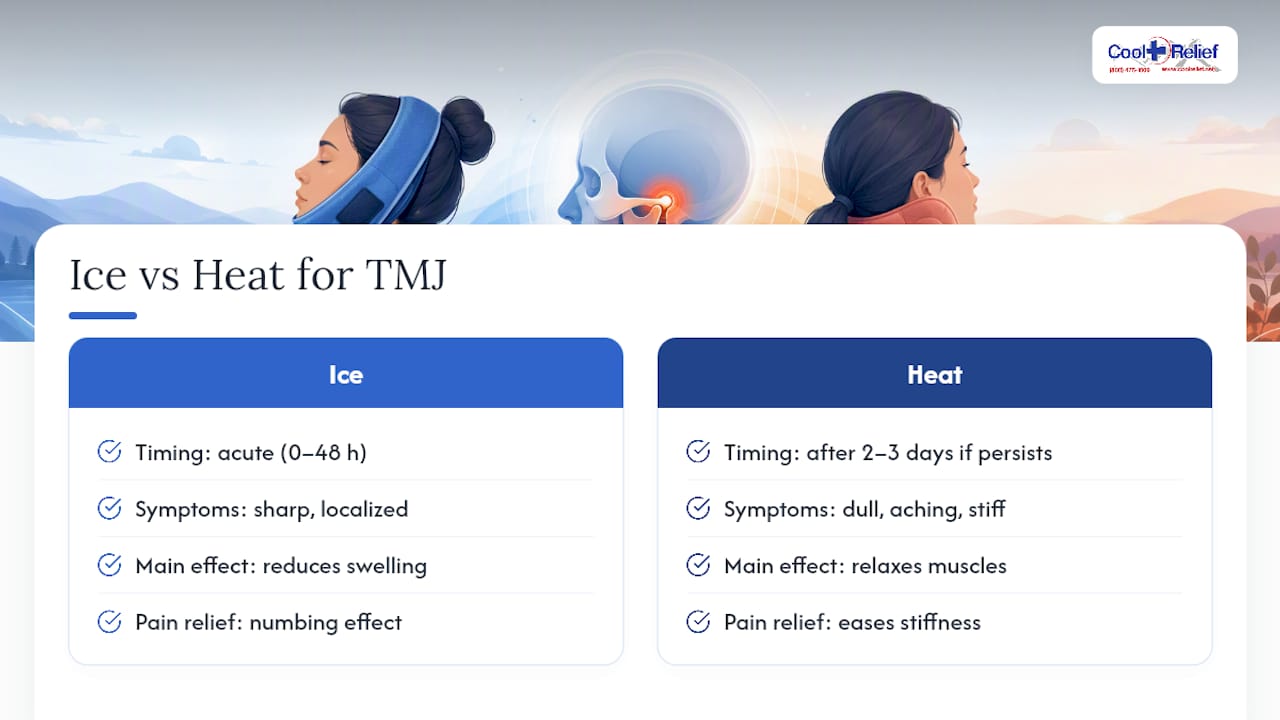
Reach for cold therapy when you notice sudden jaw injury or flare, sharp localized pain rather than dull ache, visible or palpable swelling around the jaw joint, or pain triggered by jaw movement or chewing.
Cleveland Clinic recommends cold therapy specifically for sudden, sharp pain, switching to heat only if the pain sticks around past two or three days. To apply it correctly, wrap an ice pack in a thin cloth (never place ice directly on skin) and hold it against the joint for 15 to 20 minutes. You can repeat this every one to two hours during the first 24 to 48 hours, several times a day.
Pro Tip: A soft gel pack molds to the curve of your jaw better than a rigid ice cube tray or bag of frozen peas, which means more even coverage and less shifting around while you hold it.
Skip ice if you have poor circulation, nerve damage that limits your ability to feel temperature changes, or any open skin near the jaw. If numbness lasts longer than the application itself or your skin looks unusually pale, stop and reassess.
When Should You Use Heat for TMJ Pain?
Heat does the opposite of ice. It widens blood vessels, boosts circulation, and helps tight muscles loosen up, which makes it the better choice once swelling isn’t the main issue anymore.
Heat tends to work best for:
- A dull, steady ache rather than a sharp jolt
- Muscle tightness around the jaw, temples, or neck
- General stiffness, especially in the morning
- The days after acute swelling has already calmed down
Mayo Clinic advises applying warm, moist heat to the side of the face, reserving ice packs for the sharper, more acute pain. Warm washcloths, a moist heating pad, or an electric moist-heat pad set to low all work. Apply for 15 to 20 minutes daily, and gently move your jaw side to side while the heat is on to encourage flexibility. Skip heat if there’s still active swelling or if you have any sensory impairment that would keep you from noticing if it got too hot.
How Do You Apply Ice or Heat Safely?
Getting the timing and technique right matters as much as picking the correct therapy. Here’s a simple routine to follow:
- Wrap the pack (hot or cold) in a thin cloth. Never apply either directly to bare skin.
- Position it against the side of your face, over the jaw joint or the masseter muscle just below your cheekbone.
- Set a timer for 15 to 20 minutes and don’t exceed it.
- Check your skin every few minutes for redness, numbness, or irritation.
- Remove the pack and let your skin rest for at least an hour before reapplying.
- During heat sessions, add light jaw movements (open, close, side to side) to improve mobility.
The TMJ Association’s self-care guidance is specific on this point: don’t exceed 15 to 20 minutes per application, since longer exposure risks skin injury without adding extra benefit. Refreezable soft-gel wraps also tend to distribute cold more evenly across the jaw than a rigid ice pack, which cuts down on the cold spots and gaps that make DIY packs frustrating. If your pack feels too cold to hold comfortably even through the cloth, add another layer rather than removing the barrier altogether.
Should You Alternate Ice and Heat for TMJ?
Alternating gives you both benefits in one sitting: ice knocks down inflammation, then heat brings blood flow back in to relax the muscle. This combination works especially well when your symptoms are mixed, like swelling that’s fading but muscle tension is setting in around it.
A simple routine to try:
- Ice for 10 to 15 minutes
- Rest for 10 minutes with nothing on your jaw
- Heat for 10 to 15 minutes
- Repeat once to three times a day, depending on how your jaw responds
Clinical resources on TMJ pain management note that alternating fits best once you’ve moved past the earliest acute phase. Skip alternating if you’re not sure what’s causing your pain or if you have any open skin near the joint. If either therapy makes your pain sharper or the swelling spreads, stop and reach out to a clinician instead of pushing through.
What Else Helps TMJ Pain Besides Ice and Heat?
Thermal therapy works even better when you pair it with a few habit changes. Keep your jaw resting with teeth slightly apart and your tongue resting on the roof of your mouth, stick to a softer diet for a few days, and cut out gum-chewing entirely while your jaw calms down. Poor sleep posture and stress both tend to worsen clenching, so addressing those helps too, a point Mayo Clinic makes as part of its broader TMJ guidance.
Some cases need more than home care. Merck Manual notes that physical therapy, TENS units, and ultrasound are commonly added alongside ice and heat when home treatment alone isn’t cutting it, and a dentist might recommend a splint for ongoing clenching or grinding.
Watch for these red flags:
- Pain that doesn’t ease up after two to four weeks of consistent home care
- Severe limitation in how wide you can open your mouth
- Fever alongside jaw pain or swelling
- Noticeable facial asymmetry or numbness
Most acute TMJ flares improve within two to four weeks with steady, correct thermal care. If yours doesn’t, that’s your signal to get it looked at rather than waiting it out.
Cool Relief’s Take on Choosing the Right Jaw Wrap
The Jaw Ice Wrap from Cool Relief is built around the exact guidance clinicians already recommend: a soft-gel design that contours to your jawline, works with a thin cloth barrier, and holds up to repeated 15 to 20 minute sessions without losing shape. It’s refreezable, so you’re not stuck buying disposable packs every time a flare hits.
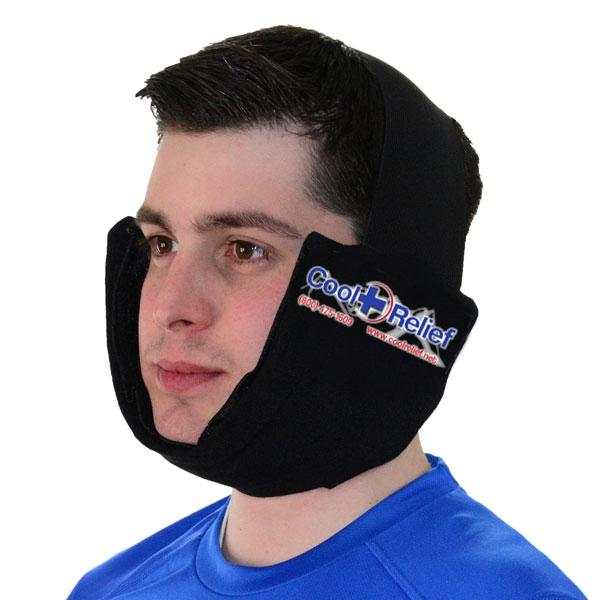
A dedicated jaw wrap beats an improvised ice pack mostly on fit. A bag of ice or a rigid pack slides around your jaw and leaves gaps; a shaped wrap stays put. For other joint pain you might be managing at the same time, the Wrist Ice Pack or Knee Ice Pack Soft Gel use the same soft-gel technology, just shaped for different body parts. Rinse gel wraps with mild soap and cool water between uses, and let them dry fully before refreezing.
Why Early, Careful Thermal Care Matters More Than People Think
Most people wait too long to start ice or heat, or they use whichever one is closest without thinking about their symptoms. Getting the choice right early, sharp pain gets ice, tight muscles get heat, tends to shorten how long a flare lasts. Home care isn’t always enough on its own. If pain lingers past a few weeks, pair thermal therapy with real behavior changes and get a clinician involved rather than assuming ice and heat alone will fix an underlying joint problem.
— Cool Relief
Get the Right Wrap for Consistent Jaw Relief
A bag of ice or a warm washcloth works in a pinch, but neither holds its shape against your jawline the way a wrap built for it does. Cool Relief’s Jaw Ice Wrap is shaped specifically for the jaw and joint area, so it stays in place during a full 15 to 20 minute session instead of sliding off halfway through.
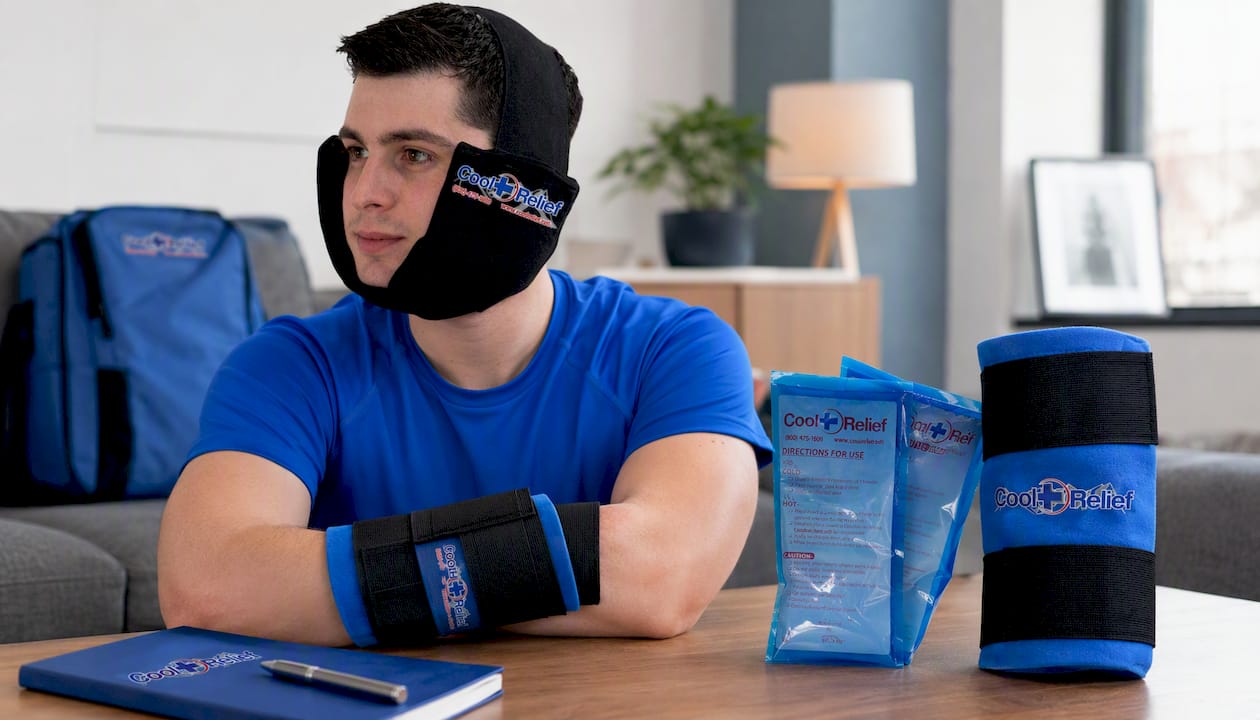
It’s refreezable, which means no more running to the store for disposable packs mid-flare, and its soft-gel fill stays flexible enough to fit snugly with a thin cloth barrier between the wrap and your skin, exactly the setup clinicians recommend. If you’re also managing knee or wrist pain, the same soft-gel technology shows up across Cool Relief’s other wraps, so one care routine (mild soap, cool water, full dry before refreezing) works for all of them. Check sizing and current return details on the Jaw Ice Wrap product page and get one in the freezer before your next flare catches you off guard.
Sources
- TMJ disorders - Diagnosis and treatment | Mayo Clinic
- How To Relieve TMJ Pain at Home | Cleveland Clinic
- Temporomandibular disorders (Merck Manual)
- Self Care | The TMJ Association
This article is general information, not a substitute for advice from a qualified doctor. Consult a qualified healthcare professional about your own circumstances before acting on anything here.
FAQ
How Do You Calm a TMJ Flare-Up Fast?
Start with ice wrapped in a thin cloth for 15 to 20 minutes if pain is sharp or swollen, or moist heat if it’s a dull ache or tight muscle. The TMJ Association’s survey found 74% of people who used thermal therapy reported reduced symptoms.
What Should You Avoid During a TMJ Flare-Up?
Avoid chewing gum, eating hard or chewy foods, resting your chin on your hand, and clenching your jaw. Skip prolonged ice or heat sessions past 20 minutes, since that risks skin irritation without added benefit.
How Do You Know if Jaw Pain Is TMJ?
TMJ pain usually centers around the jaw joint itself, often with clicking, popping, or stiffness when you open your mouth, and it can radiate to your ear or temple. A dentist or doctor can confirm it with a physical exam if you’re unsure.
Will TMJ Jaw Inflammation Go Away on Its Own?
Many acute cases improve within two to four weeks with consistent ice, heat, and jaw rest. If swelling or pain persists beyond that window, or you notice severe limitation opening your mouth, see a clinician rather than waiting it out.
Share and get 15% off!
Simply share this product on one of the following social networks and you will unlock 15% off!