


Switch from ice to heat when the injury is no longer new: swelling has gone down, the area no longer feels hot or looks red, and what is left is stiffness or tight muscles. For many muscle strains that happens somewhere between day 2 and day 7. The calendar is only a rough guide. Your body’s signals matter more, and after surgery your surgeon’s instructions come first.
Below, we walk through the signs that say “keep icing,” the signs that say “heat is okay now,” how long each session should last, and how to stop icing without guessing.
TL;DR
- Ice is for new injuries with swelling, heat, or sharp pain. Heat is for stiffness and tight muscles once the swelling is gone.
- Typical guidance puts the switch after the first 24 to 72 hours, but the acute phase can last up to a week. Swelling, not the date, is the signal.
- Keep sessions short: about 15 to 20 minutes of ice with a thin cloth between the pack and your skin.
- After surgery, follow your surgeon’s plan. Some knee replacement instructions say heat only once swelling is completely gone.
- Skip ice over numb skin or nerve pain, and call a provider if swelling or redness gets worse.
Table of Contents
- The short answer: watch the swelling, not just the clock
- Why ice comes first and heat comes later
- Signs it’s time to keep icing
- Signs it’s time to try heat
- A simple decision guide
- How long should you ice, and when should you stop?
- Switching from ice to heat after surgery
- Switching by body part
- Using ice and heat safely
- When to call a provider
- Our perspective
- Ice and heat wraps for every stage of recovery
- FAQ
- Sources
The short answer: watch the swelling, not just the clock
Most articles give you a number: 48 hours, 72 hours. Those numbers are a decent starting point, but they are not a rule of nature.
MedlinePlus says ice is generally used for the first 24 to 72 hours after a muscle injury or overuse, after which heat often feels more soothing and may help healing. Harvard Health describes the acute phase as usually a couple of days, after which heat may be tried. Texas Health’s sports medicine team points out that the inflammatory phase can last up to seven days, and suggests moving to heat when inflammation has resolved instead of relying only on a 72-hour cutoff.
The American Academy of Pediatrics’ HealthyChildren.org adds a useful twist. It says ice may stay useful as long as there is pain, swelling, inflammation, or spasm, and that there is no need to switch to heat after 48 hours or to alternate ice and heat.
Put those together and the practical answer is this: if the area is still swollen, warm to the touch, or red, ice is still the right tool. If those signs have faded and you mainly feel stiff or tight, heat becomes a reasonable option.
Why ice comes first and heat comes later
The order makes sense once you know what each one does.
Harvard Health explains that cold numbs pain and limits blood flow to an inflamed area. Heat does the opposite: it raises your pain tolerance and relaxes muscles, but because it increases circulation, it can make active inflammation worse. Harvard specifically advises against heat on a swollen, red, hot area or on a newly sustained injury.

So a fresh ankle roll, a pulled hamstring, or a sore knee after a long run needs cold first. Heat on day one can add to the swelling you are trying to calm down. Once the swelling has settled, heat does what ice can’t: it loosens things up.
HealthyChildren.org notes that heat is most useful for warming stiff or scarred soft tissue before stretching or exercise, and that it may relieve pain or spasm from neck or back injuries.
Signs it’s time to keep icing
Stay with cold if you notice any of these:
- The area looks puffy or larger than the other side.
- It feels warm or looks red.
- Pain is sharp, throbbing, or gets worse when you move.
- The injury happened in the last day or two.
- You have just finished activity that aggravated it.
If you are icing a joint like a knee or ankle, a wrap that stays in place helps. Our Knee Ice Pack Soft Gel and Ankle Ice Pack are designed to conform to the joint so you can sit comfortably instead of holding a pack in place.
Signs it’s time to try heat
Heat is a better fit when the picture looks like this:
- Swelling is gone or nearly gone.
- The area is no longer hot or red.
- You feel stiff, especially in the morning or before activity.
- Muscles feel tight or knotted rather than sharply injured.
- Several days have passed since the injury, and the pain is dull and achy.
Start gently. Use moderate warmth and check how the area responds. If the pain, swelling, or warmth comes back after a heat session, the injury is not ready for it yet. Go back to ice and try again in a day or two.
We cover this in more detail in our guide to heat therapy for stiffness and the fresh injury mistake, and in our piece on heat for muscle soreness.
A simple decision guide
| What you notice | Better choice | Why |
|---|---|---|
| New injury, swelling, warmth, redness | Ice | Cold limits blood flow to inflamed tissue |
| Swelling still present on day 3 or 4 | Keep icing | The acute phase can run up to a week |
| Swelling gone, area feels stiff | Heat | Heat relaxes muscles and raises pain tolerance |
| Warming up before stretching or exercise | Heat | Warms stiff soft tissue |
| After a workout or activity | Ice if sore or swollen | Heat after activity is not advised |
| Numb skin or nerve involvement | Neither without medical advice | Both can hide or worsen problems |
How long should you ice, and when should you stop?
About “when to stop icing” there are really two questions: when to end one session, and when to stop the whole routine.
Ending a single session
Mayo Clinic’s first aid guidance says to ice for 15 to 20 minutes, 4 to 8 times a day, during the first 48 hours or until swelling goes down. It also says not to leave ice on longer than 20 minutes at a time and to put a dishcloth or thin towel between the ice and your skin.
Why the limit? Cleveland Clinic explains that icing for much longer than about 20 minutes may trigger the blood vessels to open back up and undo the benefit. Numbness can also hide warning signs. It advises removing ice if skin turns red or pale, or becomes itchy, prickly, or tingly.
For an ankle sprain, Mayo Clinic Health System suggests a lighter schedule: 15 minutes on and 15 minutes off as much as possible on the first day, then 15 minutes three times daily until pain and swelling subside.
Ending the whole routine
You can stop icing when the swelling is gone and pain no longer spikes with movement. From there, you have two options: stop thermal therapy altogether, or use heat for leftover stiffness. You do not have to alternate. As noted above, HealthyChildren.org says there is no need to alternate ice and heat.
If you wake up the next morning and the area is puffy or hot again, you stopped too soon. Ice again for a day.
If you ice at night, read our tips on sleeping with an ice pack first. And if you want to know whether compression can help the swelling go down faster, see ice vs. compression.
Switching from ice to heat after surgery
Surgery changes the rules. Your surgeon knows your incision, your procedure, and your risks, so their plan beats any general timeline.
The American Academy of Orthopaedic Surgeons says ice or heat can be part of pain management after orthopaedic injury or surgery, but patients should discuss and follow an individualized plan with their surgeon. Its hip and knee replacement handout suggests ice several times a day for 15 to 30 minutes with a thin towel between the pack and skin, and says temperature therapy should follow the surgeon’s instructions.
Some programs are stricter about heat. OHSU’s 2024 total knee replacement instructions recommend ice for 20 minutes at a time with 20-minute breaks, and heat only after swelling is completely gone. That is a good example of why “72 hours” is not a universal answer: after a joint replacement, swelling can last much longer than after a mild strain.
UCSF lists topical heat or cold as options for postoperative and incision pain, and says to limit heat to 5 to 30 minutes and cold to a maximum of 20 minutes.
A few practical points for post-surgery use:
- Use a barrier. Mayo Clinic’s post-surgery workbook says to place a towel between your skin and the ice pack, leave it 15 to 20 minutes, and check your skin every five minutes.
- Watch your color. The same workbook says to remove the ice immediately if your skin loses its natural redness, because that can signal frostbite.
- Keep the dressing dry. Ask your care team how to protect your incision. A moisture barrier like our Shower Shield is for keeping the area dry, but your surgeon decides what is safe for your wound.
- Ask before you switch. Do not move to heat just because a week has passed. Ask your surgeon or physical therapist at your next check-in.
Switching by body part
The same logic applies everywhere, but each area has quirks.
Knee
A swollen knee after a twist or a long day usually wants ice first. Once the puffiness is gone and the knee just feels stiff when you stand up, heat can ease it. Our knee ice wraps are made for cold therapy, and we also make a Knee Heat Pack for the stiff phase.

Shoulder
Shoulder pain after a strain often follows the same pattern: cold for the first day or two, then moist heat for stiffness. We lay that out step by step in our shoulder pain ice vs. heat guide. You can browse shoulder ice wraps or the Soft Gel Shoulder Ice Wrap directly.
Lower back
Back spasms are one place where heat often feels good fairly early, but a brand-new, swollen, or very sharp injury still starts with cold. Our post on heat for lower back pain and the 48 to 72 hour rule covers it.
Hamstring and other muscle strains
Muscle pulls tend to follow the classic order: ice early, heat later as the tightness remains. See our hamstring strain timing guide.
Arthritis
Arthritis is different because there is often no single “injury” moment. Many people find heat helps morning stiffness and cold helps a flare that feels hot and swollen. Our 20 minute rule for arthritis explains how to choose.
Nerve pain
Nerve pain is the exception to the standard playbook. HealthyChildren.org advises against ice when pain or swelling involves a nerve, such as the ulnar nerve or “funny bone”. For a pinched nerve in the neck, Ohio State’s guidance allows ice or heat on a low setting for 10 to 20 minutes with a thin cloth barrier, but recommends talking with a doctor about treatment options. If you are unsure whether your pain is nerve-related, ask a provider before choosing.
Using ice and heat safely
Cold and heat are low-tech, but both can hurt you if you overdo them.
Heat safety
- Keep it comfortable, never hot. Harvard Health says temperatures above 113°F may be painful and above 122°F may burn skin.
- Check your skin about every five minutes. Mayo Clinic’s workbook says to stop heat if red blotches or patches appear, since continued heating can cause burns or blisters.
- If you warm a gel pack in the microwave, follow the timing in our microwave gel pack instructions and test the temperature before it touches skin.
Cold safety
- Always use a thin cloth between the pack and your skin.
- Stay within the 15 to 20 minute window.
- Skip ice over numb skin, open or blistered skin, or skin that is burned, stretched, or thin. HealthyChildren.org also advises avoiding ice with vascular disease, Raynaud disease, or cold hypersensitivity.
- Mayo Clinic’s workbook also cautions against cold when circulation is poor or there is pressure-injury risk, including risks tied to diabetes.
Kids and older adults. Cleveland Clinic notes that children, older adults, and people with neuropathy or Raynaud syndrome may need shorter sessions. If you are helping a child or an older parent, check the skin more often and keep sessions on the short side.
If you are also looking into other non-drug options for pain, this overview of PEMF for pain and what the research shows covers a different approach to the same goal.
As UCSF puts it, more research is needed to pin down the best uses of heat and cold, and checking skin often is key to preventing tissue injury. That is a good habit to keep whatever the timing.
When to call a provider
Icing and heating at home suit minor strains and aches. Get medical advice if:
- Muscle pain lasts more than three days, is severe and unexplained, shows signs of infection, or happens where circulation is poor, per MedlinePlus.
- Redness, discoloration, or blistering increases, swelling gets worse, the area becomes hot and red, or you cannot bear weight. NHS inform advises stopping ice and getting professional advice in those cases.
- You have had surgery and the incision looks different, drains, or swells more than your care team told you to expect. Call your surgeon’s office.
MedlinePlus also lists signs that call for emergency care, including shortness of breath, difficulty swallowing, muscle weakness or inability to move, vomiting, a very stiff neck, or a high fever. Do not wait on those.
Our perspective
Most people ask us for a number of days. We get it. A number feels safe. But after helping people through everything from knee surgery recovery to weekend sports strains, we think the better question is “what does my body look like today?”
That is why we design our wraps around flexibility and comfort. Our soft gel technology is made to stay pliable, so a wrap can sit snugly on a knee, shoulder, ankle, or back without feeling like a stiff brick. When a wrap is comfortable, you are more likely to rest with it for a full, proper session and then take it off on time.
We also make ice and heat versions for several body parts, so you can move from cold to warmth with the same kind of fit when your care team says it is time. Keep your sessions short, put a thin cloth between the wrap and your skin, and let swelling be your guide.
Whatever you use, follow your surgeon’s or clinician’s advice first. We are here to make that plan easier to follow at home.
Cool Relief
Ice and heat wraps for every stage of recovery
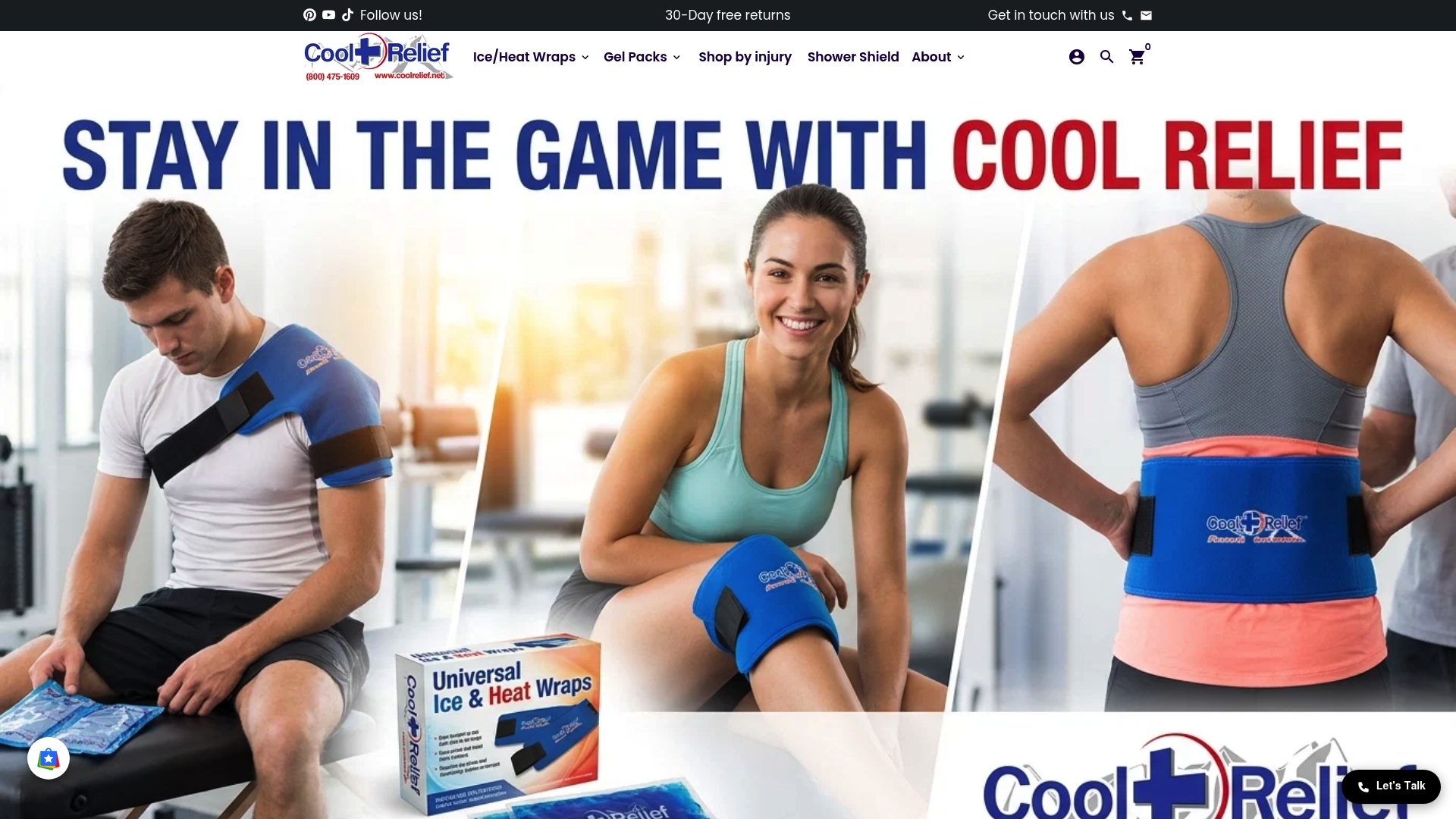
When you are icing in the first days and warming up later, it helps to have both options ready. Cool Relief makes reusable soft gel ice and heat wraps for knees, shoulders, hips, backs, ankles, wrists, elbows, jaws, faces, and necks. Our designs aim to give you targeted cold or heat that adapts to the body part, so you can focus on recovery instead of holding a pack in place.
If you want a flexible option for several areas, the Soft Gel Universal Ice and Heat Wrap works on the elbow, thigh, ankle, wrist, and more. You can also see everything on coolrelief.net.
Not sure how a gel pack can do both jobs? Our guide to universal gel pack uses explains safe heat, cold, and everyday tips.
FAQ
How long should you ice an injury before using heat?
Usually about 24 to 72 hours, and sometimes longer if swelling lingers. Harvard Health describes the acute phase as lasting a couple of days, while Texas Health says it can last up to seven days. Wait until swelling, redness, and warmth have faded before you try heat.
Can I switch back to ice after using heat?
Yes. If swelling, warmth, or sharp pain returns after a heat session, the injury likely still has active inflammation. Go back to ice for another day or two, then try heat again gently. If it keeps flaring, check in with a provider.
Should I use ice or heat for nerve pain?
It depends, and it is worth asking a provider. HealthyChildren.org advises against ice when pain or swelling involves a nerve. Ohio State’s guidance for a pinched nerve allows ice or heat on a low setting for 10 to 20 minutes with a thin cloth barrier, along with a talk with your doctor.
When can I use heat after knee surgery?
Ask your surgeon. Some programs, such as OHSU’s for total knee replacement, say heat may be used only after swelling is completely gone. Until then, ice for about 20 minutes with breaks, using a barrier, as your care team directs.
Is heat good for shoulder pain?
Often, once the injury is no longer fresh. Ice is the usual first step for a new strain, and moist heat can help with stiffness afterward. If the shoulder is swollen, hot, or red, stay with ice and see a provider if it does not improve.
Sources
- Treating Sports Injuries with Ice and Heat, HealthyChildren.org
- Muscle aches, MedlinePlus
- Cold versus heat for pain relief, Harvard Health
- Ice vs. Heat: How to Decide, Texas Health
- Sprain: First aid, Mayo Clinic
- Ankle sprain treatment and recovery, Mayo Clinic Health System
- Here’s How Long To Ice an Injury, Cleveland Clinic
- Healing After Surgery Workbook, Mayo Clinic
- Treating Pain with Heat and Cold, UCSF
- Total knee arthroplasty instructions, OHSU
- Prescription Safety, OrthoInfo, AAOS
- Pain Management After Hip or Knee Replacement, AAOS
- Soft tissue injury, NHS inform
- Pinched Nerve, Ohio State Wexner Medical Center
Share and get 15% off!
Simply share this product on one of the following social networks and you will unlock 15% off!