


Apply an external cold compress to your cheek over the surgical side right away, using 20 to 30 minutes on and 20 to 30 minutes off while you’re awake during the initial period after surgery. This is the fastest way to control swelling and numb the ache after wisdom teeth removal. Always keep a thin cloth between the ice and your skin, and stop icing if your skin looks blotchy, feels unusually numb, or reacts oddly.
TL;DR:
- Icing in 20 to 30 minute cycles over the first 48 hours helps manage swelling and discomfort but should be done carefully with a cloth barrier and monitoring skin reactions.
- Using shaped jaw wraps or soft gel packs provides more consistent cold contact than flat or loose packs, making it easier to stick to the recommended schedule.
- Avoid icing while asleep or continuously for hours to prevent skin damage, and always check for numbness or skin issues before continuing treatment.
- Cold therapy is effective for immediate pain relief and short-term swelling control, but it should be combined with medications and other recovery practices for best results.
- Switch from cold to warm compresses after the initial 48 hours to reduce stiffness and improve circulation, following your surgeon’s guidance and safety precautions.
Table of Contents
- How to Ice Your Jaw After Wisdom Teeth Removal
- Why Does Cold Help With Wisdom Teeth Pain?
- How Do You Ice Safely Without Hurting Your Skin?
- When Should You Switch From Ice to Heat?
- Does Icing Work With Pain Medication or Replace It?
- What’s Normal Swelling vs. a Warning Sign?
- Why a Fitted Ice Wrap Beats a Bag of Frozen Peas
- The Right Ice Pack Makes This Routine Actually Doable
- Sources
- FAQ
How to Ice Your Jaw After Wisdom Teeth Removal
You don’t need anything fancy for wisdom teeth icing to work. You just need the right source, the right timing, and the right placement.
Choosing a cold source:
- A sealed bag of crushed ice wrapped in a towel works in a pinch.
- A refreezable soft-gel pack molds to your jawline instead of sitting stiff against one spot.
- Shaped jaw wraps distribute cold more evenly across the cheek than a flat pack or bag of frozen vegetables, which tend to slide and concentrate cold in one uncomfortable spot.
Your icing schedule:
- For the first 24 hours, ice in 20 to 30 minute cycles, then rest for 20 to 30 minutes before starting again. This on/off rhythm is the standard Cleveland Clinic recommendation for controlling swelling right after extraction.
- Continue this pattern through hour 48 if swelling is still building, checking your skin during each rest period.
- Keep going only while you’re awake. Never fall asleep with a pack against your face.
Positioning matters more than people think. Rest the pack against your cheek directly over the extraction site, not on your neck or jaw joint. Prop yourself up with two or three pillows so your head stays elevated above your heart. This alone reduces how much fluid pools in your cheeks overnight, according to oral surgery post-op guidance that echoes the same 20 to 30 minute cycling.
A few habits make the routine easier to stick to:
- Switch sides if you had extractions on both sides, alternating which cheek gets the pack.
- Peek under the pack between cycles to check for redness, white patches, or unusual firmness.
- Rest the pack gently against your face. Pressing hard can shift gauze and disturb the healing clot underneath.
Pro Tip: Set a timer on your phone for every cycle. Grogginess from pain medication makes it easy to lose track of how long the pack has been on, and that’s exactly when overicing happens.
Why Does Cold Help With Wisdom Teeth Pain?
Cold narrows the blood vessels near the surgical site, a process called vasoconstriction. Less blood flow to the area means less fluid pools in the tissue, which is what causes that puffy, tight feeling in your cheeks after extraction. Cold also slows nerve signal conduction, which is why an ice pack numbs the ache almost as soon as you apply it.
That said, the science isn’t a clean slate of “ice fixes everything.” A systematic review of interventions after third molar removal found cryotherapy is biologically sound and widely recommended, but its effect on final swelling outcomes is inconsistent across studies. Some trials show a real reduction; others show little difference by day 5 or 7.
Here’s what that mixed evidence means in practice:
- Icing reliably helps with short-term comfort and numbing, even where long-term swelling data is murky.
- It’s low-risk when done correctly, so the mixed evidence isn’t a reason to skip it.
- It works best as one piece of a recovery plan, not the whole plan by itself.
Clinicians still recommend it because the immediate relief is dependable, even when the swelling curve on day 5 looks about the same either way. Set your expectations accordingly: icing buys you comfort now. Medication, rest, and time still do most of the healing work.
How Do You Ice Safely Without Hurting Your Skin?
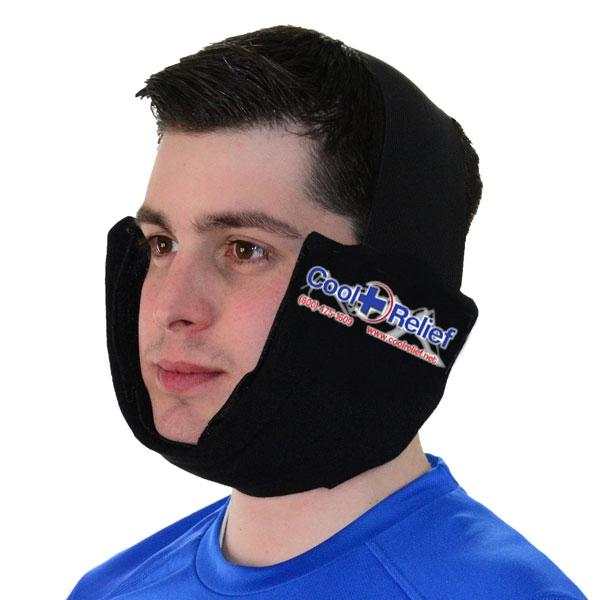
Facial skin after oral surgery is more vulnerable than it feels, partly because the numbness from your anesthesia can mask early signs of cold injury. That combination, numb skin plus enthusiasm to reduce swelling, is exactly how people accidentally give themselves a cold burn.
Follow these rules every time you ice:
- Always put a thin cloth or pillowcase between the ice pack and your skin. Never apply ice or a gel pack directly to bare skin.
- Stick to the on/off cycle. Continuous icing for hours at a stretch increases the risk of tissue damage, since prolonged compression can restrict blood flow enough to cause local injury.
- Never ice while sleeping. If you doze off, the timer that would normally tell you to remove the pack disappears with you.
- Check in with your oral surgeon before icing if you have a circulatory condition, a sensory disorder that affects how you feel temperature, or you’re on prescribed steroids or anticoagulants.
Pro Tip: If your cheek still feels numb 10 to 15 minutes after you remove the pack, longer than the numbness you’d expect from the anesthesia wearing off, that’s your cue to extend the rest period before icing again.
Call your provider if you notice blistering, patchy numbness that isn’t improving, pain that’s climbing instead of leveling off, or any trouble breathing or swallowing. Those go beyond normal post-op discomfort and need a professional look.
When Should You Switch From Ice to Heat?
Cold does its best work in the first 24 to 48 hours, when swelling and bleeding risk are both at their highest. After that window closes, many providers recommend switching to warm, moist heat to ease stiffness and encourage circulation to the healing tissue, a shift echoed in Healthline’s guidance on wisdom teeth pain relief.
Applying heat safely means:
- Test the compress against your inner wrist first. It should feel warm, not hot.
- Apply for 15 to 20 minutes at a time, similar to your icing cycles.
- Skip direct heat on any area with fragile or still-healing skin, and never heat a spot that’s actively bleeding or freshly swollen.
Some people find relief in alternating cold and warm once the acute risk period has passed, using cold when swelling flares and warm when jaw stiffness sets in. Only start alternating once your surgeon confirms you’re past the bleeding risk window, and let your own comfort, not a fixed rule, guide which one you reach for on a given day.
Does Icing Work With Pain Medication or Replace It?
Icing and medication solve different problems, and you need both. Take your prescribed or recommended NSAID (like ibuprofen) or acetaminophen on a set schedule rather than waiting until pain spikes. The ADA’s pain management guideline supports this kind of multimodal approach, combining medication with nonpharmacologic steps like cold therapy for dental pain.
Ice fills the gaps between doses. Applying a cold compress while your next dose is due can blunt the worst of the discomfort without you reaching for an extra pill early.
Round out your routine with a few other basics:
- Keep your head elevated, even at night, to reduce overnight pooling and pressure.
- Stick to a soft diet for the first several days. Nothing that requires real chewing near the extraction sites.
- Once your surgeon clears it (typically after 24 hours), gentle saltwater rinses help keep the area clean.
- Skip straws and cigarettes entirely during early healing. The suction can dislodge the clot protecting the socket.
What’s Normal Swelling vs. a Warning Sign?
Swelling that builds for the first two to three days, then plateaus and starts fading, is completely normal. So is some bruising along the jaw and a temporarily limited ability to open your mouth wide. Icing, elevation, and your scheduled medication are the right tools for this phase, and peak swelling around day 2 or 3 is an expected part of the inflammatory response, not a red flag on its own.
Contact your oral surgeon or head to an emergency room if you notice any of these:
- Bleeding that won’t slow down with steady gauze pressure after several hours.
- A fever above 100.4°F, or a foul taste or visible pus near the extraction site.
- Swelling severe enough to affect your breathing or ability to swallow.
While you’re reaching your provider, place fresh gauze if bleeding continues, keep your head elevated, and stop icing immediately if you notice any skin problem developing underneath the pack.
Why a Fitted Ice Wrap Beats a Bag of Frozen Peas
Loose ice and frozen vegetable bags shift around, leaving cold spots and gaps right where you need coverage most. A shaped, reusable jaw wrap that follows your cheek and jawline keeps consistent, even contact, which makes it much easier to actually stick to those 20 to 30 minute cycles instead of readjusting a soggy towel every five minutes. If you have a circulatory condition or another special medical concern, consult your healthcare provider before starting icing.
— Cool Relief
The Right Ice Pack Makes This Routine Actually Doable
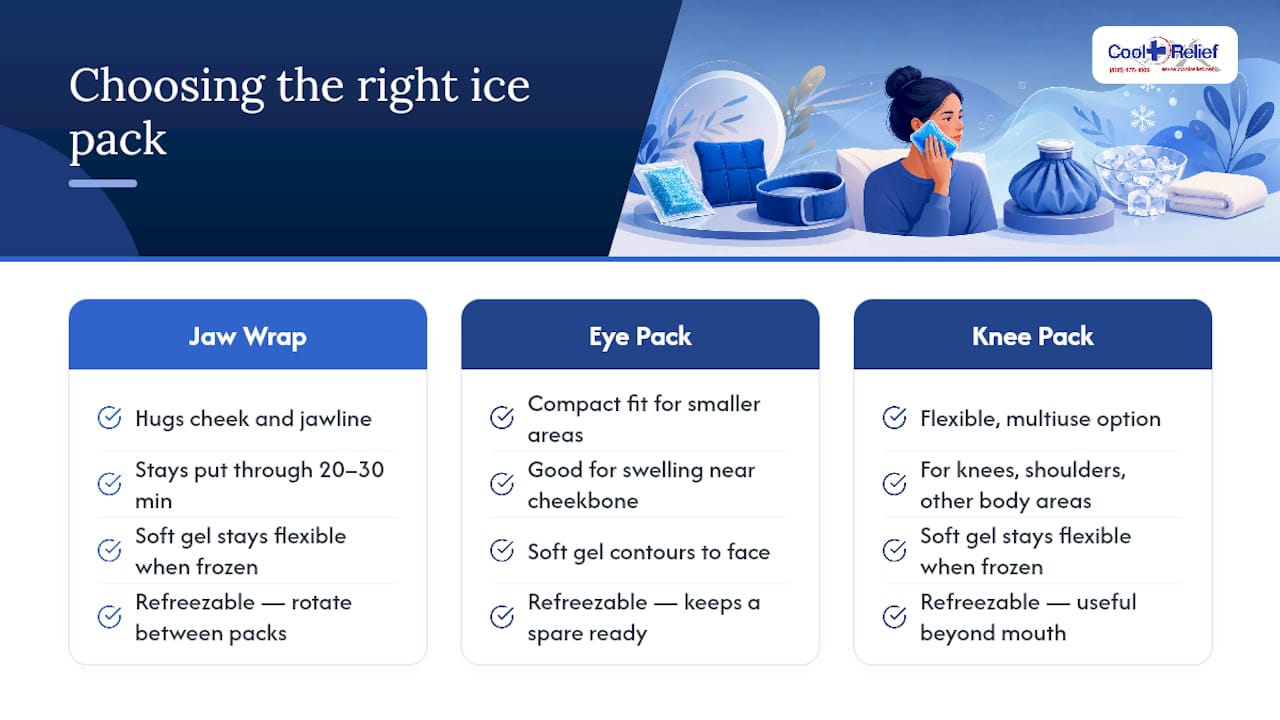
The instructions above only work if the tool in your hand cooperates with them, and that’s where a lot of makeshift ice packs let you down. Cool Relief built the Jaw Ice Wrap specifically to hug the cheek and jawline, so it stays put through a full 20 to 30 minute cycle instead of sliding toward your ear the second you lie down.
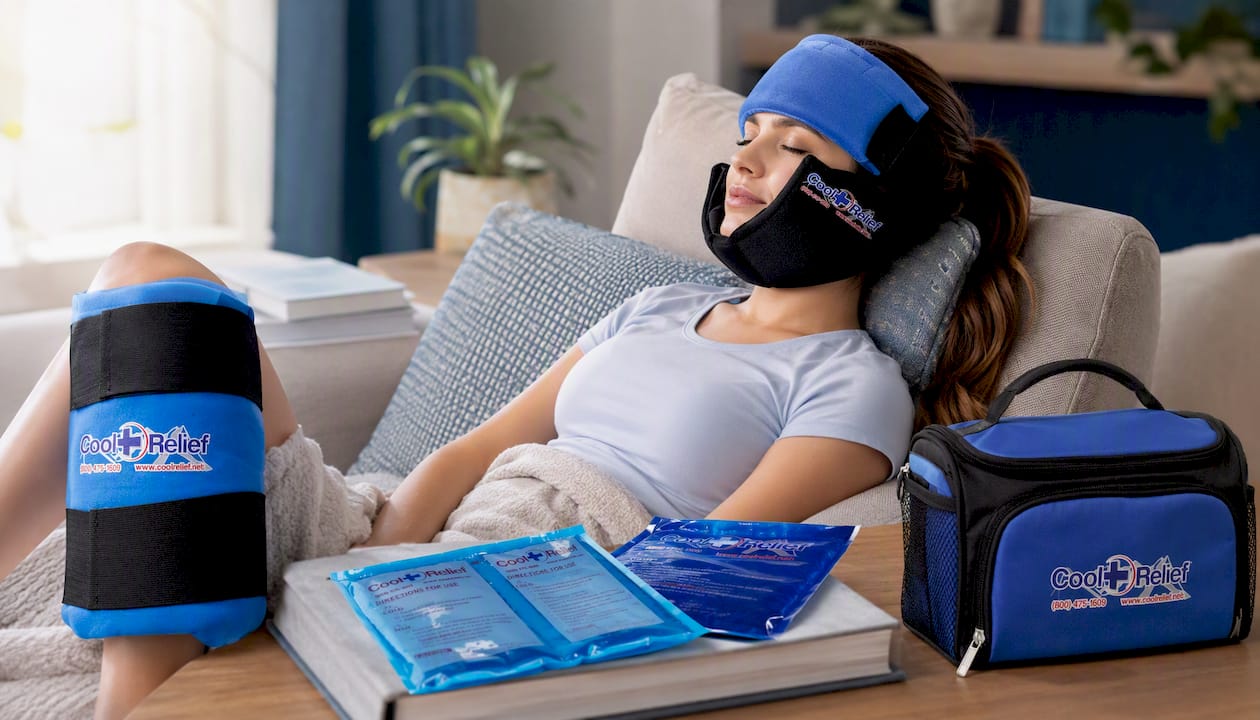
The soft gel inside stays flexible even when frozen, which means it contours to your face instead of pressing one hard, flat edge into your jaw. For smaller areas, like if swelling has concentrated near your cheekbone, the Soft Gel Eye Ice Pack offers a more compact fit. And if you’re stocking up for recovery beyond your mouth (sore knees, a tweaked shoulder, whatever comes next), the Knee Ice Pack Soft Gel is a flexible, multiuse option worth having on hand.
Every Cool Relief wrap is refreezable, so you can rotate two packs between cycles and always have a cold one ready. Just remember to keep a thin cloth barrier between the gel and your skin during every application, exactly like the schedule above recommends. Head to the Jaw Ice Wrap product page to check sizing and get one in the freezer before your procedure, not after.
This article is general information, not a substitute for advice from a qualified doctor. Consult a qualified healthcare professional about your own circumstances before acting on anything here.
Sources
- Wisdom teeth recovery (Cleveland Clinic)
- Review of interventions to reduce complications after third molar removal (PMC)
- ADA adult-adolescent pain management guideline (ADA)
- Post-op wisdom teeth instructions (OCORAL)
- Wisdom teeth pain relief (Healthline)
FAQ
What can immediately soothe wisdom teeth pain?
An external cold compress applied in 20 to 30 minute cycles brings the fastest relief, and taking your prescribed NSAID or acetaminophen on schedule keeps pain from building between icing sessions.
Does icing your face help with wisdom teeth swelling?
Yes. Cold narrows blood vessels near the surgical site, which limits fluid buildup and numbs the area, though some clinical reviews find the long-term effect on total swelling is inconsistent.
Can I eat frosting or other sweets after wisdom teeth removal?
Stick to a soft diet and avoid sugary, sticky foods that can cling to the extraction site or require chewing; smooth, cool foods like yogurt or pudding are safer choices in the first few days.
Why is day 3 the worst after wisdom teeth removal?
Swelling typically peaks around 48 to 72 hours after surgery as part of the normal inflammatory response, which is why many people feel their worst on day 3 even though healing is already underway.
Share and get 15% off!
Simply share this product on one of the following social networks and you will unlock 15% off!